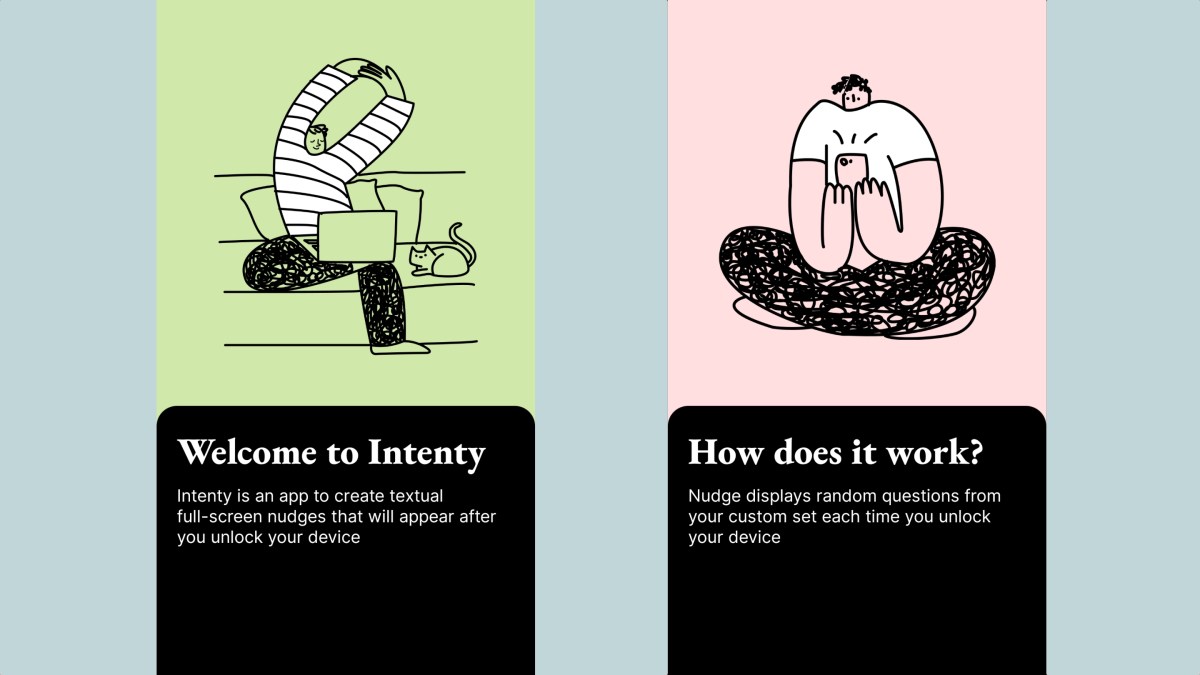
In today’s digital age, breaking free from the grip of habitual phone usage is a challenging endeavor. While operating systems like iOS and Android, and social media platforms such as Instagram and TikTok, have implemented features like timers and usage controls, users often find themselves unlocking their phones out of habit, with no real purpose. To tackle this growing issue, Ukrainian developer Yaroslav Neznaradko crafted an innovative Android app named Intenty, designed to inject mindfulness into the act of unlocking one’s phone.
Intenty takes a unique approach by prompting users to provide a reason or perform an action, such as breathing or stretching, each time they unlock their device. This clever nudge encourages individuals to become more intentional about their phone use, a concept Neznaradko began exploring in 2019. He realized he was spending excessive time on his phone, compulsively checking emails, social media, and news updates. Despite trying various screen time limits, focus modes, and app blockers, he found them more frustrating than effective. Thus, the idea for Intenty was born, initially conceived through the simple act of writing down his intentions each time he picked up his phone.
The first version of Intenty launched in 2020, featuring basic prompts asking users to justify unlocking their phones. However, the initial release encountered platform limitations, particularly with iOS, leading to the project stalling until 2023. With renewed determination and the rise of AI technologies, Neznaradko revamped the app to engage users in conversations with a chatbot about their phone use intentions. This feature, however, didn’t resonate with users.
Through extensive research into human-computer interaction, Neznaradko released a revamped version of Intenty this summer. This iteration allows users to personalize their experience by choosing nudges from various categories, including Intention, Necessity, Grounding, Posture, and Minimalism. Each category houses a range of prompts, and users can even create their own custom prompts.
Intenty offers flexibility in how often these prompts appear. While users can bypass entering a reason by swiping away the nudge screen, doing so can undermine the app’s purpose. To mitigate this, users can set cooldown periods to prevent immediate nudges after locking the phone. Additionally, they can adjust the frequency of nudge pop-ups based on how many times they unlock the phone – whether it’s the 2nd, 3rd, 5th, or 10th time.
Moreover, Intenty logs users’ answers and tracks the frequency of phone unlocks over time. For those seeking enhanced features, a subscription of $1.99 per month unlocks options such as nudge scheduling, a hard mode that requires a reason input, and a lock button to secure the phone directly from the nudge screen.
While other apps aim to minimize screen time – like One Sec, which prompts an exercise or action when opening a social media app, or Minimalist Screen Time, which restricts phone functionality – Intenty offers a unique approach. Upon sharing the latest Intenty update on Hacker News, Neznaradko received feedback regarding user preferences and the desire not to be nudged for quick actions, like taking a photo.
In response, Neznaradko is working on refining the app to accommodate unlocking patterns and reduce nudge fatigue during prolonged phone sessions. He is also considering adding more dynamic prompts, with potential future additions of image or video-based nudges. Through these ongoing developments, Intenty aims to transform habitual phone use into intentional moments of reflection and purpose.