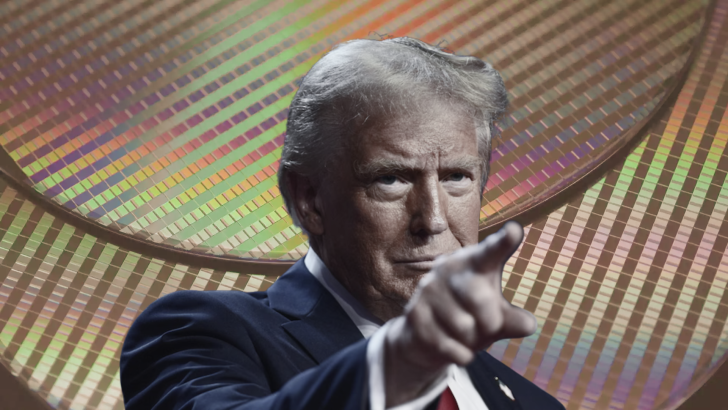
The push to boost chip production in the United States has gained significant momentum, largely thanks to a massive investment by TSMC and the increasing interest from American companies in sourcing chips domestically.
Under the Trump administration, efforts to establish the US as a leader in the chip industry have intensified, particularly focusing on developing cutting-edge technology within national borders. During his campaign, Trump argued that Taiwan had been benefiting from US technology, advocating for its return to American soil. Upon taking office, his administration announced a substantial $165 billion agreement with TSMC, enabling the Taiwanese heavyweight to expand its chip production in the US.
Today, the US is on track to meet up to half of its chip needs locally, a significant leap from last year when domestic capability was virtually non-existent. This progress stems from the CHIPS Act, vigorously supported by the Trump administration’s strategic negotiations. According to Bernstein Research, the aim is to reduce dependency on foreign suppliers by 2032.
While initially focusing on mainstream products, such as NVIDIA’s Blackwell AI accelerators built on TSMC’s N4P process, the US has gained ground in chip production. NVIDIA has committed to investing $500 billion in the US to shift production away from Taiwan, involving companies like Foxconn, Quanta, and Wistron in establishing new facilities.
Although the administration hasn’t yet succeeded in relocating Apple’s iPhone production to the US, it’s made notable advances in the data center and chip markets. TSMC plans to further enhance its American operations by scaling the A16 process in the future.
With firms like Intel Foundry advancing their capabilities, the US is moving steadily towards self-reliance in chip manufacturing and sourcing, promising a significant increase in domestic production in the years to come.


