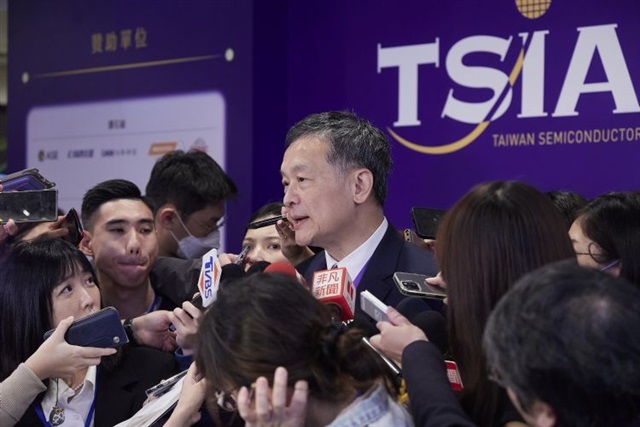
At the Taiwan Semiconductor Industry Association’s annual meeting on October 23, TSIA Chairman and Taiwan Semiconductor Manufacturing Company senior vice president and co-COO Cliff Hou delivered a focused message: Taiwan must fortify its chip ecosystem to stay ahead amid rapid change. He underscored that, even with shifting market dynamics and ongoing challenges, the path forward is clear—deeper collaboration, stronger local capabilities, and accelerated innovation.
Taiwan sits at the heart of the global semiconductor supply chain, and preserving that leadership requires a holistic approach. Hou’s remarks point to an ecosystem-level effort that unites foundries, fabless designers, OSAT providers, equipment makers, materials suppliers, academia, and government. By strengthening each link and improving how these players work together, Taiwan can boost resilience and speed from R&D to high-volume production.
A stronger chip ecosystem starts with capability building. That means cultivating domestic strength in critical areas such as advanced manufacturing, materials science, and tooling, while also expanding expertise in advanced packaging and system-level integration. As industry needs evolve—from AI and high-performance computing to automotive and edge intelligence—shortening development cycles and reinforcing supply stability will be essential.
Talent is another cornerstone. Hou’s call aligns with a growing consensus that the future belongs to economies that invest in people. Expanding engineering education, upskilling programs, and industry–academia partnerships can ensure a steady pipeline of world-class professionals in design, manufacturing, testing, and reliability. Support for small and mid-sized innovators will also be vital, enabling startups and niche specialists to plug into larger value chains and accelerate breakthroughs.
Resilience is now a strategic imperative. Geopolitical uncertainty, logistics pressures, and cyclical demand shifts have made supply assurance a top priority for chipmakers and customers alike. Building greater redundancy, qualifying multiple sources for key inputs, and localizing more parts of the supply chain can reduce risk while improving time-to-market. At the same time, international collaboration remains important, balancing global reach with a robust foundation at home.
Sustainability is rising fast on the agenda. As fabs scale and process complexity grows, energy efficiency, water stewardship, and responsible sourcing are no longer optional—they are competitive advantages. A stronger ecosystem will encourage shared standards and investments in green manufacturing practices that lower costs over time and meet increasingly stringent customer and regulatory expectations.
Digital transformation within fabs and across supply networks can drive the next leap in productivity. From AI-driven yield optimization to predictive maintenance and secure data sharing with suppliers, smarter operations translate directly into better quality, faster ramps, and more reliable deliveries. These capabilities also complement advanced nodes and packaging, unlocking system-level performance gains for AI accelerators, data centers, and 5G/6G infrastructure.
For Taiwan, the stakes are high but the opportunity is even greater. The country’s proven execution in high-volume, leading-edge manufacturing gives it a unique platform to lead the next era of semiconductor innovation. Hou’s message is a rallying call: align strategy, invest with intent, and move in step as an ecosystem. With clear priorities—talent, technology, resilience, sustainability, and collaboration—Taiwan can reinforce its position as the trusted backbone of global electronics.
The TSIA meeting underscored a shared vision: despite headwinds, the semiconductor industry can thrive by working smarter and closer together. Strengthening Taiwan’s chip ecosystem is not just about weathering uncertainty; it’s about setting the pace for the technologies that will define the next decade.