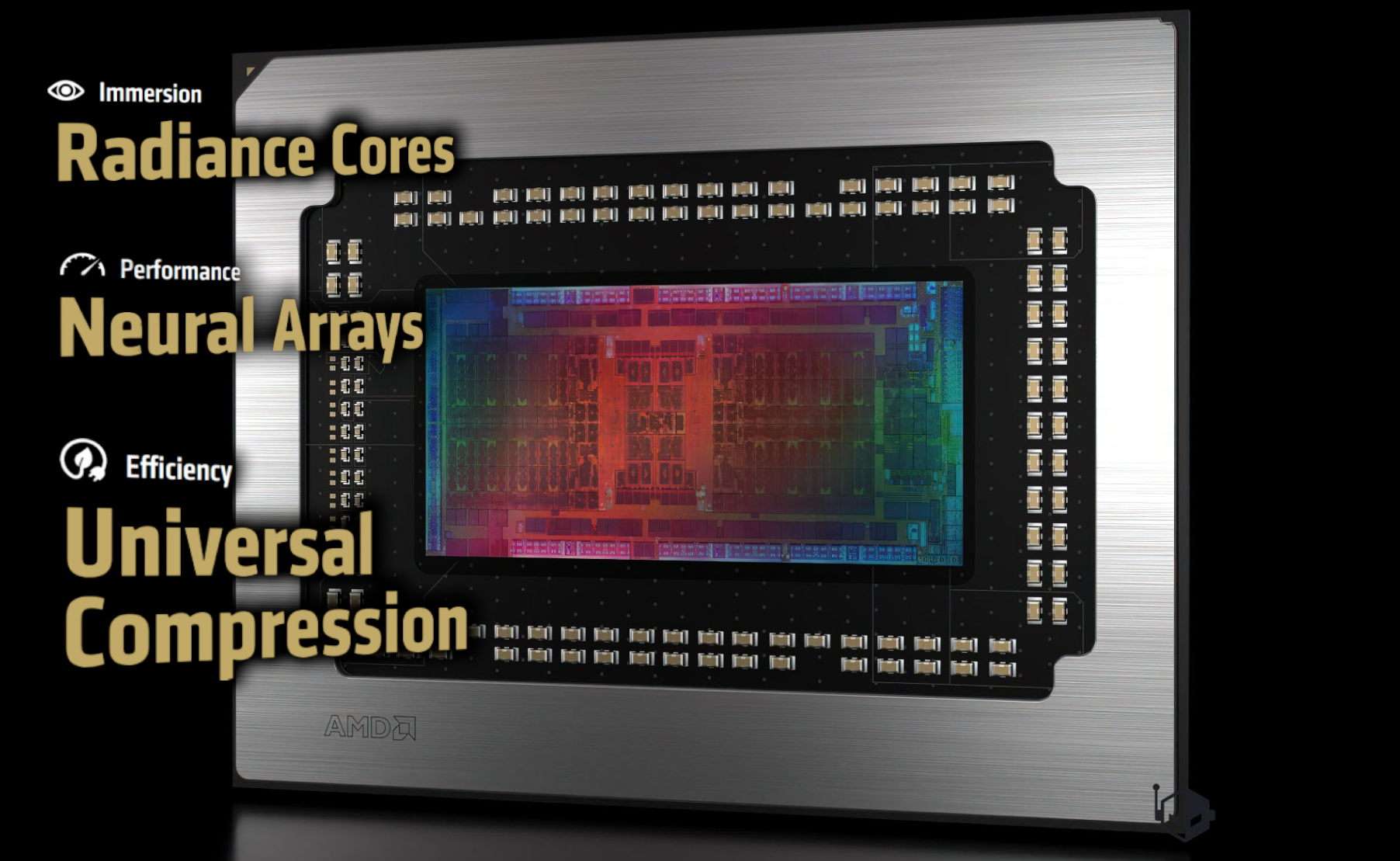
AMD and Sony just pulled back the curtain on three cornerstone features coming to the next generation of RDNA graphics, promising a major leap for both PC and console gaming. The companies previewed Neural Arrays, Radiance Cores, and Universal Compression—technologies designed to supercharge AI-driven rendering, accelerate real-time ray and path tracing, and squeeze far more performance from available memory bandwidth.
Here’s what’s new and why it matters:
– Radiance Cores: Dedicated ray traversal hardware built for speed. These new cores target significantly faster, more consistent real-time ray tracing and path tracing, reducing the heavy performance hit that typically comes with advanced lighting, shadows, and reflections. AMD has already pushed ray tracing forward in its RDNA 4 architecture; Radiance Cores aim to deliver an even bigger jump in next-gen GPUs.
– Neural Arrays: A rethink of how compute units collaborate. Instead of operating in isolation, clusters of compute units interconnect to act like a unified AI engine. That architecture is designed to supercharge neural rendering, strengthening future versions of FSR and PSR upscaling. Expect cleaner upscaled images, better temporal stability, and smoother frame generation—especially in complex scenes.
– Universal Compression: Smarter, broader compression at the hardware level. This system evaluates and compresses virtually all data inside the GPU, dramatically cutting memory bandwidth demands. The payoff is higher performance without relying solely on wider memory buses, plus faster texture and model streaming. For desktops, laptops, handhelds, and consoles alike, it’s a direct boost to efficiency and responsiveness.
What this means for gamers and creators is straightforward: higher fidelity with fewer compromises. Radiance Cores pave the way for more widespread use of ray and path tracing at playable frame rates. Neural Arrays push AI-enhanced image quality and frame generation to new heights. Universal Compression unlocks headroom for higher resolutions and richer assets by relieving bandwidth bottlenecks.
AMD hasn’t shared a consumer release date yet, but the company signaled that these capabilities are headed for the next wave of RDNA-powered hardware, including discrete graphics cards and custom SoCs used in popular consoles. If the rollout aligns with typical cadence, the next generation of RDNA products is positioned to be the first to bring these features to players.
Bottom line: AMD and Sony are aligning on a future where AI-driven rendering, accelerated ray/path tracing, and pervasive hardware compression become standard. That combination targets sharper visuals, smoother frames, and faster load-in of complex scenes—exactly what modern games need as they scale up in resolution, realism, and world size.