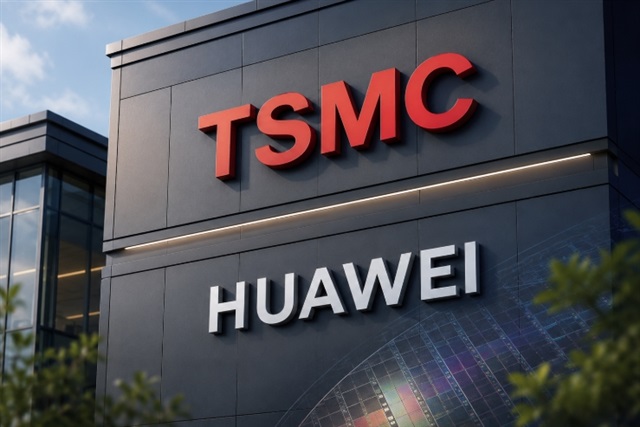
TSMC’s 3D Chip Stacking Push Could Redefine the AI Semiconductor Race
The global semiconductor industry is entering a decisive new era. For decades, chip progress was measured by how successfully manufacturers could shrink transistors and pack more of them onto a single piece of silicon. That race is becoming harder, more expensive, and increasingly restricted by geopolitics. Now, the next major advantage may come not only from making chips smaller, but from stacking them higher.
At the center of this shift is TSMC, the world’s leading contract chipmaker. As demand for artificial intelligence processors continues to surge, TSMC is strengthening its position through advanced packaging and 3D chip stacking technologies. These methods allow multiple chip components to be placed vertically, improving performance, power efficiency, and data movement without relying solely on smaller process nodes.
This is especially important for AI chips, which require enormous computing power and high-speed memory access. Traditional chip design is reaching practical limits, but 3D stacking gives companies a new way to boost performance. By bringing logic, memory, and other components closer together, chipmakers can reduce latency and energy use, both of which are critical for AI training and inference workloads.
The result is a growing dependency on TSMC’s manufacturing ecosystem. Leading AI chip designers need access not only to cutting-edge fabrication nodes, but also to advanced packaging solutions that can combine multiple chiplets into one powerful processor. As AI accelerators become more complex, TSMC’s ability to deliver both advanced silicon and sophisticated 3D integration makes it increasingly difficult for rivals to catch up.
Meanwhile, China’s semiconductor ambitions continue to face major obstacles. US export controls have limited access to the most advanced chipmaking equipment, especially EUV lithography systems required for producing the smallest and most advanced nodes. Without these tools, Chinese foundries are largely constrained to older manufacturing processes, making it harder to compete at the highest end of the market.
This technology gap is widening at a crucial moment. AI development is becoming a strategic priority for governments and corporations worldwide, and the most powerful AI systems depend on state-of-the-art chips. While China continues investing heavily in domestic semiconductor capabilities, restrictions on advanced equipment create a major bottleneck for front-end chip production.
TSMC’s 3D stacking strategy changes the competitive landscape. Instead of relying only on transistor scaling, the company is building a deeper moat through packaging innovation. This approach gives major customers a path to higher performance even as traditional scaling slows. It also makes the overall chip supply chain more specialized, with fewer companies capable of delivering the full package required for next-generation AI hardware.
For AI chip designers, the advantages are clear. Advanced 3D packaging can improve bandwidth, reduce power consumption, and enable more flexible chip architectures. These benefits are essential for data centers running large AI models, where performance per watt can determine operating costs and system efficiency.
For the broader semiconductor market, the implications are significant. The industry is no longer defined only by who can manufacture the smallest transistor. It is increasingly defined by who can integrate chips most effectively, manage heat, improve interconnects, and package multiple components into a compact, high-performance system.
This gives TSMC a powerful position in the global AI chip supply chain. As companies race to build faster and more efficient processors, they are likely to depend even more on the Taiwanese manufacturer’s advanced production and packaging capabilities. At the same time, countries cut off from EUV technology may find it harder to close the gap, even with strong domestic investment.
The semiconductor race is now moving into three dimensions. TSMC’s leadership in 3D chip stacking could become one of the most important factors shaping the future of AI hardware, while export restrictions continue to reshape which nations and companies can compete at the cutting edge.