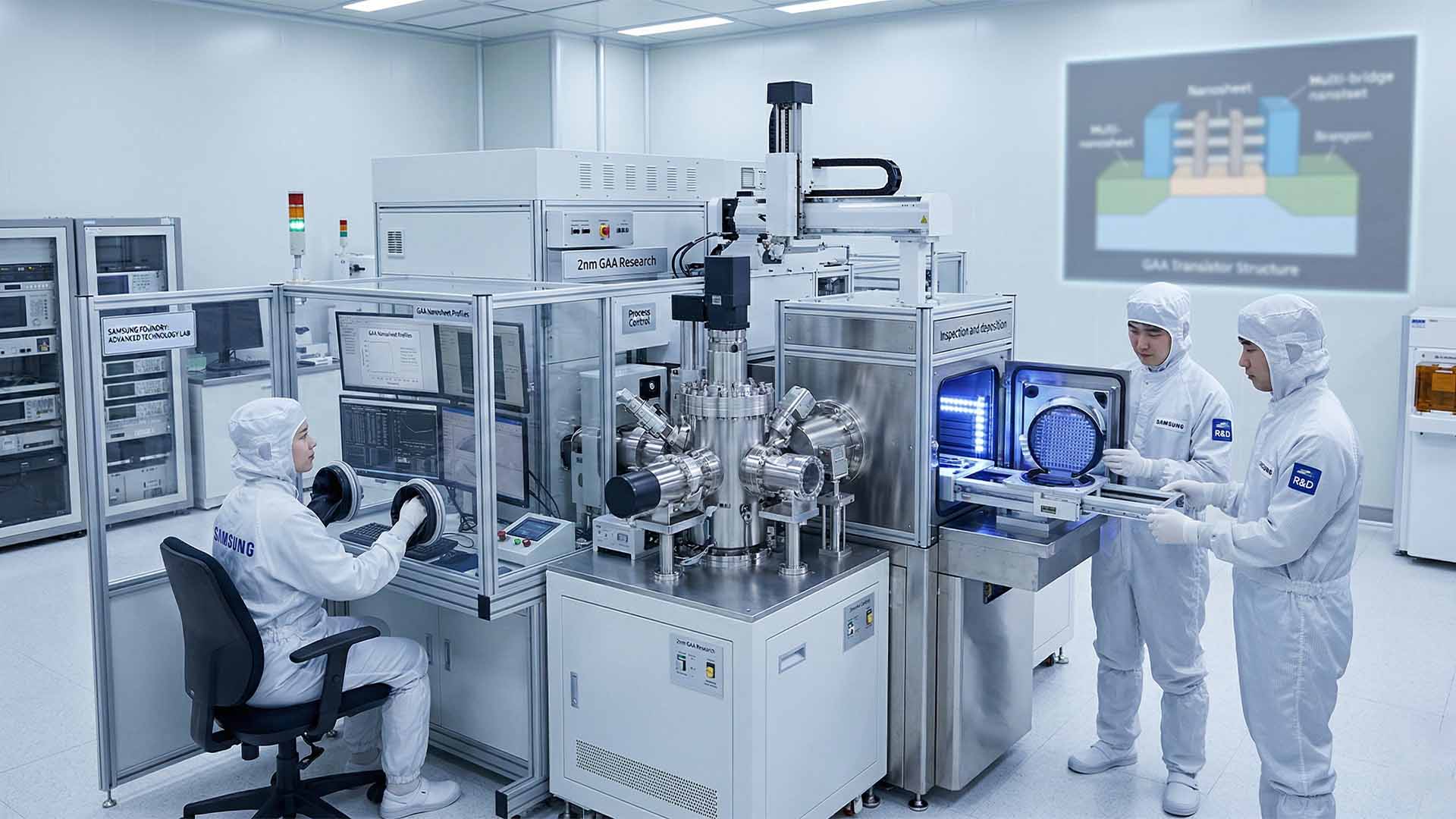
Samsung is pushing hard to prove it can be a true contender in the 2nm semiconductor race, but new reports suggest the company is still battling a major hurdle: manufacturing yield. While Samsung has already joined the industry’s move toward cutting-edge 2nm Gate-All-Around (GAA) technology, the latest estimates indicate it isn’t yet producing enough usable chips per wafer to compete on equal footing with the market leader.
Recent claims put Samsung’s 2nm GAA yields in the mid-50% range, with some expectations that the effective yield could slide closer to 40% after back-end steps are completed. If accurate, that would mean earlier talk of 60% yields may have been overly optimistic. In semiconductor manufacturing, yield is everything. A process can be technically “working,” but if too many chips fail along the way, production becomes expensive, limited, and difficult to scale.
Why do these numbers matter so much? For big-name clients—think major smartphone and computing chip designers—the comfort zone is typically much higher. Industry watchers often point to around 70% yield as the kind of benchmark that signals a process is mature enough for large-scale, long-term contracts. With Samsung reportedly still below that threshold, it suggests the company may be in what’s described as a “running” stage: capable of producing chips, but not yet at the stability and efficiency needed to rapidly expand capacity and consistently handle additional high-volume customers.
That said, Samsung’s progress—at least based on the same wave of reporting—has been fast. Estimates previously pegged its 2nm GAA yield at roughly 20% in the second half of 2025, with the figure climbing into the mid-50% range in under a year. Even allowing for uncertainty, that kind of improvement highlights how aggressively Samsung is working to close the gap and refine its next-generation node.
It’s also worth noting that yield figures in the foundry world are notoriously difficult to pin down from the outside. Samsung doesn’t publicly disclose detailed yield data, so much of what appears in reports comes from industry chatter and supply-chain speculation rather than official confirmation. As a result, different outlets often circulate different numbers, making it hard to know the exact state of play.
Despite the concerns, Samsung’s 2nm struggles don’t appear to be scaring off every potential buyer. The company has still reportedly secured chip-related business tied to Tesla as well as Chinese cryptocurrency equipment makers—an indication that even if Samsung isn’t yet the first-choice option for the most demanding, high-volume designs, it can still win orders where pricing, availability, or strategic diversification matter.
Looking ahead, Samsung’s chip manufacturing expansion in the United States could play an important role in its next phase. Its Taylor, Texas facility is expected to begin trial production soon, and the company’s upcoming Exynos 2700—expected to be announced later this year—could become one of the first chips to use Samsung’s second-generation 2nm GAA process. If that happens, it would give Samsung a high-profile internal platform to validate improvements, optimize its manufacturing flow, and demonstrate that its 2nm technology can move beyond “running” to truly scalable.
In the bigger picture, Samsung is clearly advancing, but the key question remains whether it can raise 2nm yields high enough to become a dependable, long-term alternative for top-tier chip designers. Until it does, its competitiveness against the industry leader will continue to face skepticism—even as it keeps moving forward with ever-more advanced process development.


