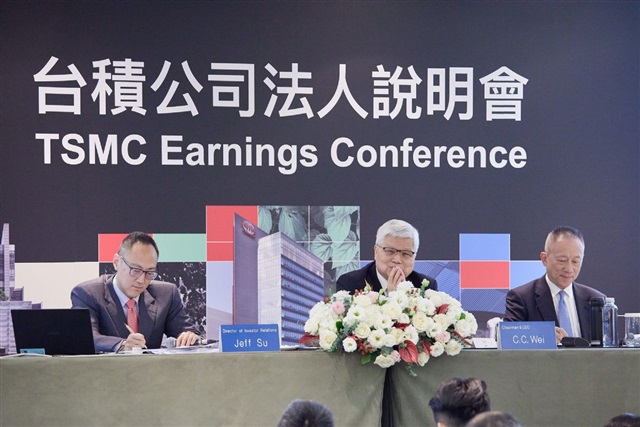
TSMC is doubling down on its most advanced chipmaking technologies as demand continues to outpace supply, and the company says the pressure on capacity isn’t easing anytime soon.
During its latest earnings call, TSMC chairman C.C. Wei highlighted ongoing capacity shortages across the business, signaling that customers are still lining up for cutting-edge manufacturing. One of the biggest takeaways is just how quickly the company’s 3nm process has become a major revenue driver. TSMC reported that 3nm technology contributed around 25% of its revenue in the first quarter of 2026, underscoring how rapidly flagship smartphone chips, high-end PC processors, and AI-focused silicon are migrating to smaller, more advanced nodes.
To answer that demand, TSMC plans to ramp up fresh 3nm production capacity in stages. New output will come online sequentially in Taiwan, a move designed to steadily expand supply rather than rely on a single massive jump in production. This phased rollout is intended to keep up with strong customer orders while maintaining the strict yield and quality targets required for advanced nodes like 3nm.
The continued rise of 3nm is also a clear signal about where the semiconductor market is heading in 2026: more AI workloads, more high-performance computing, and more premium devices that require better performance per watt. As chip designers push for faster speeds and improved energy efficiency, demand for leading-edge processes is staying high, which helps explain why TSMC is still dealing with tight capacity.
For consumers and the broader tech industry, TSMC’s comments point to two likely outcomes. First, the industry should expect ongoing competition for advanced manufacturing slots, especially for top-tier products that rely on 3nm. Second, as more 3nm capacity is added in Taiwan over time, supply conditions should gradually improve—though not overnight—potentially helping stabilize availability for next-generation chips used in smartphones, AI accelerators, and other performance-focused hardware.
In short, TSMC’s 3nm node is no longer just a next-gen technology on the horizon—it’s already a cornerstone of the company’s revenue, and the roadmap now centers on expanding capacity fast enough to meet relentless global demand.