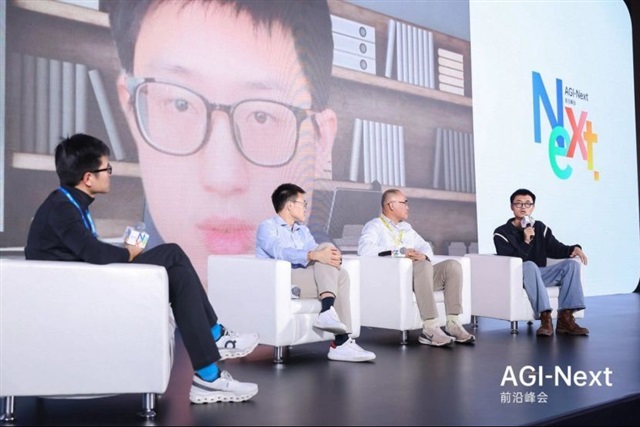
As the global generative AI race heats up, China’s push to build powerful large language models is no longer being steered by one headline-making company. Instead, the momentum is increasingly shaped by a tight circle of researchers and academic leaders who bring deep technical credibility and long-term strategic thinking to the table.
In recent months, the country’s large-model development has started to look less like a single-lane sprint and more like a coordinated national effort. The focus is shifting toward building a sustainable foundation for next-generation AI: stronger core research, more efficient model training, and a clearer path from laboratory breakthroughs to real-world products.
At the center of this shift is a growing emphasis on talent and research leadership. Rather than relying solely on market buzz or rapid product rollouts, China’s AI community is leaning into academically grounded innovation—people with proven track records in machine learning, system optimization, and large-scale computing. Their influence is shaping what gets built next, how it will be trained, and where it will be deployed.
This matters because the generative AI competition is entering a new stage. Early wins were often about being first to release a chatbot or launching the largest model. Now, the bar is rising. The next phase is about performance, reliability, efficiency, and the ability to adapt models for high-impact use cases across industries like education, healthcare, manufacturing, and enterprise software. In that environment, research-driven leadership becomes a major advantage.
Another key takeaway is scale—and the willingness to invest heavily. China’s “big bet” on AI isn’t just about matching global rivals. It’s about positioning large-model development as a core pillar of future economic growth. That means increased funding, stronger compute infrastructure, and more organizational support for foundational model research, especially as the country looks for ways to build competitive models under evolving global constraints.
What’s emerging is a more diversified landscape where multiple teams and leaders can push the field forward at the same time. That reduces dependence on any single company’s strategy and speeds up experimentation across different approaches—from model architecture improvements to training efficiency and domain-specific AI solutions.
For observers watching the global AI race, the message is clear: China’s generative AI strategy is becoming broader, more research-led, and more coordinated. The development of large language models is increasingly being driven by a small group of influential researchers, and their work is helping define how China plans to compete in the next era of artificial intelligence.
If you want, paste the rest of the post text (the image preview cuts off mid-sentence), and I can rewrite the full article in the same style while keeping the original intent and improving SEO clarity.