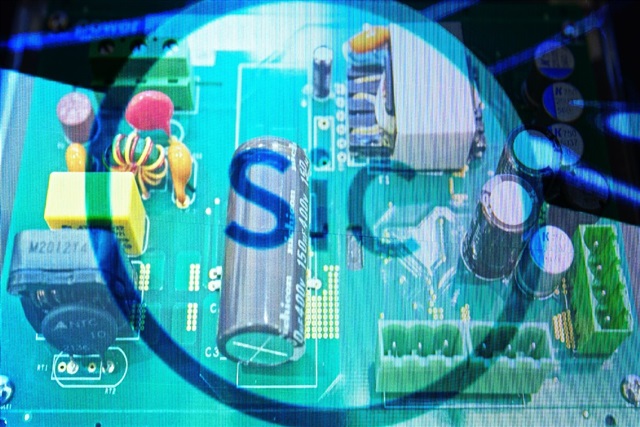
During Donald Trump’s presidency, the United States took significant steps to restrict China’s access to silicon carbide (SiC), a vital material in the realm of third-generation semiconductors, citing national security concerns. However, these restrictions have inadvertently fueled China’s determination to boost its own SiC industry.
Far from stifling the growth of technology in China, the U.S. sanctions acted as a catalyst for the nation to strengthen its domestic capabilities in the semiconductor market. By reducing dependence on foreign SiC supplies, China accelerated research, development, and production within its borders, leading to substantial advancements in the industry.
The impact of the restrictions has been profound. China’s swift mobilization to enhance its SiC technology involves not only increased investments but also the pursuit of cutting-edge research. As a result, the nation is rapidly becoming a formidable player in the global semiconductor arena, challenging previous market dynamics.
This shift highlights the complex interplay between international trade policies and technological competitiveness. While intended as a protective measure, the U.S. sanctions have spurred China to fortify its technological infrastructure, potentially leading to a significant shift in global semiconductor supply chains.
As China continues to advance its SiC capabilities, the long-term implications for international commerce and technological innovation remain closely watched by industry experts worldwide. The scenario underscores the unpredictable outcomes of trade restrictions in a highly interconnected global economy.