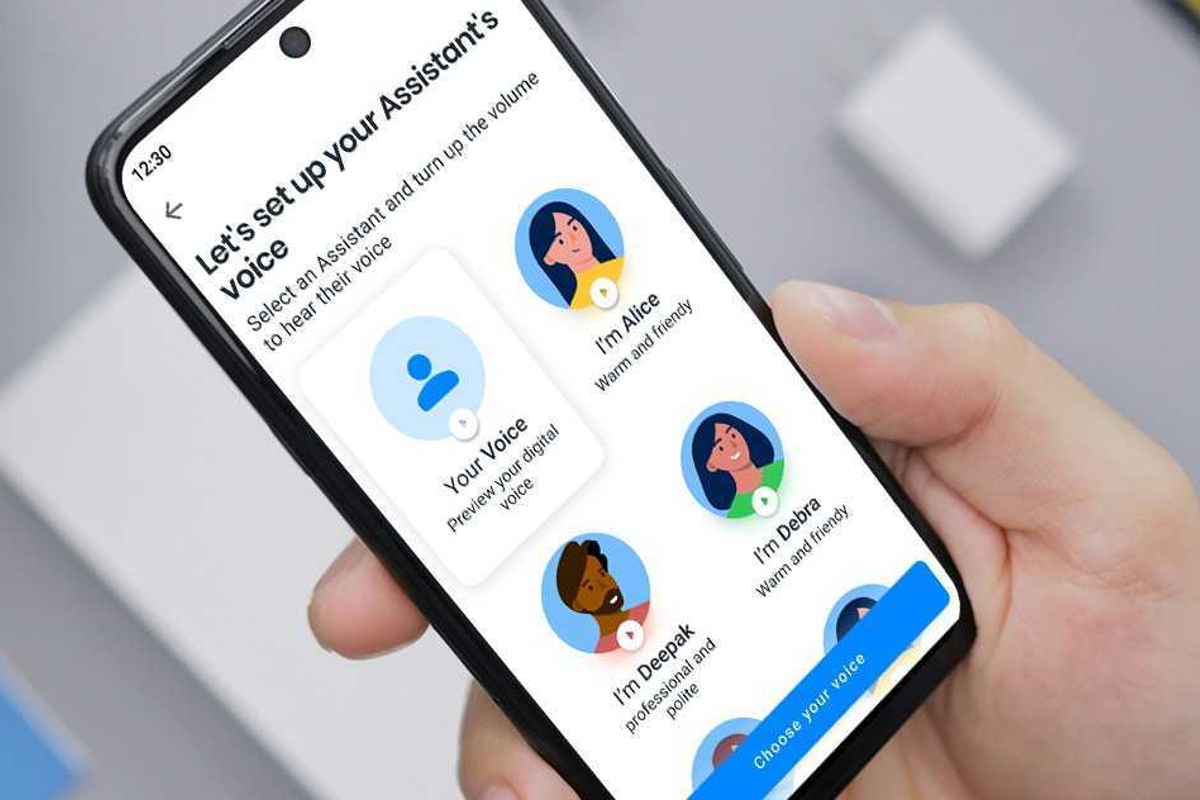
With artificial intelligence (AI) rapidly evolving, companies are continually developing groundbreaking applications of the technology. One such advancement comes from Truecaller, the popular caller ID and spam blocking service provider, which has recently made waves by introducing a new feature that lets its AI Assistant answer phone calls using a replication of the user’s own voice.
This innovation is the result of a collaboration with Microsoft, which enables Truecaller to harness Microsoft’s Personal Voice technology from Azure AI Speech. This technology was unveiled in November as a novel addition to the Azure AI platform.
The core enhancement for Truecaller’s AI Assistant is the ability for premium users to experience a more personalized call management service. This is achieved by creating a voice profile—a digital copy—using the user’s spoken script, which is then utilized by the Assistant to answer incoming calls. Up until now, users could opt for system-generated voices for this convenience feature that addresses calls, screens unidentified callers, relays messages, and, where necessary, records conversations.
The newly-introduced personalized experience requires users to record a script of a few seconds and give their consent for the creation of their digital voice twin. This operational twin will then handle calls in the user’s stead.
Truecaller has made the decision to implement a degree of restraint by offering a fixed greeting template when personal voices are in use. This is to ensure callers can distinguish between a live person and their ‘digital’ counterpart. However, the responses following the greeting can be crafted to suit the user’s individual preference, adding a layer of customization.
Furthermore, the Azure AI Speech’s Personal Voice introduces watermarks into the synthesized speech, enabling software tools to detect and differentiate synthetic audio from authentic human speech.
Expressing optimism about the future of AI-powered voice technologies, Truecaller’s Product Director and General Manager, Raphael Mimoun, conveyed enthusiasm for the novel capabilities that this feature will bring to the platform’s users. The intent behind this alliance, according to Mimoun, is to substantially enrich the Truecaller Assistant experience for a global audience.
In the upcoming weeks, Truecaller proposes to roll out this feature incrementally, with initial access given to public beta users across regions including the U.S., Canada, Australia, South Africa, India, Sweden, and Chile. After the beta phase, all users within the supported markets will gain access to this voice-personalization innovation.
Incorporating personal voices in AI call management is a clear sign of a trend towards more human-like interactions with technology. As this technology becomes widely accessible, it could redefine communication efficiency and personalization, ultimately enhancing the way we handle our calls and manage our time.