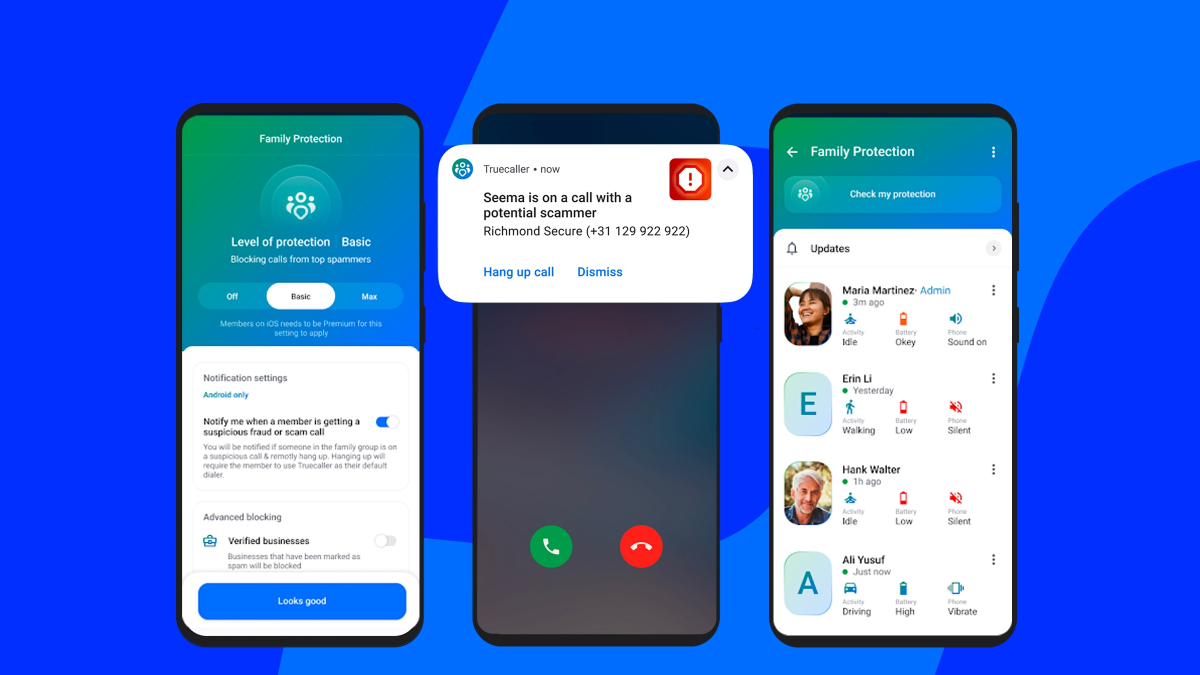
Truecaller is expanding its fight against phone scams with a new “family group” feature designed to help protect loved ones from fraud calls. The caller identification platform, which says it now serves more than 450 million users globally, is rolling the tool out worldwide after an initial launch in December across a small set of markets including Sweden, Chile, Malaysia, and Kenya. The global expansion also includes India, Truecaller’s largest market and one of the hardest-hit regions for scam calls.
The idea is simple: in many families, one person is more tech-savvy than everyone else. With Truecaller’s new setup, that person can become the admin of a small family or friends group (up to five members) and help monitor scam risks for everyone in the group. Importantly, the feature is free to use, and group members don’t need to be on a paid Truecaller plan to join.
Once a group is created and members opt in, the admin can receive alerts when other members get calls flagged as potentially fraudulent. If something looks suspicious, the admin can take action right away by remotely ending the call on the member’s behalf—an especially useful option when the person receiving the call may be vulnerable, pressured, or unsure what to do. These fraud-call alerts work for group members using either iOS or Android, but the remote “end call” capability is limited to Android devices.
Truecaller is also adding more “safety and awareness” tools on Android for families who want them. Members can choose to share real-time indicators such as whether they’re walking or driving, their phone’s battery level, and whether the device is muted. Truecaller positions this as a practical way for caregivers and family admins to avoid calling at unsafe moments and to better support elderly relatives who may not always notice incoming alerts or may be more exposed to social engineering attempts.
Beyond alerts, the admin can tighten protections by blocking specific numbers and even restricting calls from certain international calling codes. A shared blocklist can also be distributed across the group, helping everyone benefit from the same fraud defenses without each person needing to configure settings individually. At the same time, Truecaller says it has put boundaries in place: the admin cannot view non-spam call history or SMS history for other group members, keeping the feature focused on safety rather than surveillance.
The family-protection push comes as Truecaller continues to invest in AI-driven call tools. In India, the company previously introduced an AI voicemail assistant that can answer when a user is unavailable and provide a transcript summary. Now, Truecaller is exploring similar AI capabilities for family protection, including smarter alerts that help an admin understand what type of scam a loved one may be facing.
The company is also looking at automated call screening that could disconnect calls when certain scam-related phrases are detected. One example being studied is “digital arrest,” a tactic where scammers impersonate law enforcement to intimidate victims into sharing personal information or sending money.
This expansion arrives at a time when phone scams are escalating, particularly in India. Truecaller says it identified more than 7.7 billion fraud calls last year, underscoring the scale of the problem and why consumers are looking for stronger call-blocking and spam-identification tools.
At the same time, Truecaller is navigating business and competitive pressures. The company’s stock has fallen sharply over the past year, and it has reported a significant year-over-year drop in operating profitability, alongside declining advertising revenue. In India, another challenge is the gradual introduction of a carrier-based Caller Name Presentation system (CNAP), which displays a caller’s registered name through telecom providers. Truecaller’s stance is that name display alone won’t meaningfully stop spam and scam calls, and it argues that its approach adds more context through community reporting and broader fraud detection.
Even with those headwinds, the company’s latest move makes its priorities clear: if scam calls are increasingly targeting households, Truecaller wants to turn individual call protection into a shared safety net—one where the most informed person in the family can help shield everyone else, before a suspicious call turns into a costly mistake.