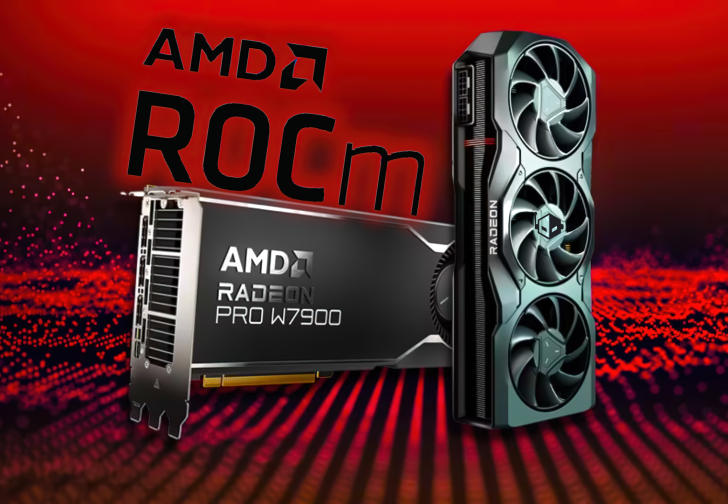
AMD is making waves in the tech world with a bold move to empower AI development on consumer-ready Radeon GPUs. With the latest ROCm update, the company is setting the stage for enthusiasts and developers alike to explore machine learning (ML) capabilities on their RDNA 3 architectures. This groundbreaking support means avid tech enthusiasts can now delve into AI tasks using consumer-grade graphics processors, bridging a gap that was previously dominated by data center hardware.
Traditionally, AI and ML workloads were seen as the domain of high-end, enterprise-grade solutions designed for monumental tasks in data centers. However, AMD is challenging this notion, supplying consumer GPUs with the capability to handle these heavy computations. This transition is part of a broader industry trend, recognizing the potential for everyday systems to engage in AI computation without breaking the bank. Innovative systems like TinyBox capitalize on AMD’s RDNA GPUs for efficient and cost-effective performance. Yet, software support has been a stumbling block—until now.
With the introduction of ROCm 6.1.3 on Linux, AMD extends the power of AI and ML to their Radeon RX 7000 series and workstation Radeon W7000 series GPUs. Developers and researchers operating within popular AI frameworks like PyTorch, ONNX Runtime, and TensorFlow can now harness the robust performance of these advanced GPUs. The RDNA 3 architecture not only promises a cost-efficient solution but also offers a self-contained system that addresses the limitations of cloud-based services.
AMD has strategically highlighted the benefits:
– These GPUs deliver more than twice the AI performance per Compute Unit compared to previous generations.
– With up to 192 AI accelerators and substantial GPU memory capacities of 24GB to 48GB, these GPUs are designed for handling large ML models.
This initiative responds to the need for accessible, high-powered solutions in the realm of AI, as ML engineers and enthusiasts seek more affordable ways to develop and train AI applications.
The latest ROCm update is crucial for AMD’s software ecosystem, strengthening its position by integrating sought-after AI libraries. This development heralds a step toward fostering an “edge AI environment,” even as potential performance constraints remain a subject of interest. As the tech community keenly awaits benchmarking results, AMD’s move signifies a pivotal moment in making AI tech more accessible, promising to engage a wider audience in the exploration of machine learning possibilities on consumer PCs.