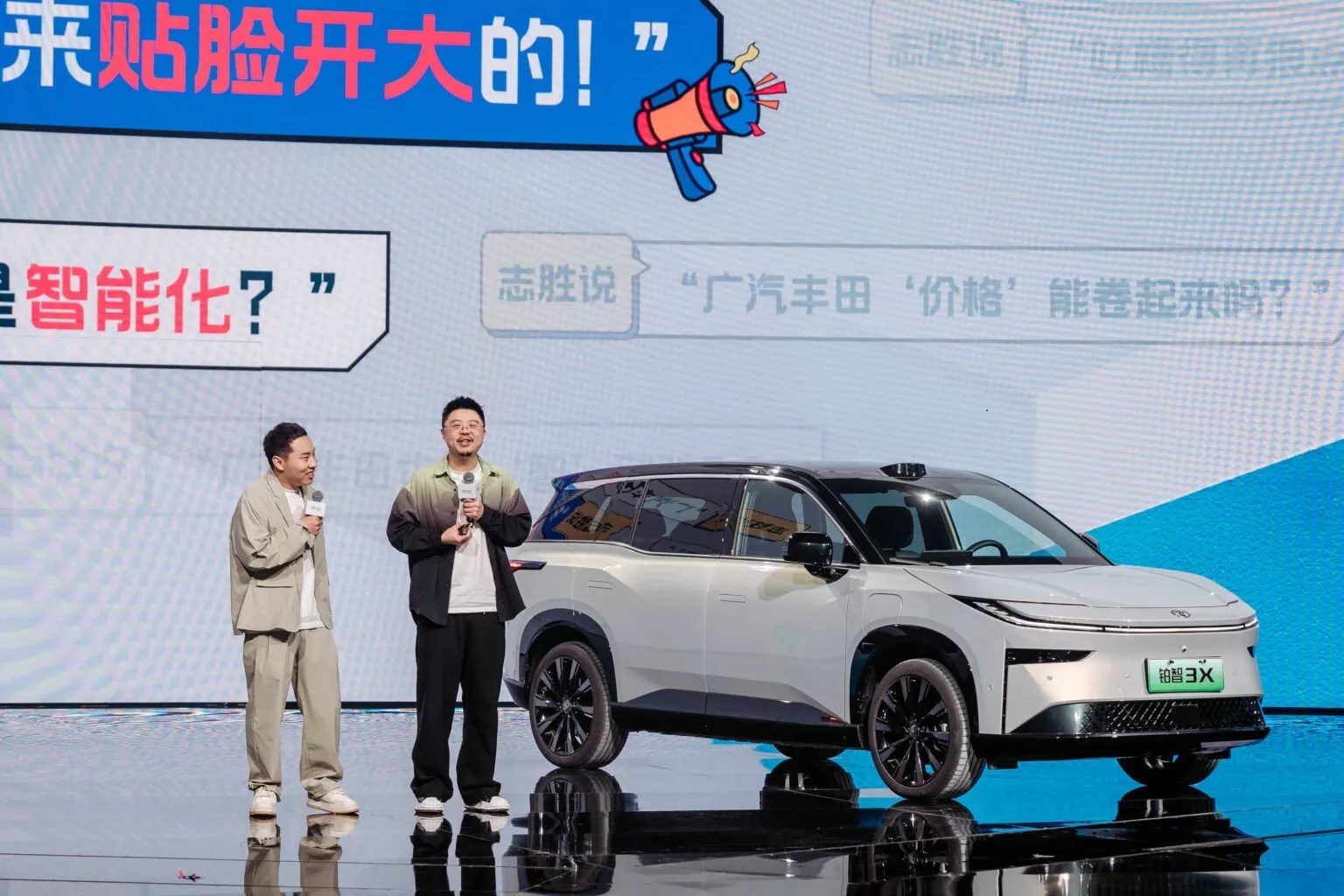
Toyota has made a splash in the Chinese electric vehicle market with the launch of its new $15,000 electric SUV, the bZ3X. This new model ignited a fervor among consumers, leading to an overwhelming demand that saw 10,000 eager customers flood the ordering system, causing temporary technical disruptions.
Despite its stronghold as a leading car manufacturer, Toyota has traditionally lagged in the electrification race. However, the introduction of the bZ3X seems to mark a pivotal turn in their strategy, offering a highly desirable electric vehicle at an accessible price point. This SUV, officially named the Bozhi 3X, comes from a collaborative effort with the Guangzhou Automobile Group (GAC), with pre-orders opening late last year.
Toyota presents the bZ3X in two variants: the ‘non-smart’ model and the ‘smart’ model. The basic ‘non-smart’ version, available in five trims, starts at an attractive 109,800 yuan (approximately $15,000). The more advanced ‘smart’ variant begins at 149,800 yuan (around $20,500), catering to those seeking additional features.
The top-tier ‘smart’ version impresses with a 67.92 kWh LFP battery, offering a substantial driving range of 379 miles based on the CLTC standard. Meanwhile, the entry-level model delivers up to 267 miles on a 50.03 kWh battery.
What makes the Chinese bZ3X even more appealing is its array of high-tech features, despite the budget-friendly price. It boasts a 14.6-inch infotainment system paired with an 8.8-inch driver display, both equipped with voice recognition. The interior design includes a stylish two-spoke multi-function steering wheel, empowered by an advanced NVIDIA Drive AGX Orin X processor, and a suite of 25 driver assistance systems (ADAS).
With this strategic release, Toyota is not only making waves in the electric vehicle sector but also setting a new standard for affordable innovation in the global automotive landscape. Their forward-thinking approach in collaboration with GAC could very well propel them to greater prominence in the burgeoning EV market, as they respond dynamically to consumer appetite for sustainable and technologically advanced vehicles.