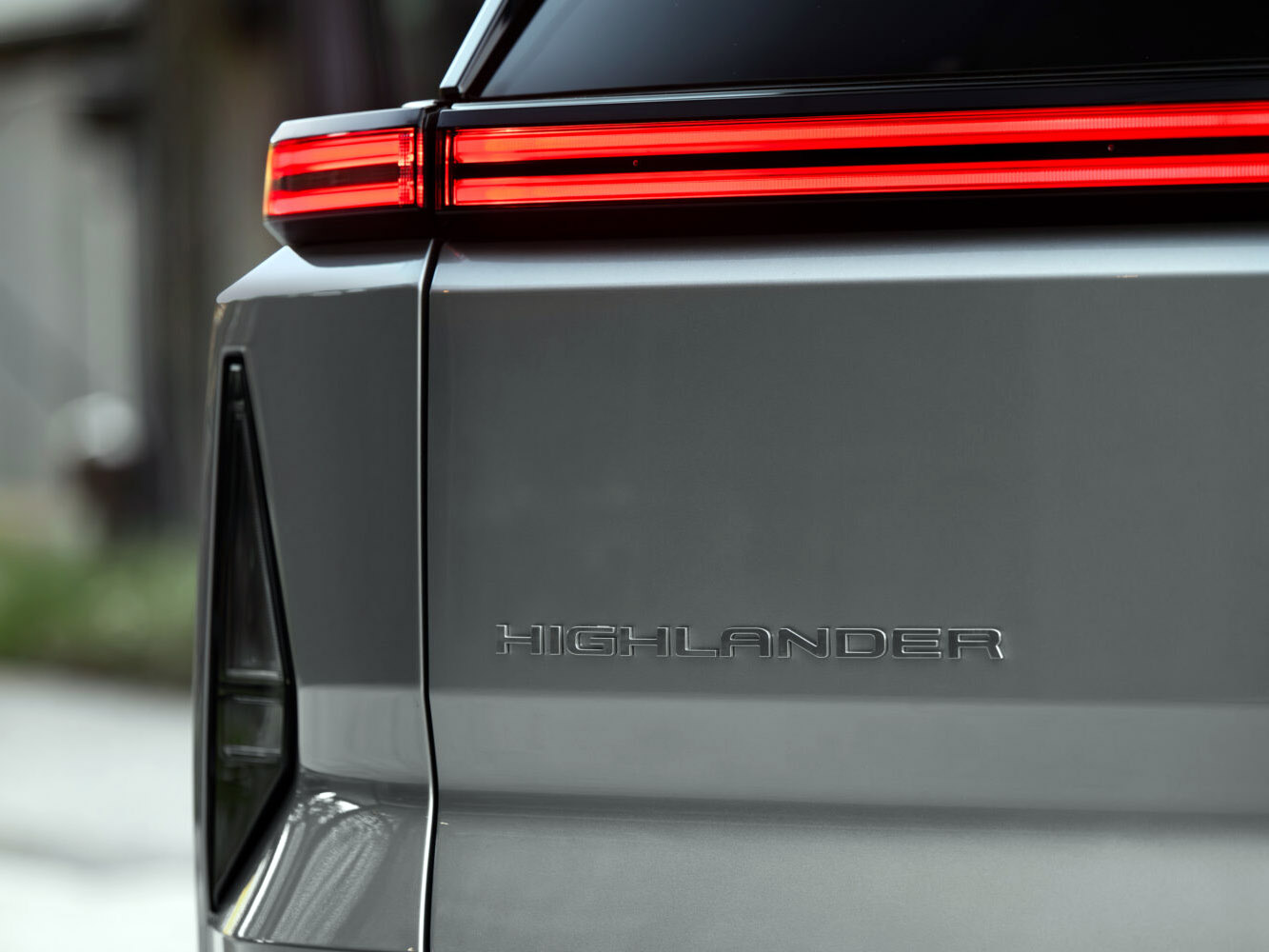
Toyota’s cautious, wait-and-see stance on full electrification may have paid off while hybrids surged in popularity, but the brand isn’t slowing down. It’s now pushing deeper into the EV market with recognizable nameplates, starting with a major one for families: the 2027 Toyota Highlander, reimagined as the company’s first three-row all-electric SUV.
For buyers who want the space of a family hauler without the sticker shock often associated with larger electric SUVs, Toyota is positioning the electric 2027 Highlander as a value-focused option. In the U.S., it will be offered with 77 kWh and 96 kWh battery choices—sized to deliver everyday practicality while helping Toyota keep the starting price under $50,000. That price target could make the electric Highlander one of the more accessible three-row EVs for households shopping in the mainstream segment.
The 2027 Highlander EV also arrives at the right time. The Highlander name has long been a staple in the midsize SUV category, and it was due for a modern reset. Toyota pairs a contemporary redesign with the safety and comfort features Highlander owners expect, while adding EV-era upgrades that make the vehicle more useful beyond commuting. One of the standout features is vehicle-to-load (V2L) capability, which allows the SUV to supply power to external devices and even household appliances—especially helpful during outages, camping trips, or emergency situations.
Range and charging convenience are central to EV shopping, and Toyota is leaning into both. With the larger 96 kWh battery, the 2027 Toyota Highlander can travel up to 320 miles on a charge. It also includes a NACS charging port, giving drivers access to Tesla Superchargers across the U.S. That combination—family-friendly space, long range, and broad fast-charging availability—targets one of the biggest concerns for shoppers considering an electric SUV for road trips and daily carpool duty.
Inside, Toyota keeps the practicality that made the Highlander a household favorite. The third row gets USB-C ports for charging, and when the rear seats are folded down, the cargo area opens up to 45 cubic feet of storage space. It’s the kind of flexibility families rely on, whether hauling groceries, sports gear, luggage, or home improvement supplies.
Safety tech is equally central to the new model. The electric Highlander includes Toyota Safety Sense 4.0, bundling a wide set of driver assistance and collision-avoidance features such as pedestrian detection, dynamic cruise control, lane tracing assist, road sign recognition, and proactive driving assistance. Toyota’s approach also emphasizes value: these safety and driver-assist systems are included, rather than locked behind paid subscriptions.
With the 2027 Highlander EV, Toyota is signaling it’s ready to compete more aggressively in the electric SUV race—without abandoning the practical priorities that made the Highlander so popular in the first place: price, space, safety, and everyday usability.