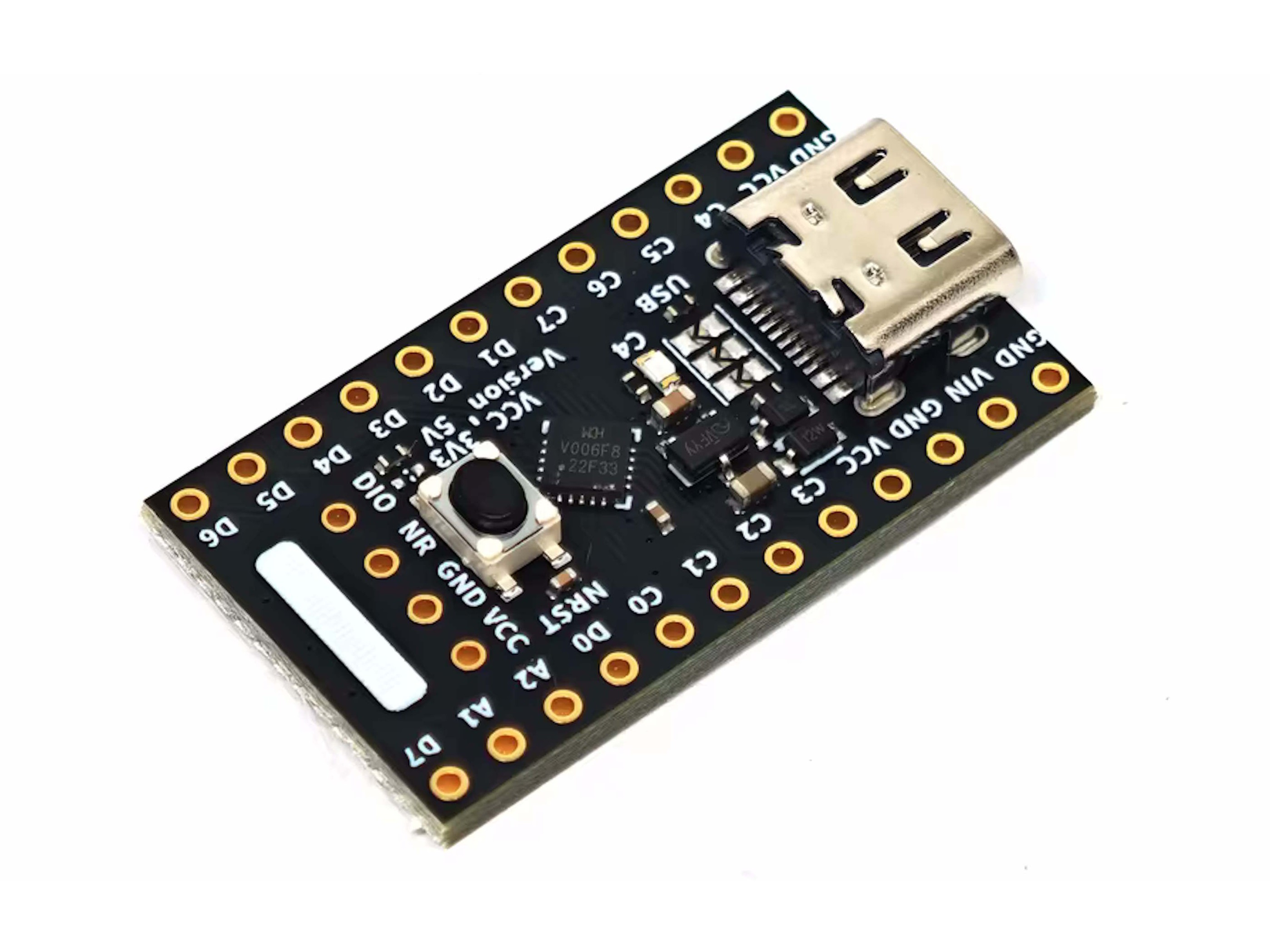
WeAct has introduced a tiny new development board designed for makers who want an inexpensive, straightforward way to connect sensors and control small electronic components. Called the WeAct CH32V006F8U6, this compact RISC-V board is aimed squarely at DIY and Arduino-style projects—think simple automation, sensor-driven lighting, or basic actuator control—rather than heavy computing tasks like running a desktop operating system.
At the heart of the board is a single RISC-V CPU core clocked at up to 48MHz. That level of performance is ideal for common microcontroller workloads such as reading sensor data, reacting to button inputs, driving LEDs, triggering relays, or controlling small motors with the right external components.
One of the big selling points is connectivity for add-ons. The board includes two 12-pin headers, giving you a total of 24 GPIO connections to work with. That’s a lot of flexibility for a board this size and price, especially for projects that need multiple inputs and outputs at the same time—such as reading several sensors while controlling multiple LEDs or other devices.
For power and programming, the WeAct CH32V006F8U6 uses a USB Type-C port. You can program the board via USB-C and power it the same way, which helps keep a project clean and simple. Depending on the version you choose, the board can be supplied with either 5V or 3.3V. There’s also a dedicated debug header for development and troubleshooting.
On the software side, an SDK is available for programming. However, anyone hoping for a plug-and-play experience with the Arduino IDE should be aware that Arduino IDE support is not straightforward and may not be available in a typical beginner-friendly way. This board is likely a better fit for users who don’t mind working with vendor tools or more hands-on embedded development workflows.
Price is where this board really stands out. It’s listed for around $2 on AliExpress, making it an appealing option for experimenting, learning RISC-V microcontrollers, or building projects where you might want several boards without spending much. For those comparing options, common alternatives include traditional Arduino boards and ESP32-based development boards, depending on whether you need built-in wireless connectivity or a broader ecosystem.
In short, the WeAct CH32V006F8U6 targets budget-friendly embedded projects where compact size, a USB-C setup, and plenty of GPIO pins matter most—ideal for hobbyists who want a simple RISC-V microcontroller board for everyday sensor-and-control builds.