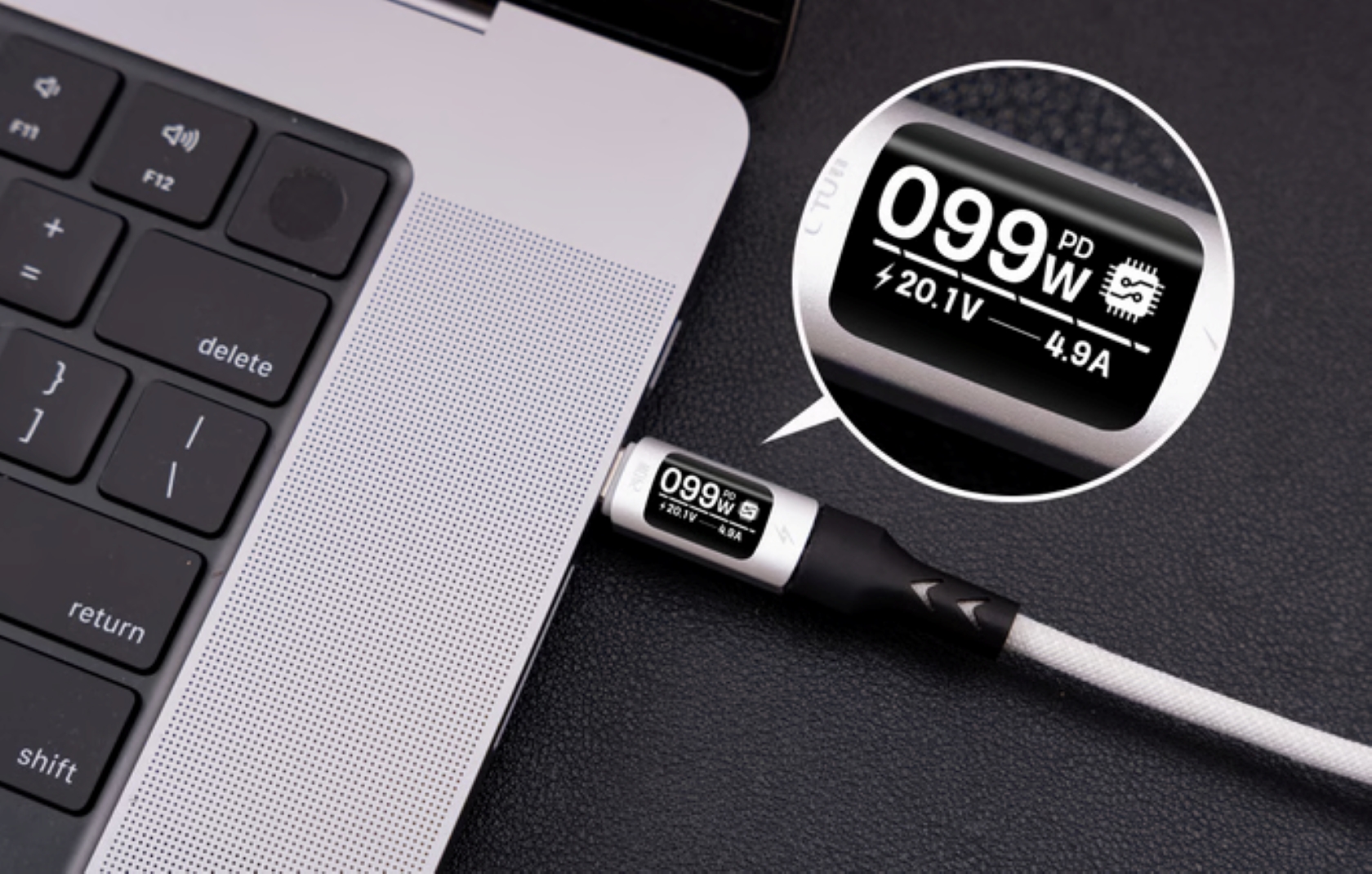
A new USB-C charging cable with a built-in display is aiming to make fast charging more transparent, giving users a real-time look at how much power their devices are actually receiving.
Buying a USB cable used to be simple. If the connector fit, it worked. Today, things are very different. Modern USB-C cables can vary dramatically in charging speed, data transfer performance, video output support, and overall compatibility. A cable that looks ordinary on the outside may be limited to slow charging, while another can power a laptop, transfer huge files, and handle high-resolution display output.
That is where this new smart charging cable stands out. Instead of relying on guesswork, it includes an integrated display that shows live charging information directly on the cable.
The built-in screen is designed to display key details such as charging power, voltage, and current during use. For anyone who wants to confirm whether a smartphone, tablet, handheld device, or laptop is charging at full speed, this feature could be genuinely useful. It can also help identify whether a charger, cable, or device is limiting performance.
The cable supports USB Power Delivery 3.1 fast charging with a maximum output of 240W. That makes it suitable for a wide range of modern devices, including high-powered laptops that require more than the typical phone charger can provide. With 240W support, the cable is built for today’s premium electronics and should remain useful as more devices adopt higher charging limits.
Beyond charging, the cable also claims support for USB4 data transfer speeds of up to 80Gbps. That is an extremely high bandwidth rating and places it among the more future-ready USB-C cables currently being promoted. In practical terms, most everyday users may not fully take advantage of that level of speed yet, since many current consumer devices do not consistently require or support such high transfer rates. Still, for users who frequently move large files, connect fast external drives, or want a cable that will stay relevant for years, the specification is appealing.
The creators also list support for video output up to 16K at 60Hz. While that sounds impressive, it is more of a forward-looking feature than something most people will use anytime soon. Consumer 16K displays are not common, and hardware capable of making practical use of that resolution remains far outside the mainstream market. Even so, the inclusion helps position the cable as a premium, future-proof accessory.
At the moment, the cable is being offered through a crowdfunding campaign. The early backer price is listed at around $27, with shipping costing about $5. Deliveries are expected to begin in November if the campaign proceeds as planned.
However, it is important to remember that backing a crowdfunding project is not the same as buying a finished product from a retail store. There is always some level of risk involved, including possible delays, changes to the final product, or in the worst case, loss of the pledged amount. The team behind the project has shown a working prototype, which is encouraging, but potential buyers should still approach it with the usual caution that applies to any crowdfunded gadget.
For those who do not want to wait or take the risk, there are already USB-C cables with small displays available from established accessory brands. Some of these alternatives also support up to 240W charging and are often priced lower, usually around $15 to $20 depending on length. The trade-off is that many of those cheaper display cables are limited to basic USB 2.0 data speeds, such as 480Mbps, and may not support video output.
That makes this new cable interesting for users who want one cable that combines high-power charging, fast data transfer, video output, and real-time charging information. The built-in display is not just a flashy extra; it can help users understand whether their device is charging efficiently and whether their charger is delivering the expected output.
As USB-C continues to become the standard for phones, tablets, laptops, monitors, gaming handhelds, and accessories, smarter cables like this could become more common. For now, this model is aimed at tech enthusiasts, power users, and anyone who wants more visibility into their charging setup.