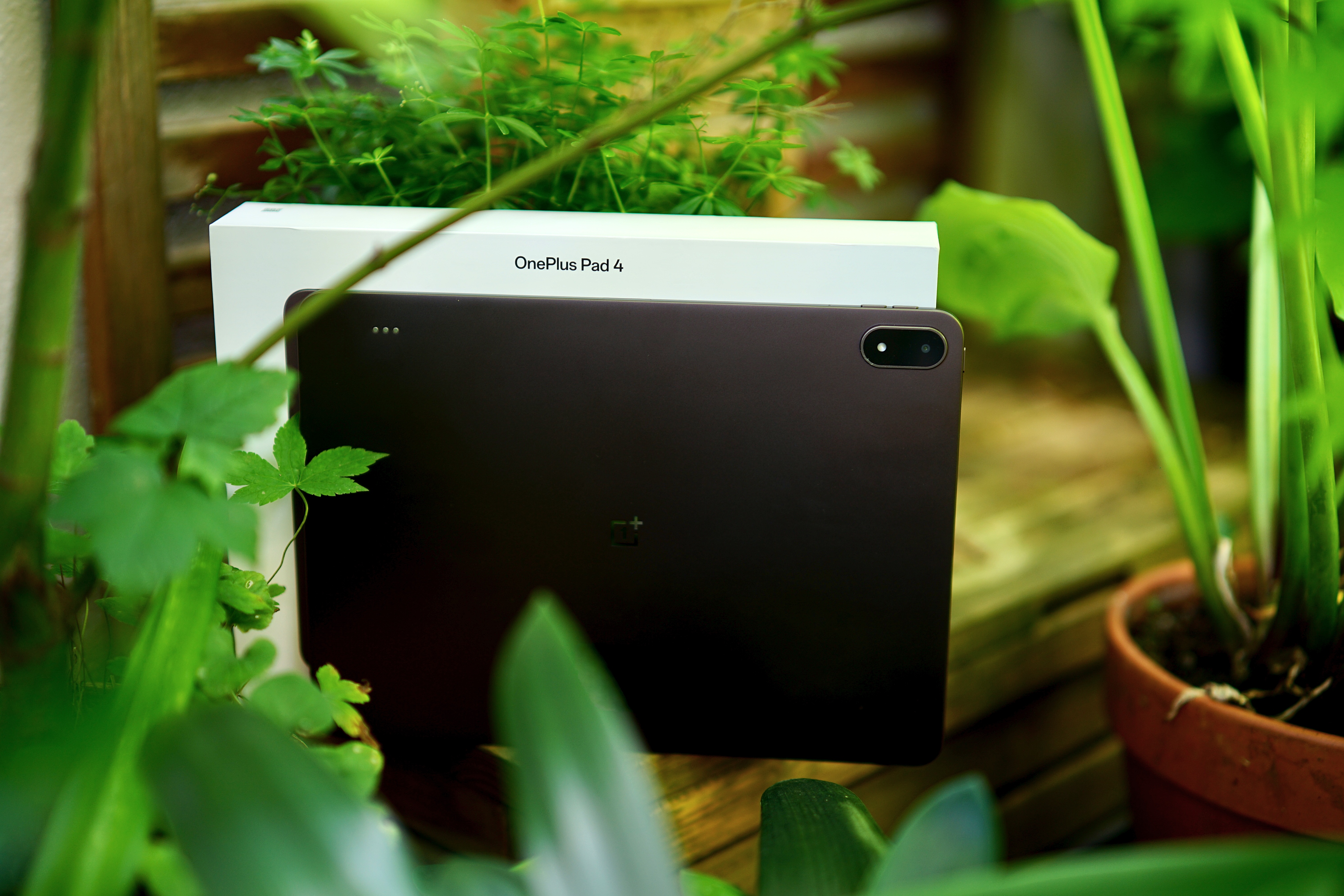
OnePlus Pad 4 skips key features that many tablet buyers still expect
The OnePlus Pad 4 may look like a powerful large-screen tablet, but two missing features could make it less appealing for users who care about security and mobile freedom. Despite its premium-sized 13.2-inch display and travel-friendly design, the tablet does not include a fingerprint sensor, LTE support, or 5G connectivity.
That means users must unlock the device using either camera-based face recognition or a PIN. For internet access away from home or the office, the tablet depends entirely on Wi-Fi or a separate smartphone hotspot.
For casual browsing, streaming, and home use, this may not be a deal-breaker. But for commuters, business users, students, and frequent travelers, these omissions could make everyday use less convenient and potentially less secure.
Face unlock is convenient, but not the safest option
The OnePlus Pad 4 uses the front-facing camera for facial recognition. While this can be quick in good lighting, it does not offer the same level of protection as a fingerprint sensor or advanced infrared-based face authentication.
In darker environments, camera-based face unlock can become slower or fail altogether. It may also be easier to fool than more secure biometric systems, which is an important concern for anyone storing sensitive files, work documents, payment apps, or banking information on the tablet.
A PIN is available as a backup, but it is not always ideal. It takes longer to enter, can be seen by people nearby, and is generally less convenient than placing a finger on a sensor. For a modern tablet in this category, the absence of a fingerprint scanner feels like a noticeable compromise.
Software update uncertainty adds another concern
Security is not only about how a device is unlocked. Long-term software support also matters, especially for tablets used for banking, work, communication, and cloud storage.
OnePlus only refers to a general three-year update policy for tablets from the launch date, but there does not appear to be a stronger device-specific update promise for the OnePlus Pad 4. Buyers who plan to keep the tablet for several years should consider this carefully.
Without clear long-term support, users may eventually face delayed security patches or reduced confidence in using the tablet for sensitive tasks.
No LTE or 5G makes mobile use harder
Another major limitation is the lack of mobile network support. The OnePlus Pad 4 does not offer a SIM card slot, LTE, or 5G. Users must rely on Wi-Fi networks or connect through a phone’s mobile hotspot.
This can be inconvenient in daily life. A commuter trying to work on a train, a student moving between campus buildings, or a field worker traveling between job sites may not always have stable Wi-Fi access. Using a smartphone hotspot can drain the phone’s battery quickly and may require a larger mobile data plan.
The lack of built-in mobile connectivity could also push users toward public Wi-Fi networks, which are not always secure. For people handling private messages, business files, or financial accounts, this adds another layer of risk.
Other tablets in a similar size and price range offer more flexibility by including mobile connectivity options. That makes the OnePlus Pad 4 feel less versatile for buyers who need internet access wherever they go.
The large body had room for more hardware
The OnePlus Pad 4 is not a compact device. With a 13.2-inch screen and a weight of around 675 grams, it has a large enough chassis that a fingerprint sensor, modem, and SIM slot would not seem unrealistic.
Because of that, the missing features appear to be more about cost-cutting and product positioning than physical limitations. For a tablet designed to compete in the large-screen Android tablet market, these choices may disappoint users expecting a more complete package.
A good tablet, but not for everyone
The OnePlus Pad 4 still has appeal for users who mainly want a large display for entertainment, reading, drawing, browsing, or working over Wi-Fi. However, the lack of a fingerprint sensor and mobile network support makes it harder to recommend for anyone who needs stronger security or reliable connectivity on the move.
For home users, these compromises may be acceptable. For professionals, travelers, and security-conscious buyers, they are much harder to ignore.
The OnePlus Pad 4 shows that display size and performance are only part of the tablet experience. In 2026, secure unlocking and always-available connectivity are no longer luxury features. For many users, they are essentials.