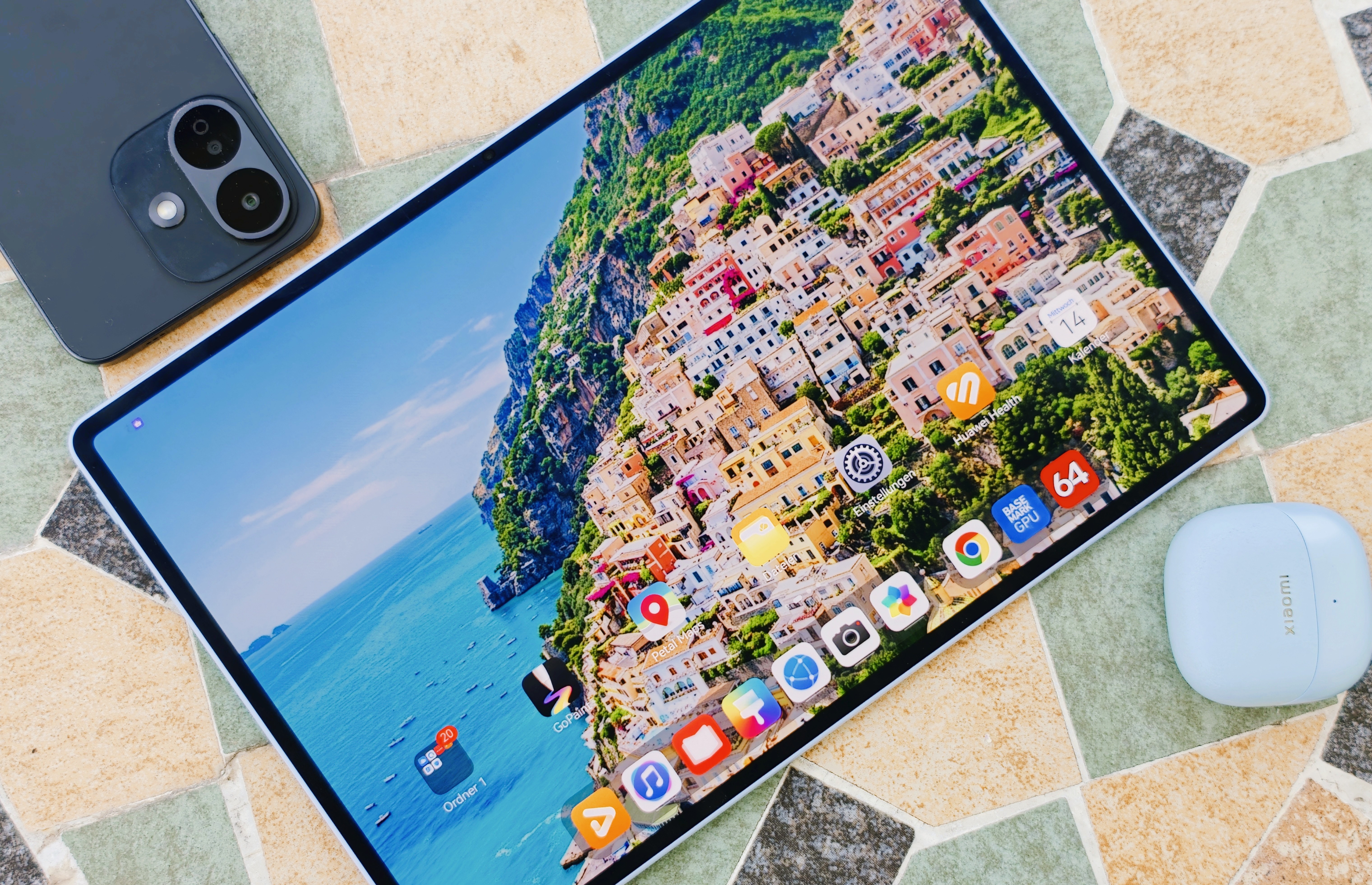
Huawei MatePad Air 2026 Takes on the iPad Air 2026 With a Brighter, Smoother OLED Display
The Huawei MatePad Air 2026 appears to have one of the biggest display advantages in the tablet market, especially when compared with Apple’s iPad Air 2026. While both devices target users who want a slim, powerful tablet for work, entertainment, studying, and creative tasks, Huawei’s latest model stands out thanks to its OLED screen and PaperMatte anti-reflective finish.
The biggest difference starts with the display technology. The MatePad Air 2026 uses an OLED panel, giving it much deeper blacks and stronger contrast than the LCD screen found on the iPad Air 2026. This is especially important for watching movies, editing photos, viewing HDR content, or simply enjoying a more premium visual experience. Dark scenes look richer, colors feel more vibrant, and the overall image has more depth.
Huawei’s PaperMatte surface also gives the MatePad Air a practical advantage. The anti-reflective coating helps reduce glare and distracting reflections, making the tablet easier to use in bright rooms, near windows, or while traveling. For users who often read, sketch, take notes, or work outdoors, this kind of screen finish can make a noticeable difference in daily use.
Earlier matte-style tablet displays sometimes struggled with black levels and contrast, but the OLED panel in the MatePad Air 2026 helps solve that problem. Because OLED pixels can switch off individually, black areas appear far more convincing than on traditional LCD screens. This gives Huawei’s tablet a strong balance between a paper-like viewing surface and the deep contrast expected from a high-end OLED display.
Brightness is another area where the MatePad Air 2026 pulls ahead. Testing shows the display can reach more than 1,200 cd/m², making it significantly brighter than the iPad Air 11 with Apple’s M4 chip. That extra brightness is not just a number on a spec sheet. It improves visibility in challenging lighting conditions and makes HDR videos look more impressive, with brighter highlights, stronger contrast, and more eye-catching color reproduction.
The refresh rate may be an even more noticeable difference for many users. Apple continues to limit the iPad Air 11 to 60 Hz, while Huawei offers up to 144 Hz on the MatePad Air 2026. This means scrolling through websites, switching between apps, writing with a stylus, and watching animations can feel much smoother on Huawei’s tablet.
Anyone who already uses a modern smartphone with a high-refresh-rate display will likely notice the difference right away. A 60 Hz screen can still be usable, but it no longer feels as fluid as 120 Hz or 144 Hz panels, especially on a larger tablet display. For note-taking, drawing, gaming, and general navigation, the MatePad Air’s faster refresh rate gives it a more responsive and polished feel.
Overall, the Huawei MatePad Air 2026 offers a display experience that clearly challenges the iPad Air 2026. With its OLED panel, anti-reflective PaperMatte coating, higher peak brightness, stronger HDR performance, and 144 Hz refresh rate, Huawei’s tablet has a major visual advantage. For buyers who care most about screen quality, smooth performance, and comfortable viewing in different environments, the MatePad Air 2026 looks like a very strong alternative to Apple’s iPad Air.