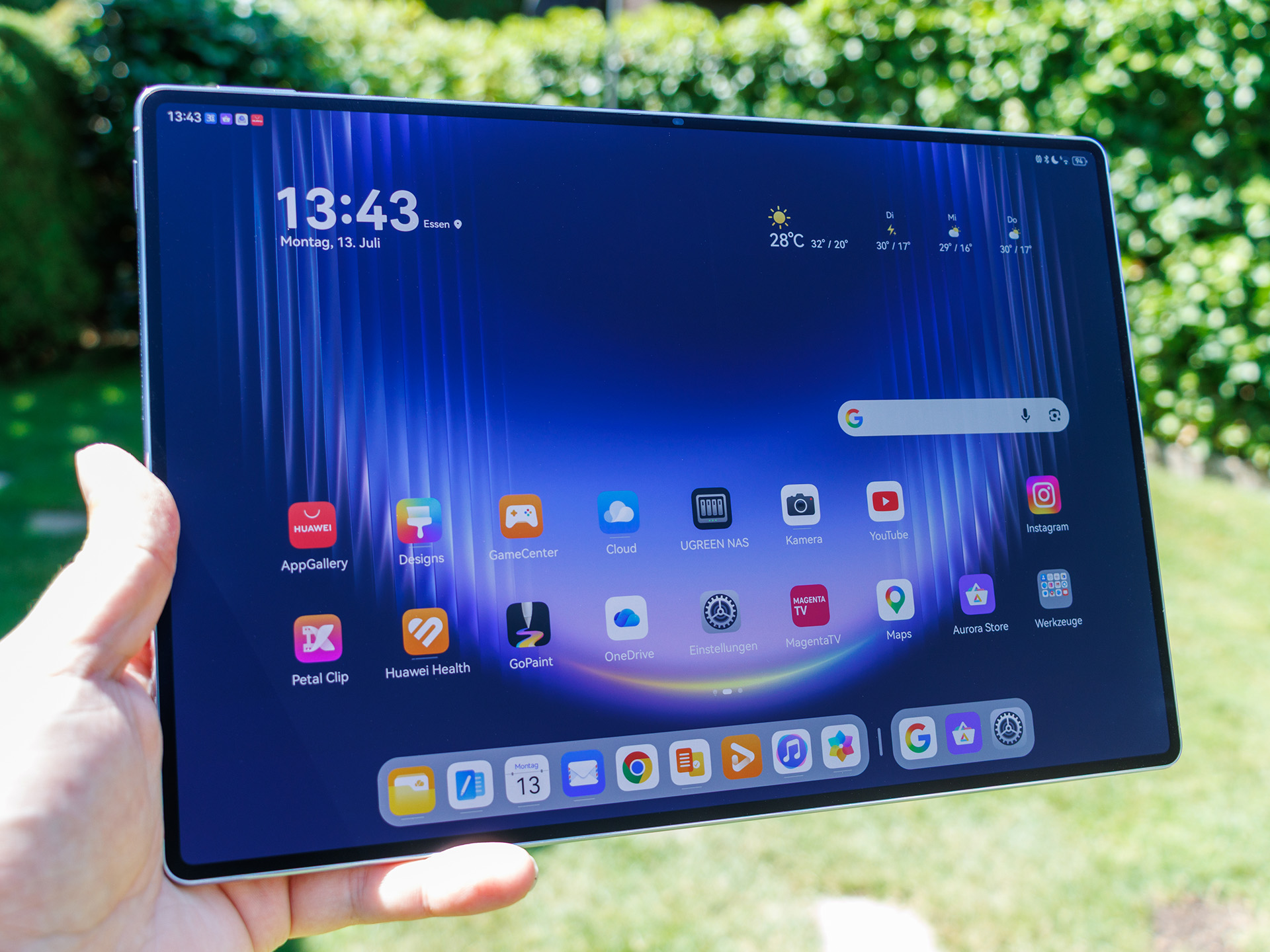
Huawei PaperMatte Display on the MatePad Pro Max Makes Outdoor Tablet Use Much Easier
Tablet displays are expected to do a lot. They need to be bright, colorful, sharp, and smooth, but they also need to stay readable when you step outside or sit near a window. That is where many premium tablets struggle. Glossy glass panels can make images look vivid and crisp, but they often become difficult to use when reflections take over the screen.
Huawei’s PaperMatte technology is designed to solve that problem, and on the MatePad Pro Max, it makes a clear difference. Instead of relying on a highly reflective glass surface, Huawei places a matte layer directly above the OLED panel. The result is a display that significantly reduces glare and unwanted reflections, especially in bright environments.
This matters most when using the tablet outdoors. A standard glossy screen can quickly turn into a mirror under sunlight, making videos, documents, web pages, and apps harder to see. The Huawei MatePad Pro Max with PaperMatte remains much easier to read in those same conditions. It does not simply improve comfort; it makes the tablet far more practical for real-world mobile use.
The impressive part is that Huawei has not removed the key advantages of a modern OLED display. The MatePad Pro Max still offers rich colors, deep contrast, and a high refresh rate of up to 144 Hz. Scrolling feels smooth, animations look fluid, and media playback remains visually appealing. Although the color tuning may not be perfectly neutral for users who want the most accurate calibration, the overall display quality is still strong.
PaperMatte also improves the experience for users who write or draw on the tablet. When paired with the optional Huawei M-Pencil Pro, the matte surface gives the stylus a more controlled feel compared to slippery glass. The pen does not glide as freely as it would on a glossy screen, which can make handwriting and sketching feel more natural. For long note-taking sessions, digital art, annotations, or study work, this slightly paper-like texture can be a major advantage.
That said, the technology is not for everyone. A matte coating can slightly reduce the sense of pure brilliance that some users enjoy on glossy OLED screens. If your top priority is maximum visual punch, crystal-clear reflections, and the most polished-looking image indoors, a traditional glossy display may still be more appealing.
For everyday tablet use, however, the benefits of Huawei PaperMatte are hard to ignore. It addresses one of the biggest issues with large-screen mobile devices: visibility in challenging lighting. Whether you are working outside, reading in a bright room, drawing near a window, or watching content while traveling, the MatePad Pro Max remains easier to use than many glossy-screen tablets.
Huawei has also shown the value of this approach with devices such as the Huawei MatePad 11.5 (2025), which has been offered in both glossy and PaperMatte versions. That comparison highlights the main appeal of the matte option: it may not always deliver the most dazzling image, but it often provides the more practical and comfortable viewing experience.
The Huawei MatePad Pro Max stands out because PaperMatte is not just a marketing feature. It solves a common problem that tablet users face every day. By combining reduced reflections, OLED contrast, smooth 144 Hz performance, and a better stylus feel, Huawei has created a display that is especially well suited for productivity, creativity, reading, and outdoor use.