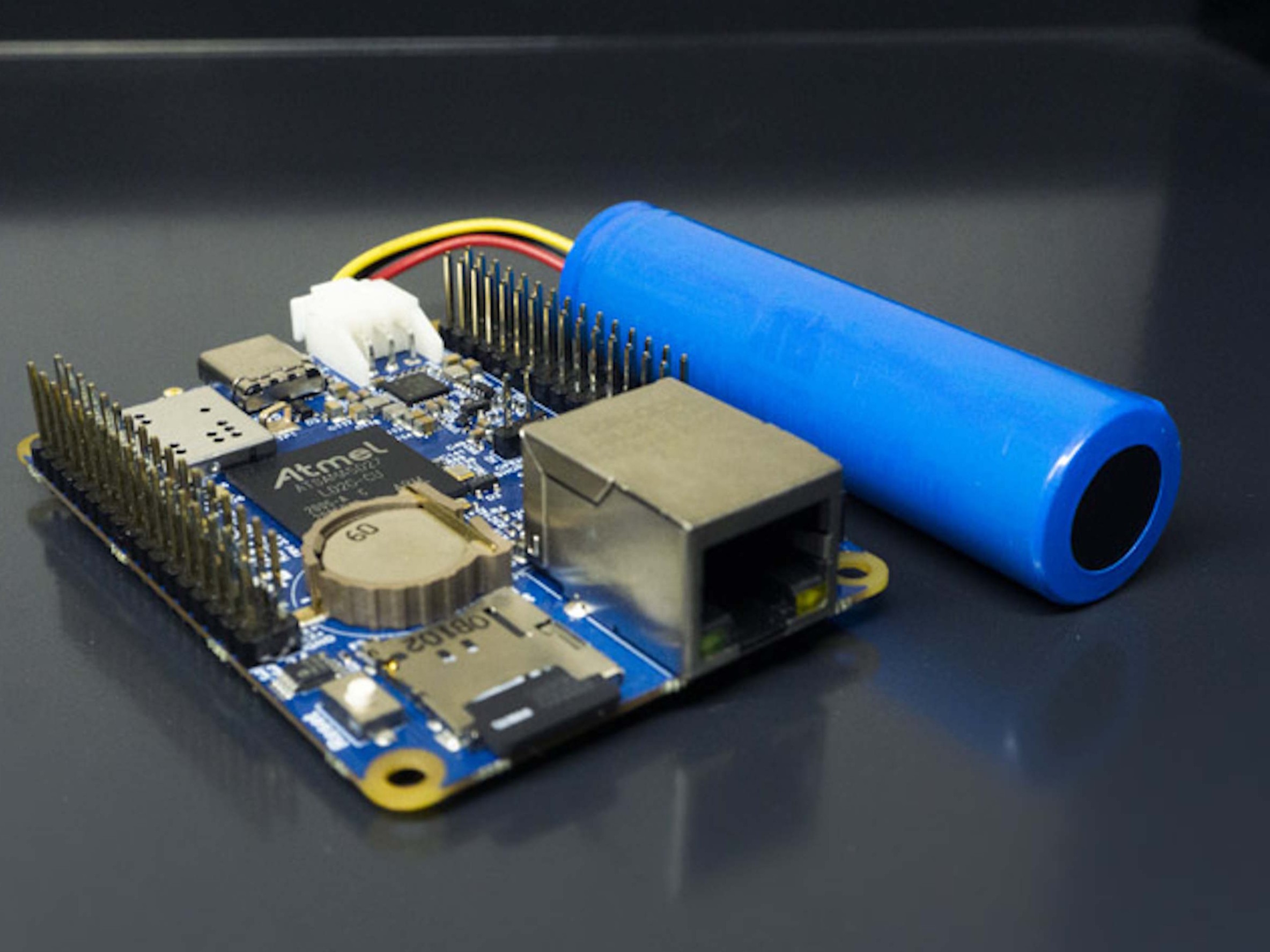
Single-board computers come in all shapes and sizes, and the choices can feel endless if you browse online marketplaces. But every so often, a new model shows up that’s built for a very different kind of user than the typical Raspberry Pi crowd. The Conclusive Engineering KSTR-SAMA5D27 is one of those boards: ultra-compact, purpose-driven, and focused far more on embedded projects than everyday desktop-style tasks.
At only 50 × 70 mm, the KSTR-SAMA5D27 immediately stands out as a space-saving single-board computer designed to fit into tight enclosures and compact devices. That small footprint makes it appealing for industrial control, hobby electronics, sensor hubs, automation projects, and lightweight networking tasks where size and power efficiency matter more than raw performance.
The main difference from popular maker boards is what it doesn’t include. There’s no HDMI output, which makes it a poor choice for a media center or a display-driven mini PC. Even if it had video output, its hardware is geared toward simple, reliable workloads rather than multimedia. The board is powered by a Microchip SAMA5D27 system-on-chip with a single ARM Cortex-A5 core clocked up to 500 MHz, paired with 256 MB of LPDDR2 RAM. That combination is suitable for basic embedded Linux applications, device control, and communication-focused roles, but it’s not intended for heavy multitasking or modern graphical interfaces.
Storage is also kept straightforward. There’s no built-in eMMC or onboard flash storage, so it relies on a memory card for the operating system and files—common for compact SBC designs and embedded deployments where removable storage can be a practical advantage.
Despite its minimal compute specs, the KSTR-SAMA5D27 offers a solid connectivity mix for IoT and embedded use cases. It includes Ethernet up to 100 Mbit/s for reliable wired networking, along with Wi-Fi and Bluetooth 4.1 for wireless connections and peripheral support. A USB Type-C port handles both data and power, simplifying cabling and making it easier to integrate into modern setups.
One of the more interesting features is power flexibility. With integrated power management, the board can be run directly from a rechargeable battery, which opens the door to portable devices, remote sensors, field monitoring, and projects where wall power isn’t guaranteed.
For builders who need expansion and hardware interfacing, the KSTR-SAMA5D27 is designed to connect to the real world. It provides 64 GPIO pins for attaching sensors, switches, relays, motors, and other external components. It also includes a QWIIC interface, helping streamline connections to compatible modules without complex wiring.
Pricing is listed at $119, and anyone considering it should pay attention to shipping terms and conditions before ordering. Overall, the Conclusive Engineering KSTR-SAMA5D27 is best seen as a compact embedded single-board computer for connectivity, control, and battery-capable deployments—not a Raspberry Pi replacement for media, display output, or general-purpose computing.