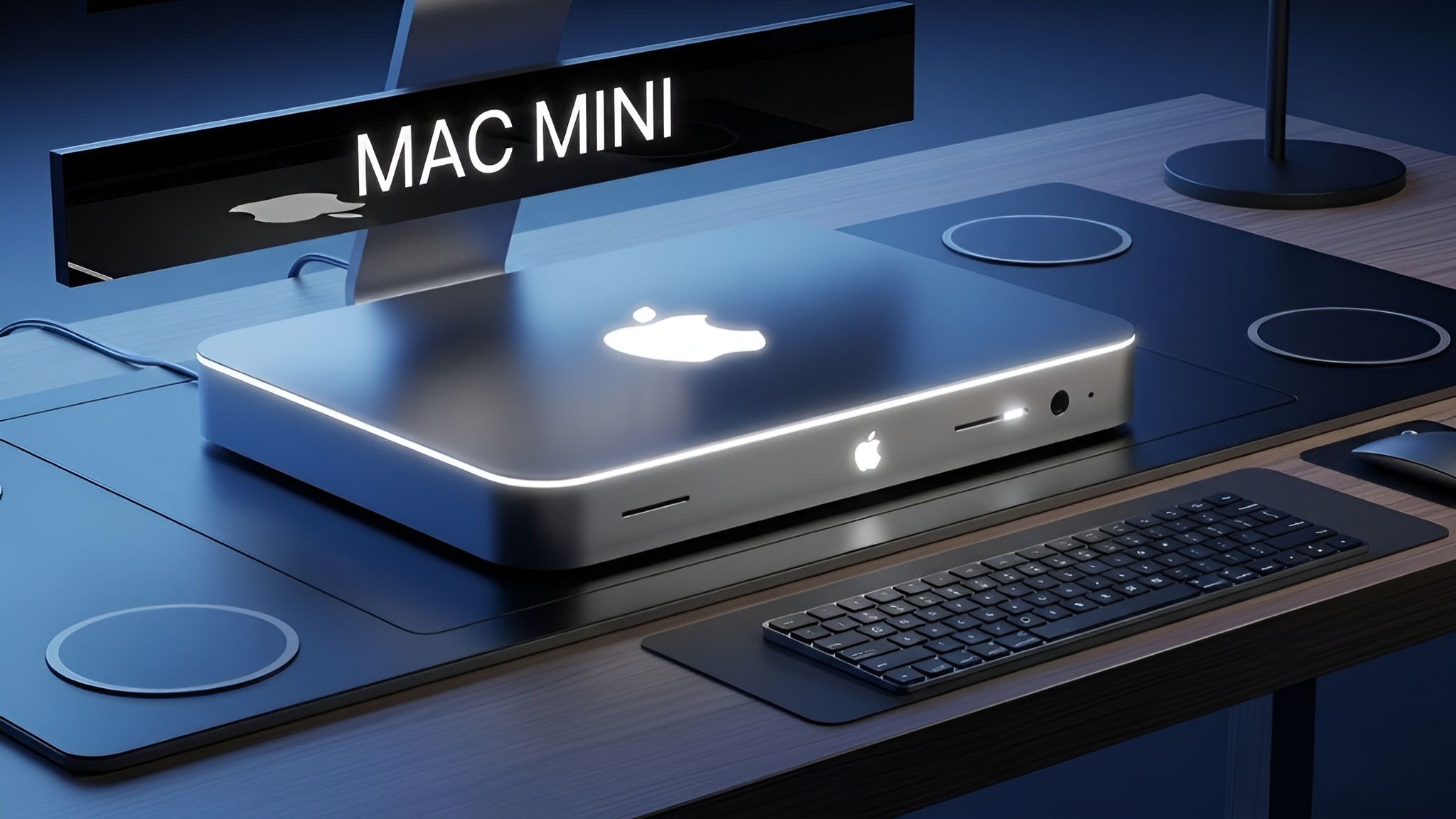
Apple’s next compact powerhouse could be the curveball 2026’s AI infrastructure needs. With data centers squeezed by soaring energy bills and tight memory supply, a cluster of M5 Pro Mac mini systems looks poised to deliver serious AI and ML performance while sipping power—and doing it at a cost that undercuts much of today’s GPU-first hardware.
Early tests have already shown that relatively simple machine learning and inference tasks can be cheaper to run on Apple silicon than on a desktop-class NVIDIA RTX 4090. The economics get even more interesting when you factor in the latest macOS networking trick.
macOS 26.1 introduces a low-latency Thunderbolt 5 mode that bypasses the usual TCP/IP stack for direct, high-speed, PC-to-PC connections. The result is a dramatic drop in latency—from milliseconds to nanoseconds—turning Thunderbolt 5 into the real bottleneck, not the network stack. With up to 80 Gb/s per port, and systems like M3 Ultra configurations providing multiple ports for huge aggregate throughput, chaining Macs together becomes a practical way to scale compute without traditional server networking overhead.
Why Apple silicon changes the math
– Unified memory: Apple silicon’s CPU and GPU share the same memory pool, avoiding expensive data copies and maximizing usable capacity for AI. For example, an M4 Pro Mac mini configuration can offer 64 GB of unified memory versus the RTX 4090’s 24 GB of dedicated VRAM.
– Lower power draw: Inference and many production ML tasks thrive on efficiency. Apple’s chips are designed for high performance per watt, which translates to smaller power budgets and simpler cooling—major cost centers in data centers.
– Cost headwinds in DRAM and HBM: As AI servers hoover up high-bandwidth memory, DRAM prices are rising. Apple’s generous unified memory configurations sidestep some of that pressure, giving deployments more headroom without chasing scarce HBM.
What to expect from the M5 Pro Mac mini
Industry chatter points to a mid-2026 debut with more CPU and GPU cores, more cache, and higher memory bandwidth. A 24‑core GPU is rumored, with each core paired to a dedicated neural accelerator. If that holds, the M5 Pro Mac mini could punch far above its weight on complex AI and ML workloads while keeping power and thermal overheads in check.
Why this matters for AI server farms
– Scale-out simplicity: Low-latency Thunderbolt 5 links let you cluster multiple Macs into a cohesive, low-overhead compute fabric.
– Energy efficiency: Lower power usage means smaller electrical footprints and reduced cooling costs, a huge advantage for facilities already at the edge of their power envelopes.
– Memory-friendly workloads: Unified memory can accommodate larger models and context windows than similarly priced GPU setups limited by VRAM.
Practical takeaways
– For inference-heavy pipelines or less complex training jobs, Apple silicon can already be more cost-efficient than high-end desktop GPUs.
– macOS 26.1 plus Thunderbolt 5 opens a new path to low-latency, high-bandwidth clustering without specialized networking gear.
– If the M5 Pro Mac mini delivers as rumored—more cores, per-core neural accelerators, and greater bandwidth—it could become a go-to building block for modular, power-thrifty AI clusters.
The bottom line: In a world where energy and memory are the new bottlenecks, an M5 Pro Mac mini cluster connected over next-gen Thunderbolt could be a compelling alternative to traditional GPU-heavy racks. Keep an eye on Apple’s 2026 lineup—this small box may have an outsized impact on how AI is deployed at scale.