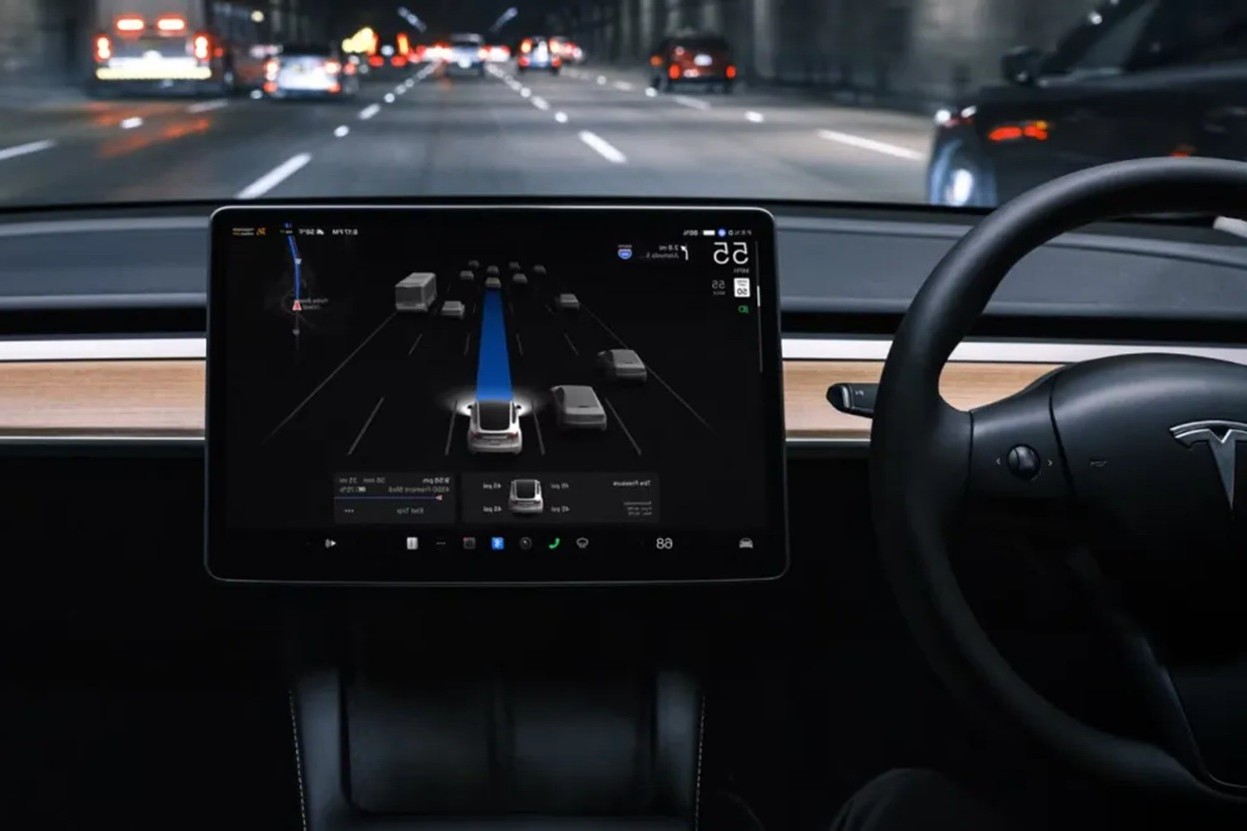
Tesla’s Full Self-Driving (Supervised) has hit the ground running in Australia and New Zealand, surpassing one million kilometers driven just days after launch. The rapid uptake underscores strong interest from local Model 3 and Model Y owners equipped with Tesla’s latest HW4 hardware, which began receiving the feature in September.
Early feedback points to a smooth rollout, with drivers stepping in when needed and no major incidents flagged. For context, the Australian Bureau of Statistics estimates the average driver covers about 33 km per day. Put another way, Tesla owners have collectively logged the equivalent of roughly 80 years of typical driving in just over a week using FSD (Supervised).
Despite the momentum, Tesla emphasizes that Full Self-Driving (Supervised) is not autonomous. The system remains classified as Level 2 driver assistance. It can perform tasks such as lane changes, navigating roundabouts and intersections, and taking highway on- and off-ramps, but it still requires constant driver attention and hands on the wheel. Drivers must be ready to take over at any time.
This early surge in usage is particularly meaningful because it delivers real-world driving data from right-hand-drive markets. Australia and New Zealand present unique road rules, signage, and layouts that differ from left-hand-drive regions. Feeding these scenarios into Tesla’s neural networks can help refine perception and decision-making, accelerating improvements and paving the way for broader global deployment.
Key points at a glance:
– Over 1 million kilometers driven with FSD (Supervised) shortly after launch in Australia and New Zealand
– Available on Model 3 and Model Y vehicles with HW4 hardware
– Classified as Level 2 driver assistance; drivers must remain alert and intervene when necessary
– Handles lane changes, roundabouts, intersections, and highway merges/exits
– Data from right-hand-drive roads will help fine-tune the system for international markets
Why it matters: Scale is everything for driver-assistance software that learns from real-world edge cases. The faster drivers engage with features like FSD (Supervised), the faster the system can encounter varied weather, road markings, traffic patterns, and regional quirks—crucial inputs for continuous software improvement. Australia and New Zealand offer a mix of dense urban streets, winding rural routes, complex roundabouts, and long highway stretches, all of which challenge and train the system in different ways.
Safety remains the central message. Even as the software grows more capable, Tesla frames FSD (Supervised) as an advanced driver-assistance tool rather than hands-free autonomy. The company advises drivers to stay engaged and be prepared to take control—especially at intersections, in unfamiliar environments, or when road conditions change quickly.
Bottom line: Tesla’s swift million-kilometer milestone in Australia and New Zealand signals strong early adoption and delivers valuable right-hand-drive data that should help sharpen the system globally. While the technology continues to evolve, it remains a supervised aid, not a substitute for an attentive human behind the wheel.


