Earlier this year, Tesla surprised electric vehicle enthusiasts with the introduction of the Model 3 Long Range Rear-Wheel Drive (LR RWD) at a starting price of $42,490, touting a robust EPA-rated range of 363 miles. However, recent tests have shown that this innovation has the potential to significantly exceed these expectations.
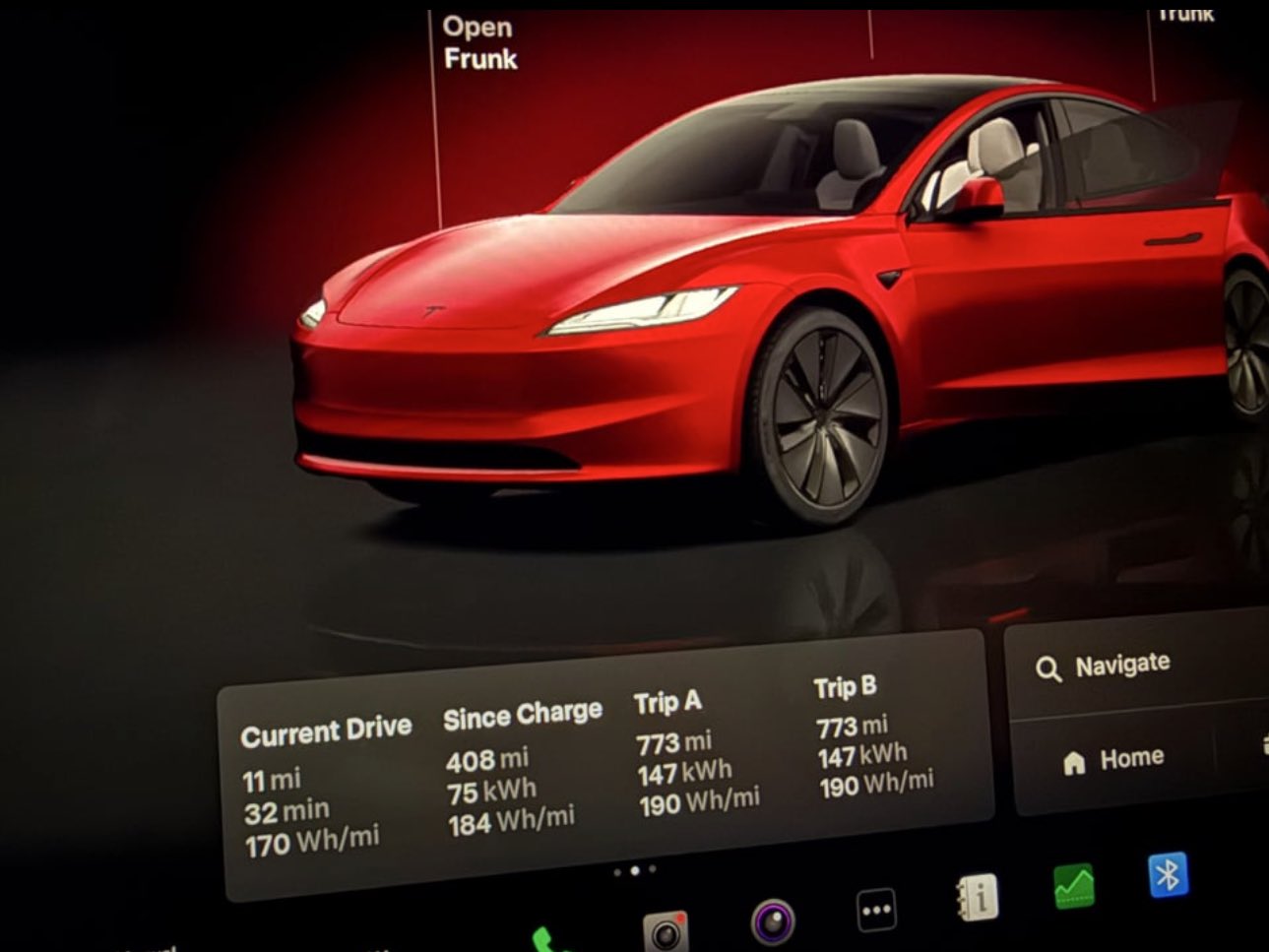
In a riveting real-world test, the Tesla Model 3 LR RWD pushed its limits, achieving an astounding 408 miles on a single charge—far beyond its advertised range. This achievement was highlighted by a user on social media, who captured the car’s impressive 184 Wh/mile efficiency on the dashboard, leaving EV enthusiasts both amazed and intrigued.
The test, which consumed a total of 75 kWh of energy — closely matching the Model 3’s battery capacity — showcases the vehicle’s advanced energy efficiency. The longer journey defies the usual constraints faced by electric vehicles, such as challenges from adverse weather conditions, varying terrains, and fluctuating speeds, often affecting real-world range performance.
When this iteration of the Model 3 first hit the market, it was designed as an affordable option offering extended range. With enhanced powertrain software and efficiency improvements, it stood out in the Model 3 lineup for its balance between cost-effectiveness and long-distance capabilities.
Surpassing the EPA estimation by over 12%, this real-world experiment opens new discussions for those considering an electric vehicle purchase, proving that the Model 3 LR RWD offers substantial range potential. Although every driver’s experience may not replicate this result exactly, it provides promising insights into the capabilities of Tesla’s technology and engineering.
Moreover, Tesla’s new lease buyout policy enhances the appeal of the Model 3 even further, making it a compelling choice for car buyers. This real-world example firmly places the Model 3 LR RWD as a strong contender in the growing world of long-range electric vehicles, offering a glimpse into what EVs can achieve away from ideal testing conditions.