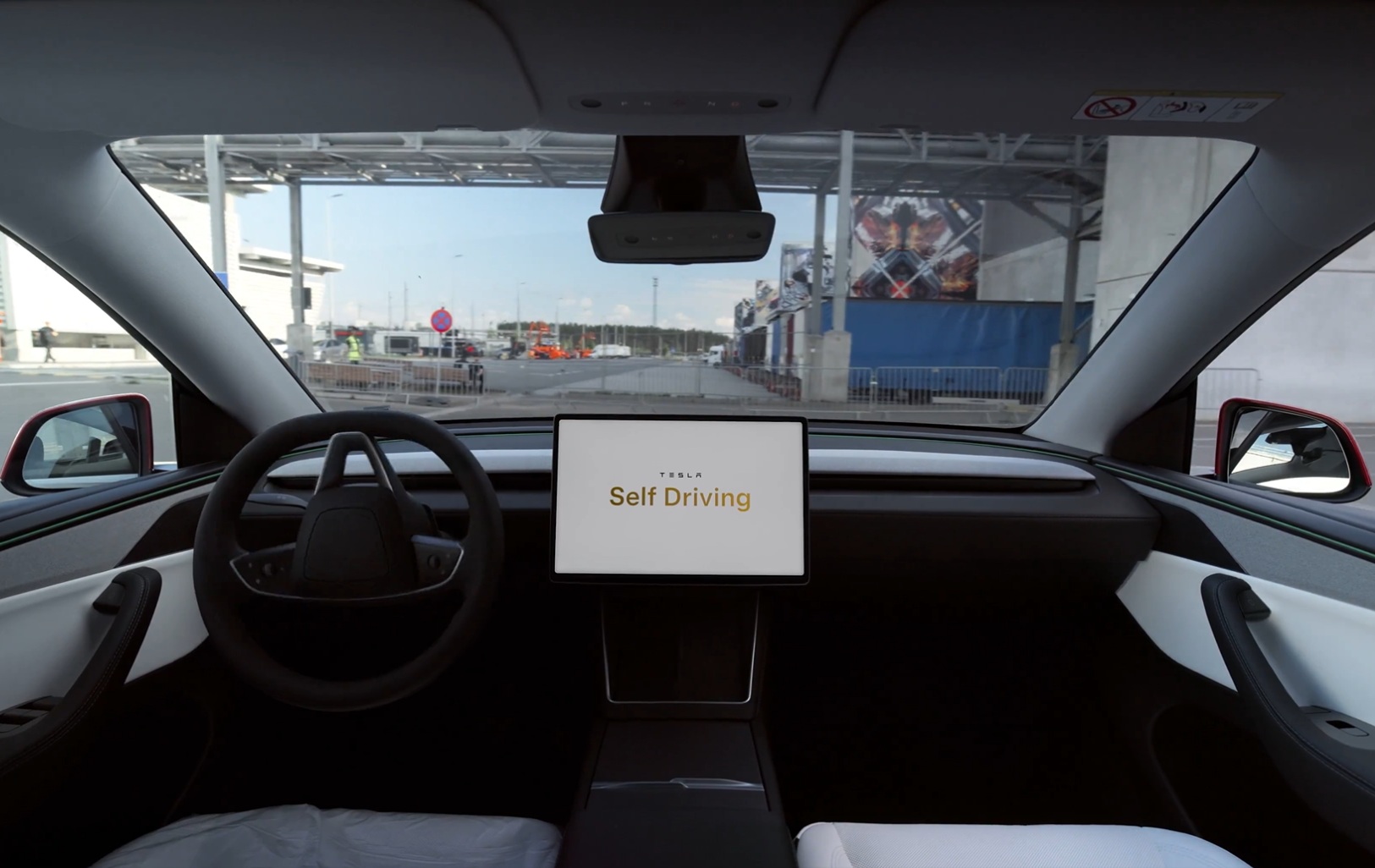
Tesla’s Giga Berlin lets new cars drive themselves to the lot using FSD
Tesla has begun using Full Self-Driving inside its German factory, where freshly built vehicles now roll off the production line and autonomously navigate to the outbound parking lots. Video clips shared by the company show the system in action at Giga Berlin, bringing the plant in line with similar internal operations already in use at Tesla’s North American factories.
The footage walks through the post-production flow: vehicles exit the Light Tunnel after final quality checks, pause at an on-site Supercharger station where attendants plug them in for a quick top-up, and then proceed on their own to the designated lot. The process is contained within factory grounds and designed to streamline the handoff from assembly to logistics.
This marks another step in Tesla’s push to automate internal logistics. Having cars drive themselves across the campus reduces the need for staff to shuttle vehicles, helps smooth bottlenecks between finishing, charging, and staging, and can improve overall throughput. Tesla previously showcased similar self-driving movements at Giga Texas, where Model Y units were seen navigating to parking after production.
The video also included a brief cameo from the Cybertruck. Notably, the vehicle was labeled as a support unit and restricted to the site, a reminder that it isn’t approved for public roads in Europe and that a regional launch isn’t imminent.
Beyond the eye-catching clips, the update underscores a practical use of FSD in controlled environments. While separate from consumer use on public roads, the factory deployment highlights how autonomous systems can deliver immediate efficiency gains inside production facilities—an area where reliability and repeatability translate directly to cost and time savings.
As Tesla continues refining this workflow in Berlin, expect to see more automation across charging, staging, and outbound logistics—incremental changes that add up to faster factory cycles and a tighter connection between the end of the assembly line and customer delivery.


