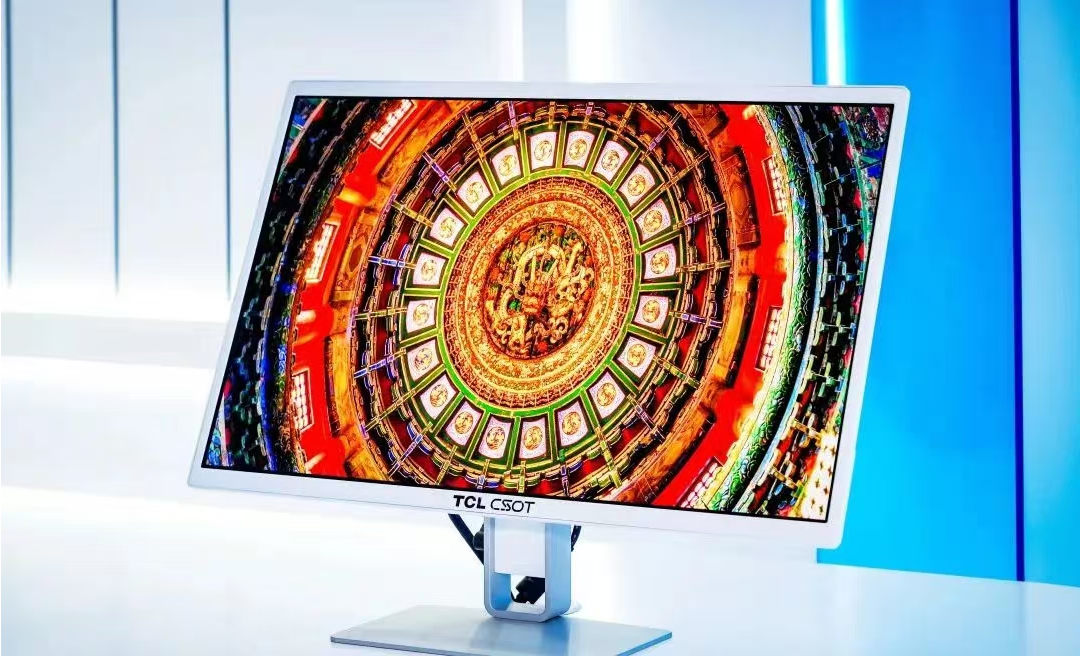
TCL CSOT has broken ground on its long-anticipated T8 8.6-generation OLED manufacturing plant in Guangzhou, China, marking a major bet on next-gen display production. Backed by roughly $4.15 billion in investment, the facility will use inkjet printing to produce RGB OLED panels at scale—a first for a large 8.6G line—setting the stage for equipment installation through 2026 and mass production beginning in 2027.
Scale is the headline. T8 is designed to process up to 22,500 8.6G substrates per month, each measuring 2290 by 2620 mm. These large sheets can be cut into multiple panels aimed at premium tablets, laptops, and monitors—the plant’s initial focus. TCL isn’t positioning this line for TVs right away. Instead, it’s targeting the fast-growing IT segment, where OLED’s deep blacks, fast response times, and rich color have strong appeal but pricing has limited mainstream adoption.
The big technical swing is the manufacturing method. Instead of traditional vacuum deposition or white OLED paired with color filters, T8 will deploy inkjet printing to lay down red, green, and blue OLED materials directly. TCL says this approach reduces material waste and could trim production costs by around 20% versus conventional techniques. Executives describe T8 as an end-to-end ecosystem that brings materials and assembly closer together, aiming to create a more competitive and cost-efficient OLED supply base.
If the company hits its targets on cost and yield, T8 could significantly increase the supply of mid-size OLED panels and accelerate adoption in laptops and monitors. That added capacity would pressure rival display technologies—such as mini-LED with RGB backlights and QD-OLED—to sharpen their value and pricing. Over time, the ripple effects could reach TVs as well, where cost and yield constraints have historically slowed the march of more affordable large-format OLED. Today, the largest screens still face trade-offs; for example, a current 97-inch flagship panel lacks certain brightness-boosting and longevity-oriented features seen on smaller sizes, underscoring the challenges of scaling up.
The risks are real, and they’re technical. Bringing an inkjet-printed OLED process to stable, high-yield mass production on 8.6G glass requires precise material formulations, highly accurate nozzles, rigorous defect control, and proven long-term reliability. Established players in large-format OLED still hold an experience advantage. TCL will need to demonstrate consistent panel longevity, color stability, and uniformity to earn wide OEM adoption.
For consumers, the earliest impact will likely be felt in premium laptops and desktop monitors, where more supply and lower production costs can drive better prices, broader model availability, and improved specifications. Longer term, a successful ramp at T8 could increase competition across the display market and apply gradual downward pressure on premium OLED pricing. Watch for equipment fit-out milestones through 2026 and the first wave of inkjet-printed panels in 2027 as the key indicators of whether this multibillion-dollar push pays off.


