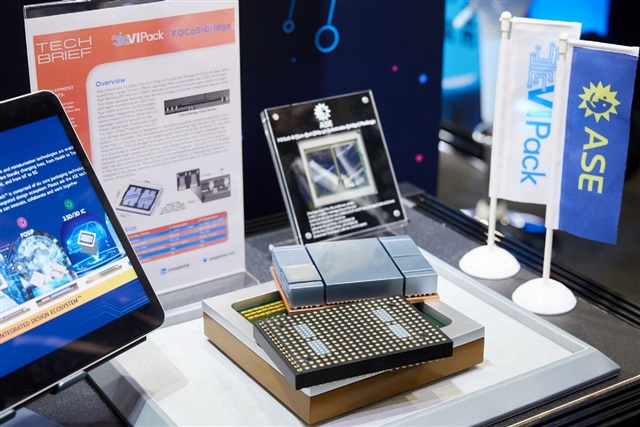
Taiwan’s top semiconductor assembly and test companies are ramping up spending at an unprecedented pace, betting big on advanced packaging as demand outstrips supply. With tight capacity at TSMC’s CoWoS packaging lines expected to remain a bottleneck into 2026, chip designers are increasingly looking beyond a single provider and building more resilient supply chains. That shift is now translating into record capital expenditure plans across Taiwan’s OSAT sector.
Advanced packaging has become one of the most critical links in the chipmaking process, especially for high-performance computing and AI workloads that rely on stacking and connecting multiple dies efficiently. CoWoS, widely used for integrating GPUs, AI accelerators, and high-bandwidth memory, has been under intense pressure as demand keeps climbing. When supply is constrained at the most popular source, the rest of the ecosystem moves quickly—designers seek backup options, and packaging specialists accelerate expansion to capture that demand.
Taiwan’s leading OSATs are responding by expanding advanced packaging capacity and upgrading equipment to handle more complex production requirements. These investments are aimed at supporting next-generation chip architectures that require sophisticated interconnects, higher throughput, and better thermal and power performance. In practical terms, this means more production lines, more tools, and more capability to package cutting-edge chips at scale.
For the broader semiconductor market, the implications are significant. First, it signals that advanced packaging will remain a top priority investment area, not a temporary surge. Second, it suggests that platform vendors and chip designers are actively diversifying packaging supply chains to reduce the risk of delays tied to a single constrained technology line. And third, it reinforces Taiwan’s position as a global hub not only for wafer fabrication, but also for the advanced packaging and testing crucial to bringing AI and high-end computing chips to market.
As these capital spending programs roll out, the industry will be watching how quickly new capacity comes online and whether it meaningfully eases the CoWoS squeeze. Even with aggressive expansion, demand for advanced packaging is expected to stay strong through 2026, keeping competition intense and making supply chain planning a key differentiator for companies racing to deliver next-wave AI and HPC products.