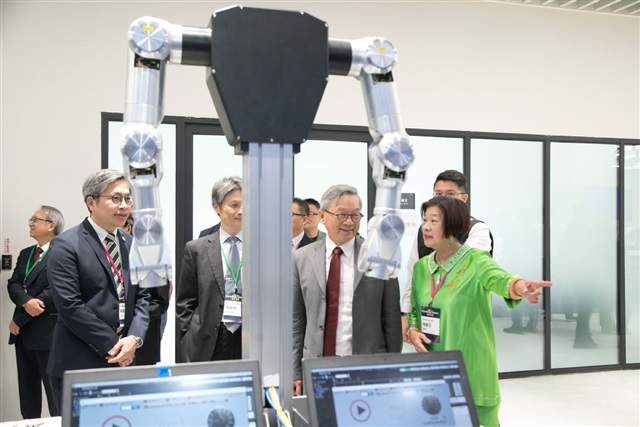
Taiwan has officially opened its first national-level robotics hub, signaling a major push to turn cutting-edge research into real-world products and globally competitive businesses. The new National Center for AI Robotics, created under the National Institutes of Applied Research, is designed to accelerate innovation in artificial intelligence and robotics while helping homegrown start-ups move faster from the lab to the marketplace.
The launch reflects Taiwan’s broader ambition to strengthen its position in next-generation technologies. By building a centralized national platform for AI robotics, the country is aiming to bring together the key pieces that often determine whether breakthrough ideas succeed commercially: advanced research, engineering talent, industry partnerships, and practical support for forming and scaling new companies.
A major focus of the National Center for AI Robotics is commercialization. Rather than leaving promising developments stuck in academic settings, the hub is structured to help researchers and entrepreneurs validate ideas, develop workable prototypes, and transform technical achievements into market-ready solutions. This approach is crucial in the AI robotics space, where success depends not only on algorithms and hardware, but also on reliability, safety, manufacturing readiness, and clear use cases customers are willing to pay for.
Equally important is the center’s role in nurturing Taiwan’s start-up ecosystem. With dedicated national backing, early-stage teams can gain better access to technical resources and collaborative networks that typically take years to build. That support can speed up product development timelines and improve the odds of launching robotics companies that can compete beyond the domestic market.
By inaugurating a national AI robotics center, Taiwan is making a long-term investment in the industries shaping the future of automation. From intelligent machines to AI-driven robotics systems, the initiative is meant to position the country as a stronger developer of original robotics technologies—while creating a pipeline that turns research excellence into new businesses, new jobs, and exportable innovation.