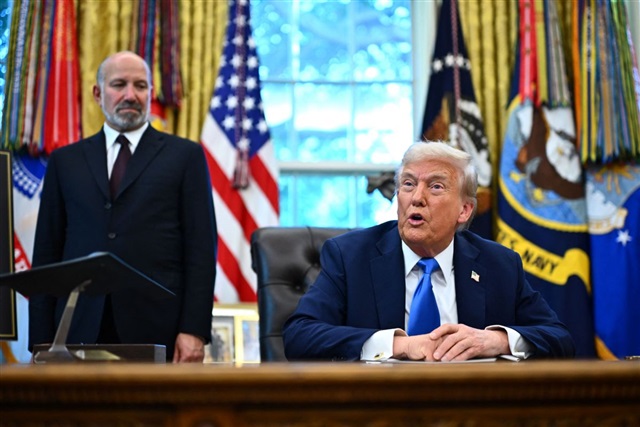
US President Donald Trump renewed his criticism of Taiwan’s semiconductor industry on February 21, 2026, once again claiming the island “stole” America’s chip business. The remarks arrive at a moment when global demand for advanced semiconductors remains intense, and when supply chains for everything from smartphones and data centers to cars and defense systems are under closer political scrutiny than ever.
Taiwan pushed back swiftly. Premier Jung-Tai Cho rejected the accusation and framed Taiwan’s position in the chip ecosystem as the result of internationally recognized industrial capability, not wrongdoing. In response to the “chip theft” claims, Cho emphasized that Taiwan’s strengths are well understood across the world and that the country should not be characterized as a “chip thief.”
The exchange highlights a broader reality: semiconductors have become one of the most strategic industries on the planet, and the language surrounding them is increasingly shaped by geopolitics as much as business competition. Taiwan’s chip sector is deeply embedded in global technology production, with manufacturing expertise and scale that many economies rely on. That dependence has fueled both cooperation and tension—especially as governments work to expand domestic chip production and reduce reliance on overseas manufacturing.
For readers following semiconductor news, the latest comments underscore how the political debate over chips is escalating alongside the race to secure investment, control advanced manufacturing capacity, and protect supply chains. As Taiwan defends its role and reputation in the global chip industry, the situation is likely to keep drawing attention from markets, policymakers, and companies that depend on stable semiconductor output.