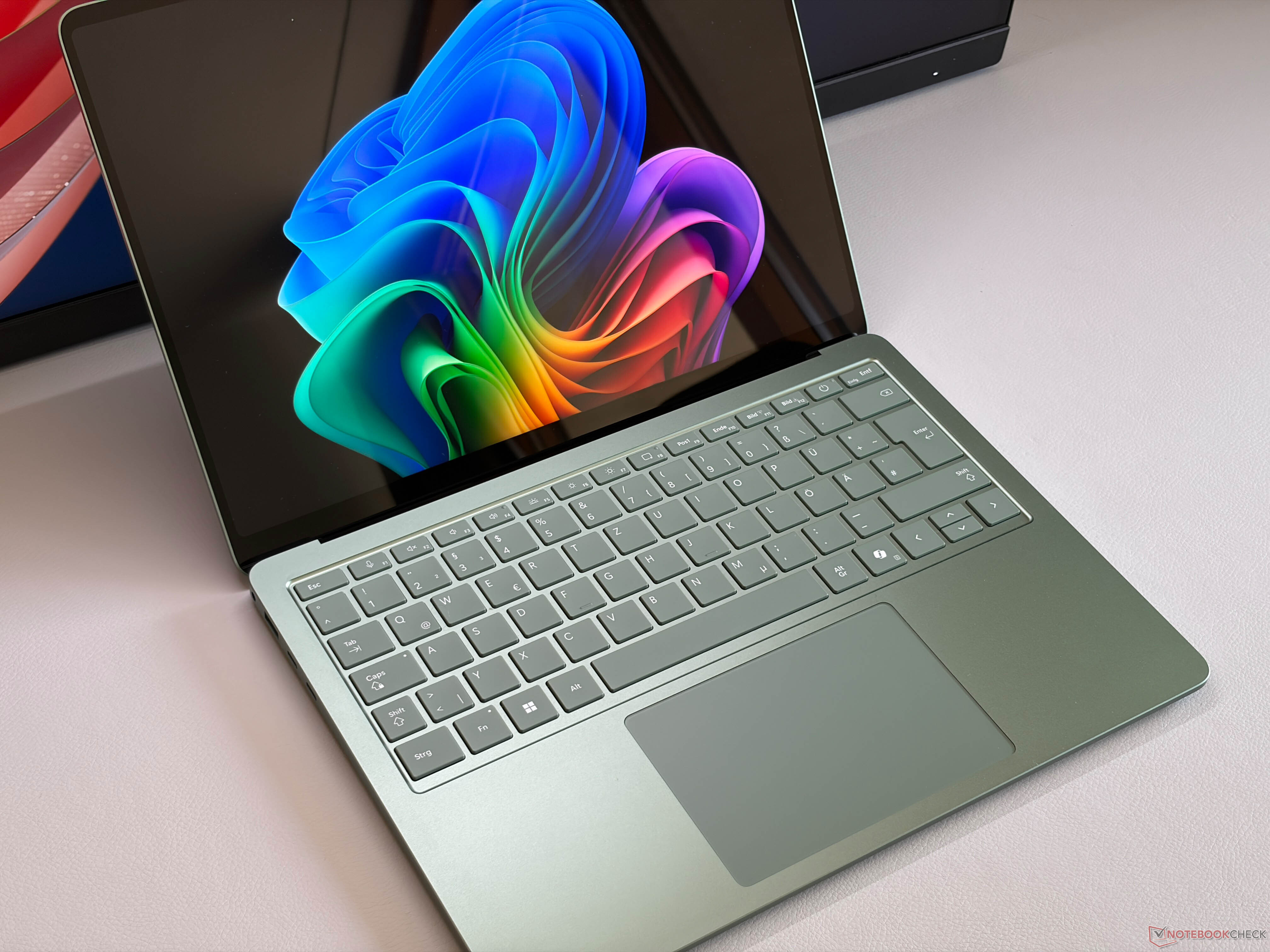
Microsoft Surface Laptop 13.8 vs Asus Zenbook A14: The Better Snapdragon Laptop May Come Down to Price
Microsoft’s latest Surface Laptop 13.8 is a polished, premium Windows laptop with strong battery life, a productivity-friendly display, and the refined design the Surface lineup is known for. However, when compared with the Asus Zenbook A14, the value equation becomes much harder for Microsoft to defend.
The Zenbook A14 starts at $1,349 with the faster Snapdragon X2 Elite X2E-88-100 processor. This chip brings six additional CPU cores, higher clock speeds, and the more powerful Adreno X2-90 integrated GPU. For users who want more performance for multitasking, creative work, or future-proofing, the Asus laptop has a clear hardware advantage.
There is also a major price gap when memory and storage are considered. The Zenbook A14 configuration with 32 GB of RAM and a 1 TB SSD costs $1,799. To get the Surface Laptop 13.8 with the same 32 GB RAM and 1 TB SSD setup, the price rises to $2,649. That is a significant difference, especially when the Asus model offers the stronger Snapdragon X2 Elite platform at a much lower cost.
Portability is another area where the Zenbook A14 stands out. Weighing just under 1 kg, it is noticeably lighter and easier to carry around than Microsoft’s Surface Laptop. For students, frequent travelers, and anyone who works on the go, that lower weight can make a real difference in daily use.
Battery life is more balanced. The Surface Laptop 13.8 lasts longer in a Wi-Fi test at 150 nits, making it a strong choice for typical office work, browsing, and document editing at moderate brightness. The Zenbook A14 performs better at full brightness, although its maximum brightness is lower, so the comparison is not completely direct. Still, both machines are built for efficient all-day mobility.
The display choice depends on what matters most to you. The Surface Laptop uses an IPS touchscreen with a 3:2 aspect ratio, which is excellent for productivity. The taller screen gives you more vertical space for reading, writing, coding, spreadsheets, and web browsing. It also avoids PWM flickering, which can be important for users sensitive to screen flicker.
The Zenbook A14 goes in a different direction with an OLED display. It does not support touch, and it is limited to a 1920 x 1200 resolution with a 16:10 aspect ratio and a 60 Hz refresh rate. On paper, those specs may not sound as impressive, but OLED still delivers excellent visual quality. You get deeper blacks, stronger contrast, and more vibrant colors, which makes videos, photos, and everyday content look richer and sharper.
In short, the Surface Laptop 13.8 has real strengths. Its premium build, comfortable productivity display, touchscreen support, and strong battery life make it an appealing Windows laptop. But the pricing is difficult to ignore. When the Zenbook A14 offers a faster Snapdragon X2 Elite chip, a stronger integrated GPU, lower weight, and a much cheaper 32 GB RAM and 1 TB SSD configuration, Microsoft’s premium becomes hard to justify.
If you are set on buying the new Surface Laptop 13.8, waiting for discounts may be the smartest move. At full price, the Asus Zenbook A14 currently looks like the stronger value for shoppers who want a lightweight Snapdragon laptop with excellent performance and a more competitive price.