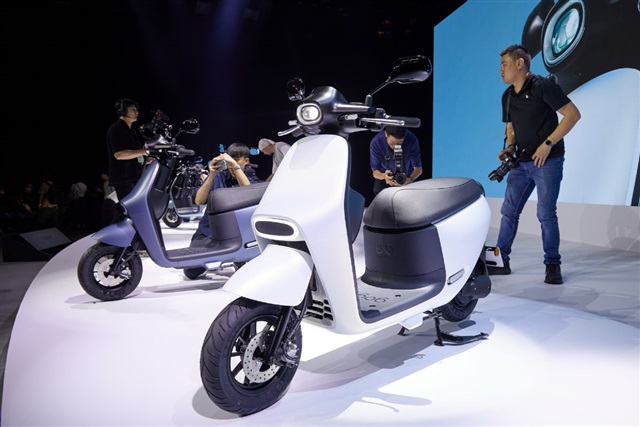
Taiwan’s Electric Scooter Market Faces a Tough Reality as Subsidies, Costs, and Supply Chain Pressure Reshape the Industry
Taiwan has long been seen as one of Asia’s most promising markets for electric scooters. With dense cities, short commuting distances, strong two-wheeler culture, and government support for cleaner transportation, the island appeared to offer the perfect conditions for battery-powered scooters to thrive.
But behind the early excitement, Taiwan’s electric scooter industry has been navigating a difficult road. Sales have often depended heavily on government subsidies, while rising cost pressure has squeezed both scooter brands and the suppliers that keep the industry running. As margins tighten and competition grows more intense, many companies have struggled to stay in the race.
The electric scooter boom in Taiwan was built partly on public incentives designed to reduce emissions and encourage consumers to shift away from gasoline-powered motorcycles. These subsidies helped make electric scooters more affordable and gave buyers a reason to consider new technology. For manufacturers, the support created momentum and brought more attention to the market.
However, this dependence on subsidies has also exposed a major weakness. When government incentives change, shrink, or become less predictable, consumer demand can quickly cool. Many riders still compare electric scooters against traditional gasoline models based on price, convenience, range, and maintenance costs. Without financial support, the decision becomes harder for everyday buyers.
That uncertainty has made long-term planning difficult for electric scooter companies. Brands must invest in product development, battery systems, charging networks, marketing, and after-sales service, but sales can fluctuate depending on policy changes. This creates a fragile business environment where only the strongest and most efficient players can survive.
At the same time, cost-cutting has become a major source of tension across the supply chain. Electric scooter manufacturers face pressure to lower retail prices in order to attract more customers. But reducing prices often means pushing suppliers to deliver components at lower costs. For parts makers, battery suppliers, electronics providers, and assembly partners, that can quickly erode profit margins.
This has created a challenging situation for the entire ecosystem. Brands want to remain competitive, but suppliers need sustainable pricing to maintain quality and continue operating. When both sides are under pressure, disputes can emerge, production can be disrupted, and smaller companies may find themselves unable to keep up.
The result is a market that has become increasingly difficult for weaker players. Some companies have faded from the electric scooter sector, while others have scaled back their ambitions. The industry that once looked like a fast-growing clean mobility success story is now becoming a test of financial discipline, supply chain stability, and long-term strategy.
For Taiwan, the stakes remain high. Electric scooters still have an important role to play in reducing urban pollution and modernizing daily transportation. The island’s crowded streets are filled with two-wheelers, making electrification a logical step toward cleaner mobility. But for the industry to grow in a healthy way, it must move beyond short-term subsidy-driven sales and build a more resilient business model.
That means companies need to offer better value without sacrificing quality. Battery reliability, charging convenience, range, durability, and service support will matter more than ever. Consumers are unlikely to switch in large numbers unless electric scooters are not only cleaner, but also practical, affordable, and dependable.
Government policy will also remain a key factor. Subsidies can help accelerate adoption, but they need to be stable, transparent, and designed to support sustainable growth rather than temporary sales spikes. If incentives are too unpredictable, both buyers and manufacturers may hesitate.
Taiwan’s electric scooter industry is now entering a more mature phase. The early enthusiasm has been replaced by tougher questions about profitability, supply chain relationships, and real consumer demand. While the road ahead may be difficult, the market still has potential if companies can balance affordability, innovation, and operational stability.
The current challenges serve as a cautionary tale for the broader electric mobility sector. A successful electric vehicle market cannot rely only on subsidies or excitement. It needs strong suppliers, fair pricing, reliable products, and consumers who see clear everyday benefits.
Taiwan’s electric scooter story is far from over, but it is becoming clear that survival will depend on more than simply joining the green transportation trend. The companies that endure will be those capable of building trust, managing costs wisely, and delivering electric scooters that make sense for real riders in daily life.