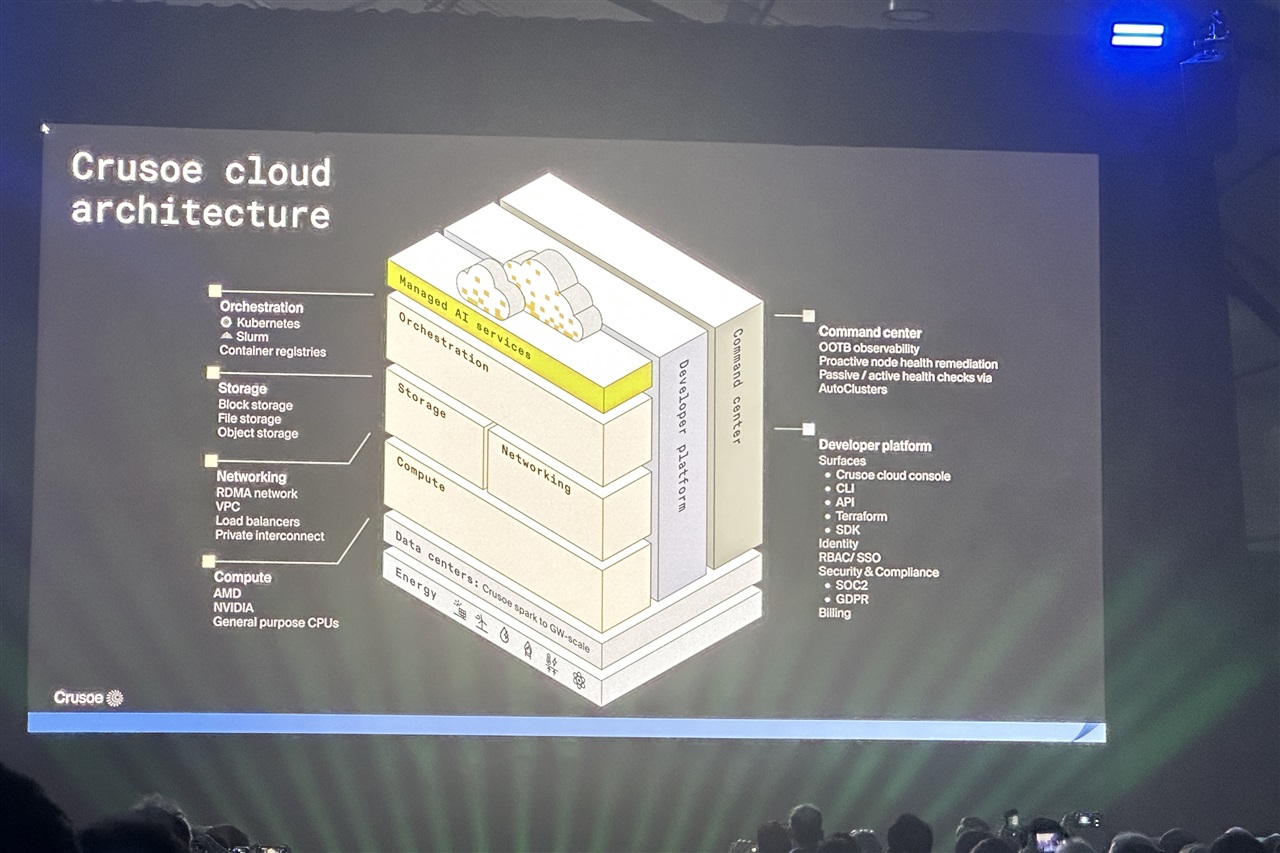
AI’s rapid acceleration isn’t just transforming software; it’s reshaping the physical backbone of computing itself. The surging demand for GPU horsepower is forcing a fundamental rethink of how data centers are designed, powered, cooled, and networked. That pivot is no longer optional, as highlighted by Vik Malyala, senior vice president for technology and AI at Supermicro, who notes that the industry must evolve its entire architectural model to keep up.
At the heart of this shift is the unprecedented power density of modern AI systems. Training state-of-the-art models and serving high-throughput inference require stacks of accelerators running at full tilt for extended periods. Traditional data center blueprints—built around moderate CPU loads, air cooling, and incremental scaling—struggle under these new realities. The new baseline is cluster-first design, where the rack, row, and entire facility are optimized around tightly coupled GPU nodes, ultra-fast interconnects, and extreme efficiency.
Power delivery is one of the first pressure points. Many operators now plan for dramatically higher rack power densities, pushing past historical norms to accommodate GPU-rich servers. Electrical infrastructure must be reimagined from the ground up: higher-capacity PDUs, improved busways, and smarter power monitoring are becoming standard. With utility constraints increasingly common, intelligent capacity planning and energy-aware scheduling are turning into competitive advantages.
Cooling is the second pillar of the AI-era data center. Air alone is often not enough to sustain dense clusters under continuous load. Direct-to-chip liquid cooling, rear-door heat exchangers, and even immersion cooling are moving from experimental to mainstream as operators seek to remove heat efficiently without sacrificing performance. The benefits extend beyond uptime and reliability; advanced cooling unlocks more compute per rack and can materially improve total cost of ownership.
Networking is the glue that turns individual servers into AI superclusters. High-bandwidth, low-latency fabrics—think 400G and 800G-class networking—are now critical to accelerate training jobs and keep inference pipelines responsive. This shift ripples through the stack: optimized topologies, lossless Ethernet or specialized fabrics, and in many cases, dedicated acceleration for storage and networking functions. The result is an architecture that treats the cluster as a single, composable computing resource rather than a collection of isolated machines.
These hardware realities are changing data center architecture in other important ways:
– Rack-scale integration: Vendors and operators are increasingly delivering pre-integrated racks with GPUs, storage, networking, and cooling engineered as a unit, boosting performance and deployment speed.
– Composable infrastructure: Dynamic allocation of GPUs, CPUs, storage, and networking enables higher utilization and faster time to value for AI projects.
– Software-defined everything: Automated provisioning, telemetry-driven tuning, and AI-aware orchestration improve efficiency from the chip to the facility.
– Sustainability by design: Better power usage effectiveness, heat reuse, and renewable integration are becoming board-level priorities as energy costs and environmental commitments converge.
The push isn’t limited to hyperscalers. Enterprises, research labs, and service providers are also confronting the same constraints, just at different scales. As the AI wave moves from pilot projects to production, the gap between traditional server rooms and AI-ready facilities widens. Organizations that modernize early gain agility and cost clarity; those that delay risk bottlenecks, spiraling energy bills, and missed SLAs.
For teams preparing for AI-heavy workloads, a practical roadmap is emerging:
– Assess workload profiles: Distinguish between training and inference needs; they drive different design decisions for density, cooling, and networking.
– Plan for growth: Design with headroom for more accelerators and interconnects; retrofit cycles are costly and disruptive.
– Upgrade power and cooling together: Align electrical and thermal strategies to avoid partial fixes that limit scalability.
– Adopt rack-scale solutions: Pre-validated configurations reduce integration risk, especially for dense GPU clusters.
– Instrument everything: Use granular telemetry on power, thermals, and performance to optimize utilization and reduce waste.
– Consider colocation and modular builds: Where power is constrained, modular data halls and colocation partners can accelerate time to capacity.
Looking ahead, AI’s trajectory suggests continued increases in performance per watt alongside rising absolute power for top-tier systems. Expect wider adoption of liquid cooling, broader deployment of 800G networking, and tighter integration between facilities and workloads. Edge locations will also grow in importance to serve latency-sensitive inference, while centralized hubs remain essential for large-scale training.
The message is clear: AI has rewritten the rules of data center design. As Vik Malyala underscores, meeting the moment requires a holistic architectural shift—one that blends dense compute, advanced cooling, robust power delivery, and high-speed networking into a cohesive, efficient platform. The organizations that embrace this shift will not only run today’s AI models faster and more affordably; they’ll be ready for what comes next.