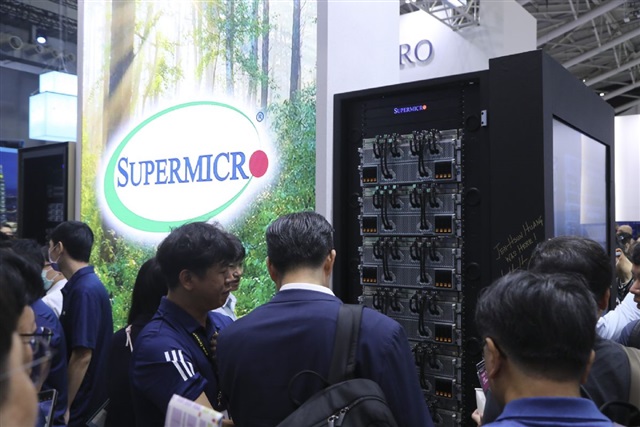
The technological landscape of server cooling is witnessing a steady advancement toward the adoption of liquid cooling systems. Amidst industry updates, such as reports on delays in shipments of certain graphical processors, companies like Supermicro are staying the course with their commitment to liquid cooling technologies.
Charles Liang, the co-founder and CEO of Supermicro, has observed a sustained interest and adoption from clients regarding liquid cooling systems. This interest is stemming from the increasingly recognized benefits that liquid cooling brings to the table, particularly for servers in data centers and other high-demand computing environments.
Liquid cooling offers superior heat dissipation compared to traditional air cooling, and, as such, it’s gaining traction within the tech community. Its ability to efficiently manage the heat generated by powerful server processors and components makes it a desirable choice for businesses looking to optimize the performance and reliability of their server infrastructure.
The trend towards liquid cooling is being driven by the need to address the thermal challenges posed by modern high-performance computing systems. As servers are tasked with handling ever-growing data loads and computational demands, they generate more heat, making effective cooling solutions essential.
A liquid cooling setup involves circulating a coolant through a closed-loop system that absorbs heat from the server components and transfers it away to a radiator or external cooling tower where it can be dissipated. This method can significantly reduce the operating temperatures of servers, leading to improved efficiency, lower energy consumption, and potentially extended hardware lifespans.
For organizations considering the transition to liquid-cooled servers, the following steps can help guide the process:
1. **Assess Your Cooling Needs:** Evaluate the thermal output of your current server setup and the potential benefits liquid cooling could provide for your specific situation.
2. **Research Liquid Cooling Solutions:** Explore the variety of liquid cooling systems available, focusing on factors such as compatibility, capacity, and maintenance requirements.
3. **Plan for the Future:** Consider scalability and flexibility in your choice of liquid cooling systems to accommodate future growth and changes in technology.
4. **Consult with Experts:** Engage with professionals who can offer insights into the installation and management of liquid cooling systems to ensure a successful transition.
5. **Monitor and Maintain:** Once implemented, maintain diligent monitoring and maintenance practices to ensure the ongoing efficacy and efficiency of your liquid cooling system.
Recent trends, such as the increased density of servers and the prevalence of energy-intensive tasks like machine learning and big data analytics, are adding to the momentum behind liquid cooling. By more effectively managing the heat output of servers, organizations can not only boost performance but also contribute to broader sustainability goals by reducing energy consumption and greenhouse gas emissions.
In practical terms, embracing liquid cooling can lead to more silent operation environments, as the need for noisy fans decreases, creating a more pleasant workplace. Improved cooling efficiency can also result in lower operational costs due to reduced power usage.
As industry leaders like Supermicro continue to advocate for and invest in liquid cooling solutions, it is clear that this technology will play a pivotal role in the future of server cooling. The proactive adoption and promotion of such systems align with the current trajectory towards more sustainable, efficient, and high-performing computing infrastructures.