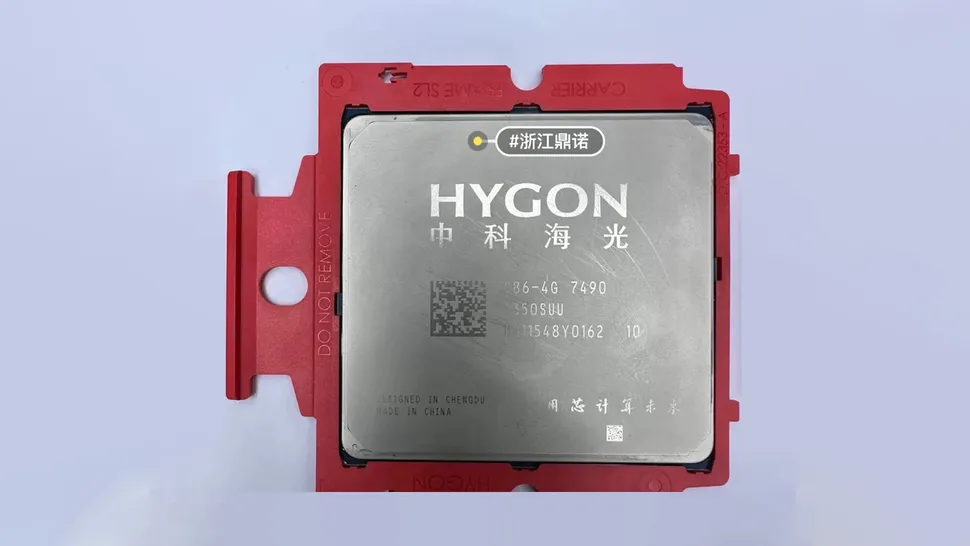
Sugon, a prominent Chinese computing company, has made significant strides forward by incorporating AMD’s SP5 packaging technology into its latest Hygon processors. This advancement points to the company’s strategic move towards adopting and enhancing some of the latest computing technologies that support cutting-edge features like DDR5 memory compatibility.
Unveiled by a hardware leaker, the 4th-generation Hygon processor looks to have similar traits to AMD’s Zen 4-based CPUs. This resemblance indicates potential support for advanced memory and interface standards. Although not directly integrating the latest AMD chipsets or the Zen 4/Zen 5 microarchitectures, Sugon’s technology adoption emphasizes DDR5 memory support specifically.
The Hygon C86-7490 processor—sealed in SP5 packaging usually reserved for high-performance data center processors—emphasizes that the product was conceived and manufactured in China. This approach aligns with Sugon’s existing strategy, where past processors were based on the Zen architecture with certain China-exclusive features.
A notable observation is that Chinese server manufacturers are already implementing Hygon processors in machines that support multi-configurations and possess a considerable number of DDR5 memory slots. These developments suggest that Sugon has cleverly connected the first-generation Zen chiplets to the latest input/output dies from AMD, indicating a hybrid approach towards integrating older chip generation with new memory controllers.
Despite U.S. sanctions restricting the export of advanced processors to China, there appears to be no such limitation on advanced IODs and platform technologies. That being said, the marriage of older 14nm-class Zen chiplets with the newer N6 (6nm-class) IODs could introduce technical complexities, specifically considering potential voltage disparities.
As of now, the exact characteristics and performance metrics of Sugon’s Hygon 4G processors are not fully revealed. However, the initial information signals a clear use of AMD’s sophisticated technologies, which might set a new milestone for China’s processor development endeavors.
This innovation in processor technology is a testament to the continued evolution and globalization of the computing industry. Adapting to advanced packaging technologies like AMD’s SP5 and embracing next-gen memory supports serve as an example of how companies like Sugon are pushing the boundaries of what’s possible in the realm of processing power and efficiency.
Users and enthusiasts anticipating the full capability and specifications of these Chinese-devised processors will have to wait for more detailed announcements to better understand this melding of older and newer technologies and how they stand to influence the server and data center landscapes.