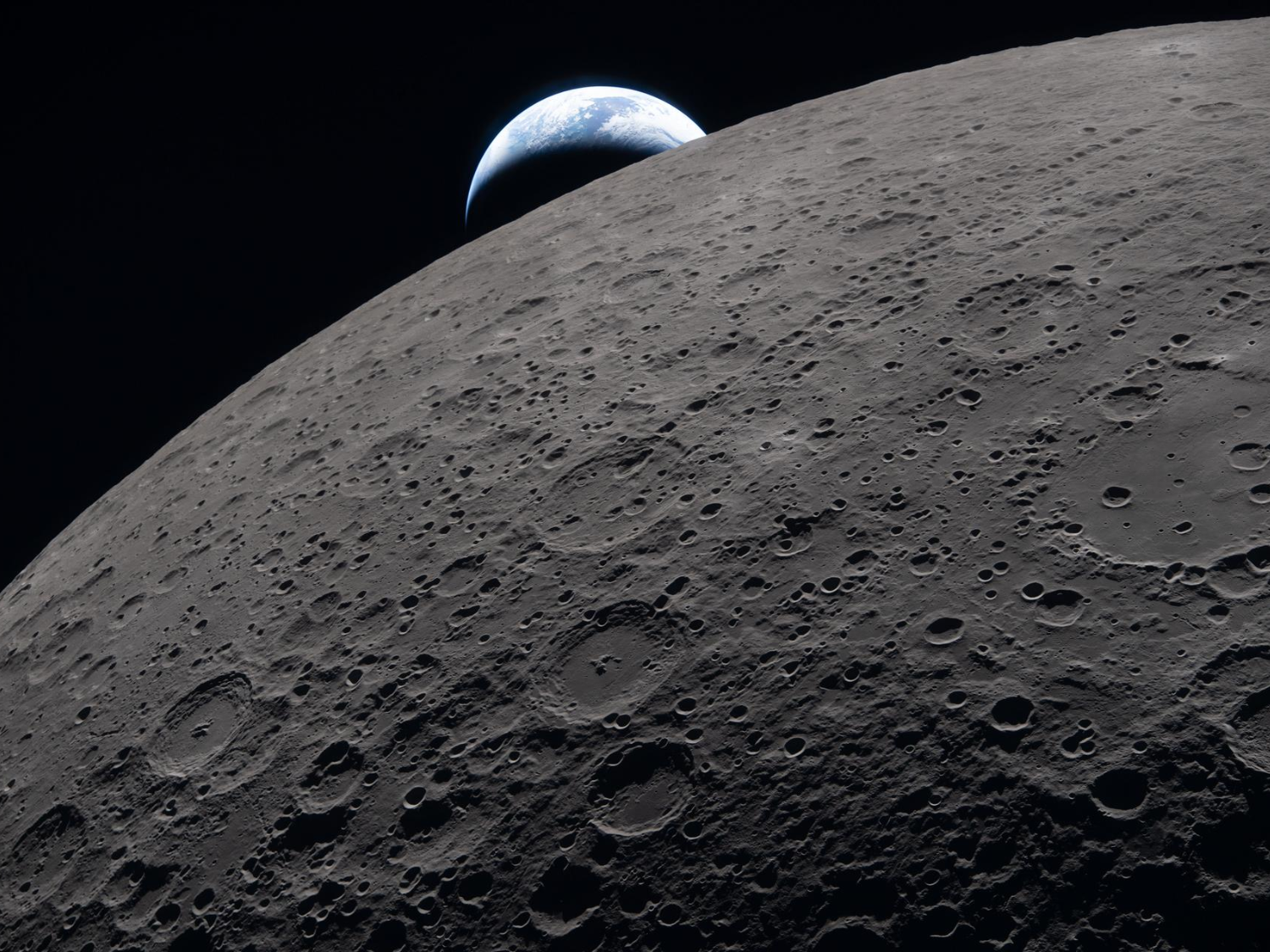
NASA has opened the vault on Artemis II, releasing a complete gallery of high-resolution photos captured during the mission’s lunar flyby. Taken as Orion and its crew swept past the Moon’s far side, the newly published images deliver crisp crater fields, striking Earthrise views, and even a solar eclipse witnessed from deep space. For space and photography fans alike, it’s a rare chance to see the Moon with modern clarity and to understand exactly how these shots were made.
What makes this release especially compelling is that the standout images weren’t created with some experimental, futuristic camera system. Much of the photography was captured using a proven, workhorse setup: Nikon D5 DSLR cameras paired with multiple zoom lenses inside the Orion spacecraft. While the Nikon D5 isn’t “new” by 2026 standards, its reputation for reliability matters far more in space than chasing the latest spec sheet. The camera system is known for ruggedness and has a track record that makes it a sensible choice for a high-stakes crewed mission where radiation, vibration, and operational simplicity all play a role.
NASA didn’t treat the photography as an afterthought, either. The crew was trained to document specific lunar landmarks, using zoom lenses to pick out details through Orion’s windows. That training shows in the results: wide interior scenes that give context to life inside the spacecraft, plus tight lunar close-ups that emphasize the Moon’s texture and topography during the flyby.
Alongside handheld photography, Orion also relies on external cameras designed for engineering, navigation support, and mission documentation. NASA hasn’t publicly broken down every single camera unit used on Artemis II, but Orion has a history of carrying multiple mounted camera views for external coverage. The result is a mix of perspectives—human-shot images from inside the cabin and spacecraft-mounted views that help tell the mission story from the outside.
Adding a modern twist, NASA also confirmed that astronauts used an iPhone 17 Pro Max for more casual photos and videos, including informal “in-the-moment” shots and selfie-style content. That helps explain why some images in the gallery feel spontaneous and personal, contrasting with the carefully composed lunar frames captured with the Nikon gear.
The visual punch of the far-side images comes down to lighting and physics as much as camera choice. With no atmosphere to soften anything, the Moon produces hard-edged shadows and intense contrast. Surface texture appears especially sharp near the terminator line—the boundary between lunar day and night—where low sun angles exaggerate depth. Crater rims, ridges, and subtle terrain features become more dramatic because the lighting skims across the surface instead of flattening it.
It’s also worth remembering the mission’s purpose. Artemis II was designed primarily as a test flight, focused on validating Orion’s systems and proving that the spacecraft can safely carry a crew on a lunar trajectory. That means the photography wasn’t the central mission objective in the way a dedicated science imaging campaign might be. Still, these images carry real value: they support documentation, training, and operational planning for future crewed missions, including eventual landings.
And for the rest of us, the gallery delivers something earlier eras couldn’t: modern high-resolution coverage of a crewed lunar flyby, captured with today’s sensors and shared in a way that’s easy to explore. NASA’s full Artemis II image set is now available as an official high-res library for viewing and downloading.