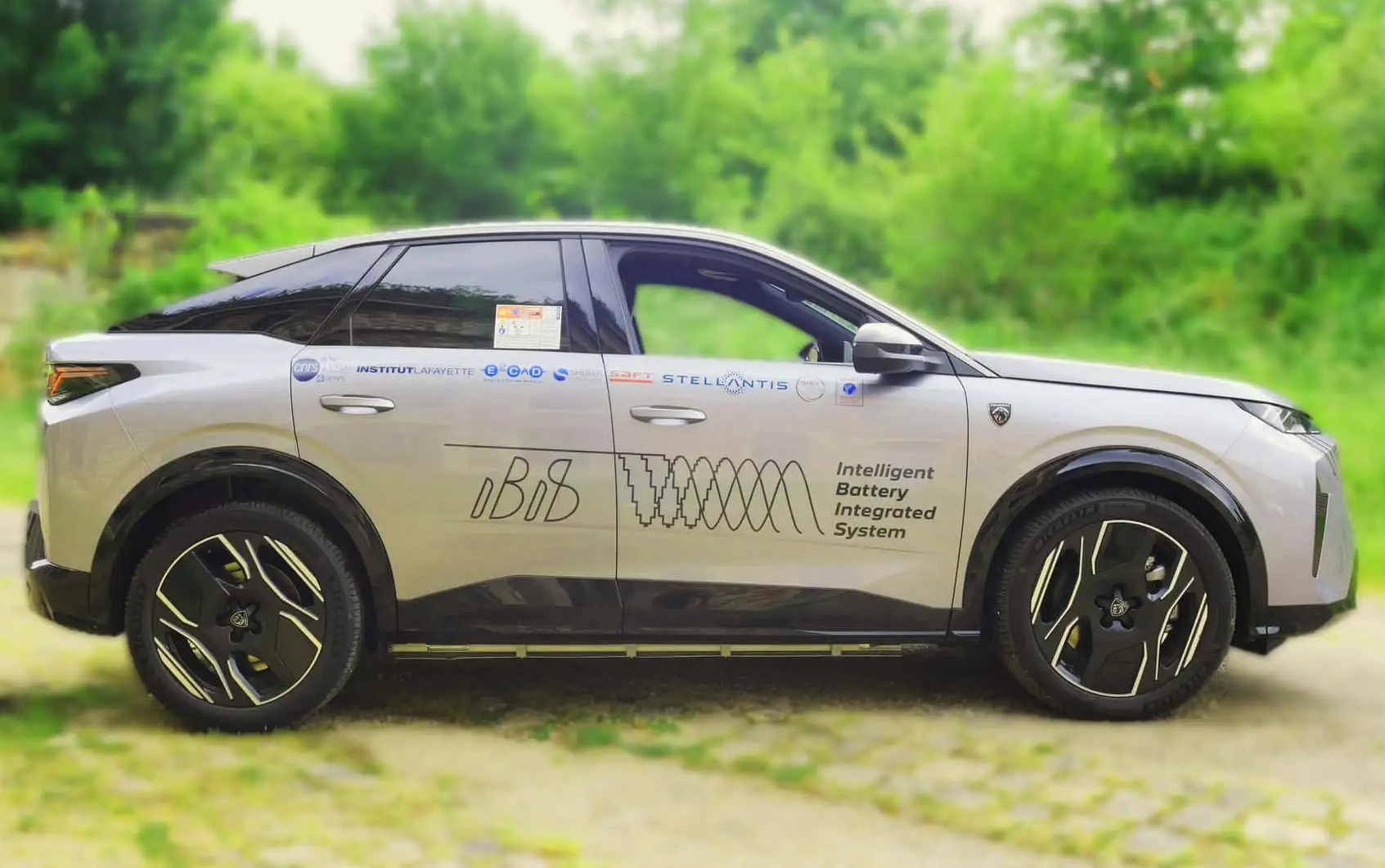
Stellantis’ IBIS battery prototype promises faster charging, lighter EVs, and smarter energy use by decade’s end
Stellantis has pulled the wraps off an ambitious prototype that could reshape how electric vehicles are built and charged. Called the Intelligent Battery Integrated System (IBIS), the design merges the battery and inverter into a single compact module. By delivering alternating current directly at the output, IBIS removes the need for separate inverters, onboard chargers, and DC converters—freeing up space, trimming weight, and improving efficiency.
Developed over more than six years with French battery specialist Saft, the current IBIS prototype is being tested on public roads in a Peugeot E-3008. Early figures point to tangible, real-world gains: up to 17 liters of space saved and about 88 lbs shaved off the vehicle. AC charging times are up to 15% shorter, while WLTP energy consumption and overall losses are each reduced by around 10%. Despite its smaller footprint, peak battery power climbs by as much as 15%, reaching up to 172 kW at the same physical size. The simplified architecture also makes maintenance easier and supports second-life applications once the pack leaves the road.
Compared to conventional lithium-ion EV setups that store DC and rely on a suite of separate power electronics, IBIS significantly streamlines the drivetrain. While many automakers still use standalone inverters and onboard chargers, Stellantis’ integrated approach promises advantages in packaging, weight, and energy efficiency—key levers for extending range, improving performance, and lowering costs over a vehicle’s lifetime.
IBIS isn’t just for cars. A stationary version has been under evaluation since 2022, opening the door to broader use in rail transport, aerospace, maritime shipping, and even data center backup and grid-tied energy storage. That flexibility could make the technology valuable well beyond passenger vehicles, especially as industries look for compact, efficient, and serviceable power systems.
The project brings together a team of 25 engineers spanning Saft, CNRS, the Sorbonne, the University of Paris-Saclay, and the Lafayette Institute. Stellantis aims to bring IBIS to production vehicles by 2029 or 2030. If the prototype’s promises hold up, drivers could see EVs that charge quicker, weigh less, and waste less energy—while the same core technology helps power critical infrastructure on land, at sea, and in the air.