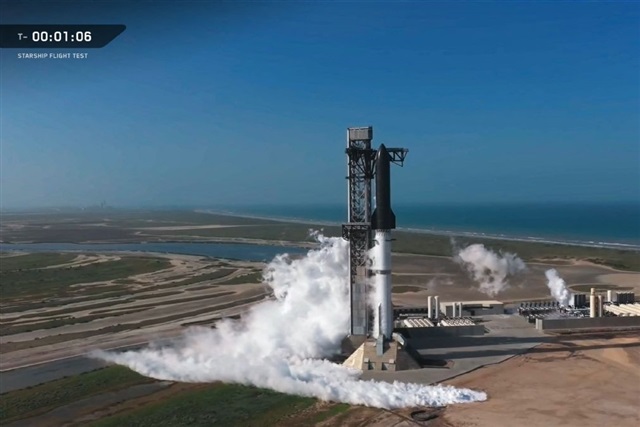
SpaceX Starship Reaches Orbit for the First Time, but Engine Issues Shorten Historic Test Flight
SpaceX has achieved a major breakthrough with Starship, sending the world’s most powerful rocket into Earth orbit for the first time during its 14th test flight. The mission also included the successful deployment of 26 third-generation Starlink satellites, marking another important step in the company’s plan to expand its satellite internet network and prove Starship’s heavy-lift capabilities.
The flight was a significant moment for SpaceX’s reusable rocket program. Starship is being developed to carry large payloads, support future lunar missions, and eventually help enable human travel to Mars. Reaching orbit shows that the vehicle is moving closer to becoming a reliable launch system for both commercial and deep-space missions.
However, the test flight did not go exactly as planned. SpaceX originally intended the mission to last around 10 hours, but engine-related issues forced the company to end the flight much earlier. Instead of completing the full mission profile, Starship deorbited after roughly three hours.
Despite the shortened timeline, the successful orbital flight and satellite deployment represent a major technical achievement. Delivering 26 next-generation Starlink satellites into orbit demonstrates Starship’s potential as a high-capacity launch vehicle capable of placing large numbers of satellites into space in a single mission.
The engine anomalies will likely become a major focus for SpaceX engineers as they review flight data from the test. Starship’s development program is built around rapid testing, learning from failures, and making design improvements between launches. Each test flight helps the company better understand how the rocket performs under real flight conditions.
Starship remains central to SpaceX’s long-term ambitions. Its fully reusable design is intended to lower launch costs and dramatically increase the amount of cargo that can be sent into space. If SpaceX can solve the remaining reliability challenges, Starship could transform satellite launches, space station logistics, lunar exploration, and future missions beyond Earth orbit.
The 14th test flight may have ended earlier than expected, but it still delivered one of the most important milestones in the Starship program so far. Reaching orbit for the first time and successfully deploying Starlink satellites shows clear progress, even as engine performance remains a key hurdle for future missions.