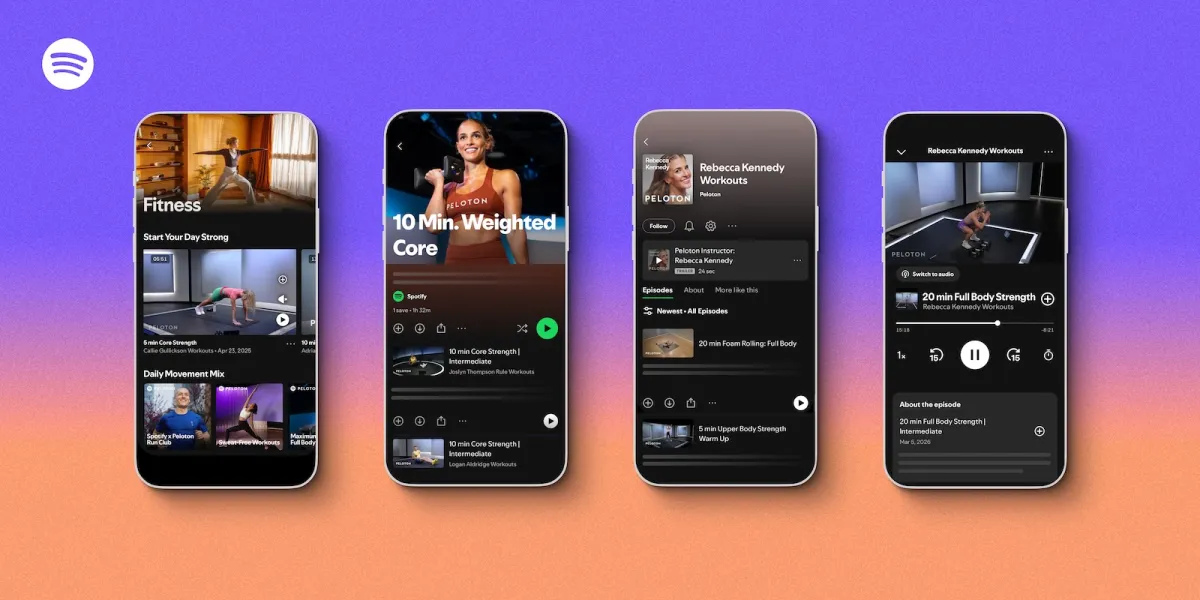
Spotify is pushing beyond music and podcasts once again, and this time it’s heading straight into your workout routine. The streaming giant has officially introduced fitness content inside the Spotify app, aiming to turn its popular workout playlists into something more complete: a place where you can actually follow along with workouts, not just soundtrack them.
The new fitness push arrives through a dedicated Fitness hub in the app. Users can also find it by simply searching “fitness.” From there, Spotify is offering a mix of workout-focused audio and video content that’s designed to work across devices, including mobile, desktop, and TVs. In other words, Spotify wants to be available whether you’re training in the living room, stretching on a yoga mat, or squeezing in a quick session between meetings.
At launch, Spotify says both Free and Premium listeners will be able to access dozens of playlists and guided workout programs from established wellness creators. The lineup includes names like Yoga With Kassandra, Caitlin K’eli Yoga, Sweaty Studio, Chloe Ting, Pilates Body By Raven, Abi Mills Wellness, Sophiereidfit, and more. The goal is to offer ready-to-play sessions that help you move, train, and recover without needing to jump between different apps or platforms.
One of the biggest parts of the announcement is a new partnership with Peloton. Through this deal, Spotify Premium users in select markets will get access to more than 1,400 ad-free, on-demand workout classes led by Peloton instructors. These sessions cover a wide range of training styles, including strength, cardio, yoga, meditation, running, and other popular categories. Notably, Spotify points out that you won’t need Peloton’s equipment to follow along, making the classes more accessible to people who simply want structured workouts at home or on the go.
For now, the workout content is primarily available in English, with some options offered in Spanish and German. Spotify also confirms that users can download workouts for offline listening or viewing, which is especially useful for travel, limited connectivity, or gym spaces with poor reception.
Spotify says this move is driven by user behavior and demand. The company notes that nearly 70% of its Premium subscribers work out monthly, and there are already over 150 million fitness-related playlists on the platform. Spotify also observed an increased appetite for workout music after the launch of its AI-powered Prompted Playlist feature, suggesting that listeners are actively looking for more personalized motivation and structure when they exercise.
Creators involved in the fitness launch may also benefit financially by tapping into Spotify’s existing monetization options, including tools within the Spotify Partner Program. Spotify didn’t disclose details of its agreement with Peloton, and it also stopped short of confirming whether fitness could eventually expand into additional paid options such as subscriptions or pay-per-class models. Still, the company hinted it may explore more monetization approaches over time.
Of course, adding yet another content category to what used to be a music-first app could frustrate users who feel Spotify has become crowded as it’s expanded into audiobooks, video, and other formats. Spotify appears to be aware of that concern, pointing to recent updates like the ability to turn off videos across the app as a way to give users more control over their experience.
With fitness now joining Spotify’s growing list of content offerings, the company is making a clear play for more time in users’ daily routines. If it works, Spotify won’t just power your workout playlist—it could become the place you go to start the workout itself.


