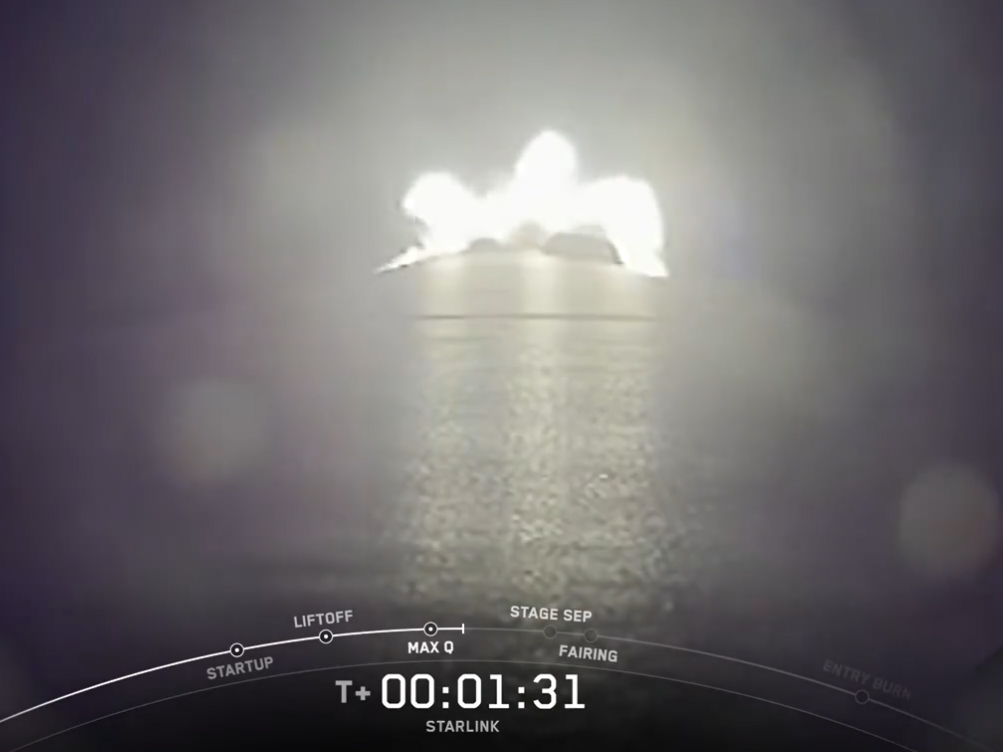
A breathtaking view from a camera on SpaceX’s Falcon 9 rocket shows the successful deployment of Starlink satellites, marking yet another milestone in their journey to provide global broadband coverage. On the 14th of August, 2025, a Falcon 9 rocket took flight from Vandenberg Space Force Base in California, launching 24 Starlink V2 Mini satellites into polar low Earth orbit at 1:05 a.m. EDT (0505 GMT). This mission highlights the impressive 98th Falcon 9 launch in 2025 and the 452nd reuse of a Falcon 9 first stage, demonstrating SpaceX’s prowess in rocket reusability.
The first stage of Falcon 9, known as Booster 1093, completed its fifth voyage, landing gracefully on the “Of Course I Still Love You” droneship in the Pacific Ocean. This successful maneuver marked the 144th landing on the drone ship, showcasing SpaceX’s continued commitment to innovative space travel.
As the Starlink network expands, it now boasts over 7,760 operational satellites, with recent service extensions into Somalia and Israel, and more regions in the Middle East awaiting regulatory nods. This expansion solidifies Starlink’s ambition to make high-speed internet accessible worldwide.
In tandem with these advancements, Starlink has introduced a new “Standby Mode” feature. Instead of the previously free pause feature, users are now offered this option at $5 or €5 per month. It includes unlimited low-speed data around 0.5 Mbps, perfect for basic messaging and emails that don’t demand high bandwidth. However, streaming and video calls are off the table. This change, affecting Roam, Residential, and Priority customers across the U.S., most of Europe, and Canada, excludes Enterprise and some promotional plans.
Previously, users could halt service without cost and resume high-speed access instantly. Now, those who cancel rather than opt for Standby Mode risk losing reactivation privileges if demand exceeds capacity. This has especially irked owners of the portable Starlink Mini dish, many of whom favored its flexible, occasional-use capability. The annual $60 charge for minimal connectivity seems to clash with Starlink’s original pay-as-you-go model.
Additionally, the $10 Roam plan is being phased out, pushing subscribers to choose between pricier plans, the new Standby Mode, or cancelation. Moreover, any unused data won’t roll over in Standby, reducing flexibility and compelling users to reconsider their options. This shift reflects a strategic pivot in Starlink’s service offerings, aiming to refine their user experience in the fast-evolving tech landscape.


