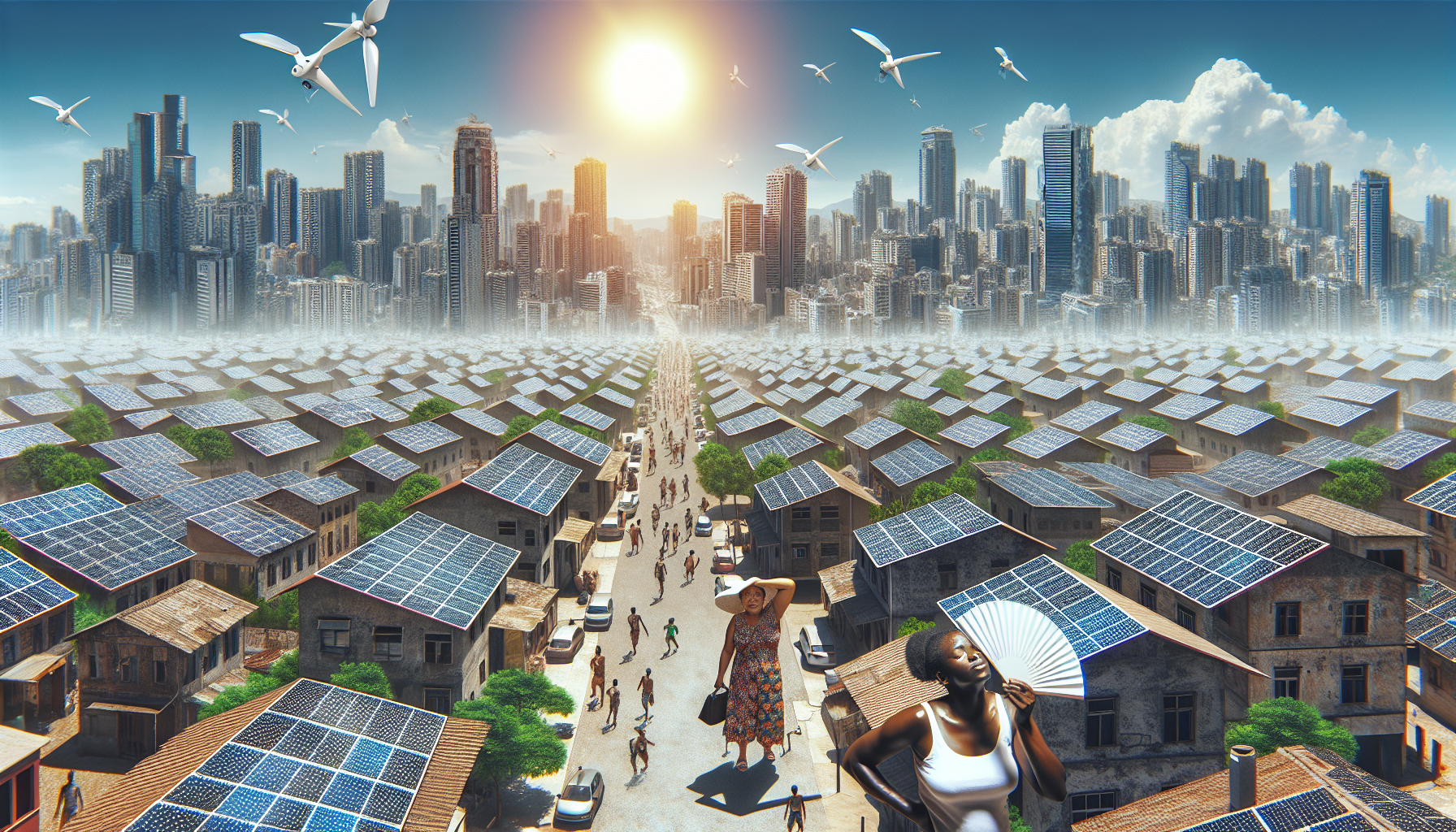
Recent research has shed light on an unexpected twist in the quest for green energy: solar panels, while a boon for sustainable energy, can also contribute to an increase in urban temperature variations. This surprising discovery was made by a team of researchers led by Ansar Khan at the University of Calcutta. Their study delves into how solar panels affect city climates, with intriguing results.
In their study, the researchers designed a detailed simulation that surpassed previous models in accuracy by factoring in energy transfer from the underside of photovoltaic panels. This simulation was applied to five cities—Athens, Austin, Brussels, Kolkata, and Sydney—investigating scenarios with varying coverage of rooftop solar panels, ranging from 25% to full coverage.
The research found that solar panels contribute to urban areas becoming warmer during the day and cooler at night. This effect stems from radiative and conductive heat from the panels, which causes larger temperature fluctuations as compared to cities without such solar installations. For instance, Athens experienced temperature changes ranging from -0.4°C to 1.2°C, while Austin saw variations from -0.7°C to 1.8°C. Similarly, the other cities also exhibited noticeable shifts in temperature.
These temperature swings lead to increased wind speeds, which may inadvertently stir up pollution due to the enhanced atmospheric mixing of smog, dust, and other pollutants. This phenomenon could pose additional challenges to urban areas already grappling with high temperatures and air quality issues. For cities like Kolkata, where temperatures soar to around 43°C (109°F) on the hottest days, this could intensify existing comfort and pollution concerns.
For those keen on embracing solar power, be mindful of the broader impacts while taking steps toward sustainability. While solar panels effectively convert sunlight to electricity, a significant portion of solar energy is still released as heat.
In sum, while solar panels are an essential part of the transition to greener energy, their impact on urban microclimates is an aspect that warrants consideration. This research underscores the importance of thoughtful and integrated planning in implementing solar technology to optimize benefits while addressing potential environmental trade-offs.


