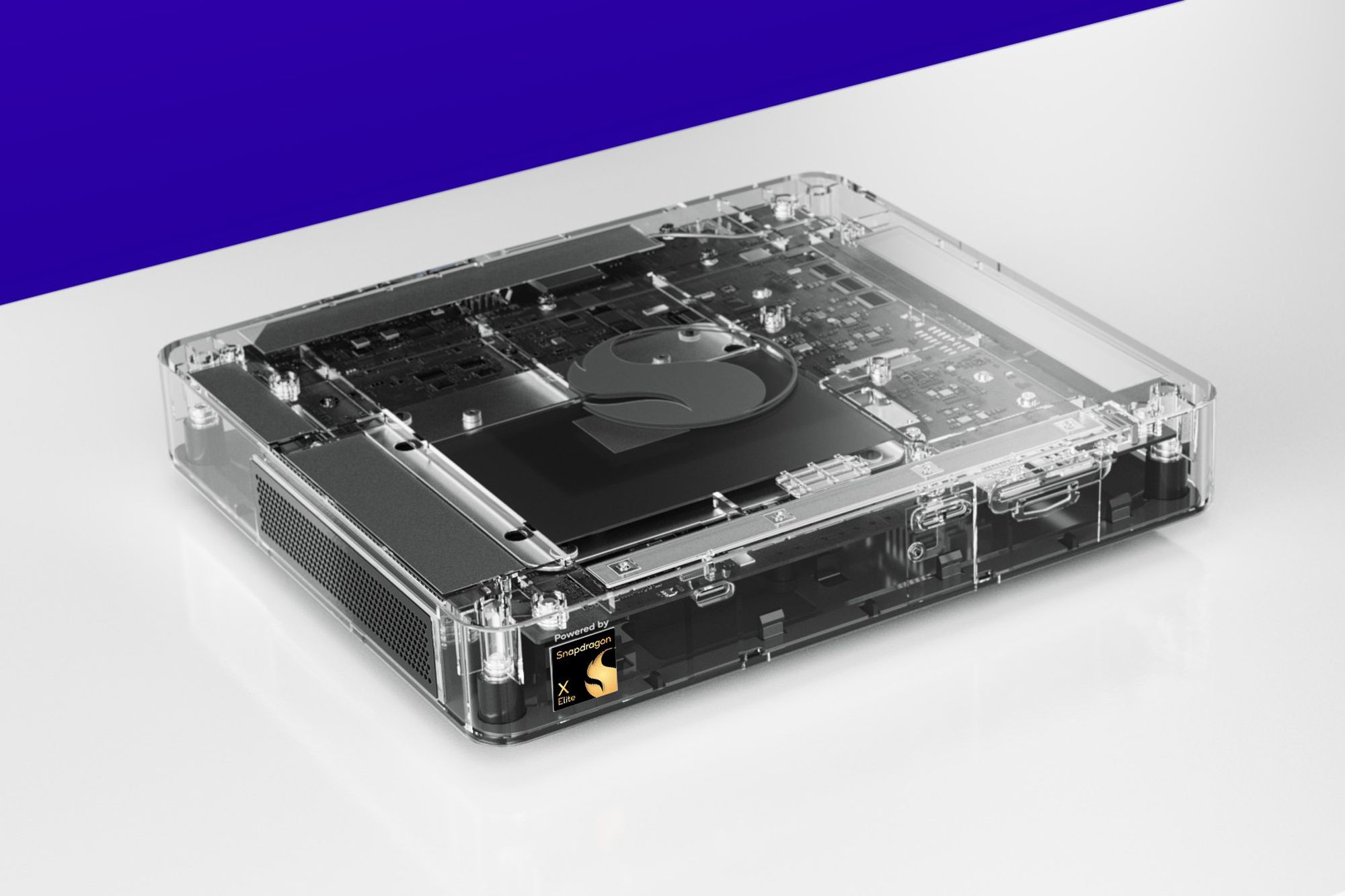
Qualcomm recently launched the Snapdragon Dev Kit at $899, specifically designed for developers to harness the power of its high-end Snapdragon X Elite chipset for Windows machines. Unlike conventional machines running on x86 architecture, the Snapdragon X Elite uses ARM’s instruction sets, theoretically offering superior power efficiency. However, real-world tests reveal a different story, with the chipset guzzling power at an alarming rate.
The Snapdragon X Elite’s performance was put to the test by developer Jeff Geerling, who noted its power consumption while running benchmark tests like Cinebench 2024 and Geekbench 6. The Geekbench 6 results were somewhat within an acceptable range, with the chipset drawing about 80W. However, the scenario changed dramatically with Cinebench 2024, where power consumption spiked between 99W-102W. Despite this power draw, the benchmark scores for single-core and multi-core performance were 131 and 1,227, respectively. These scores suggest that Qualcomm may have intentionally allowed the chipset to operate at its peak capabilities, providing developers with a robust environment to test their applications.
It’s crucial to understand that the Snapdragon Dev Kit is designed for stationary use, unlike mobile devices. This might justify Qualcomm’s decision to unleash the full power of the Snapdragon X Elite in the development kit. Such high power consumption is unlikely to be mirrored in commercial Windows notebooks, as manufacturers will strive to balance performance with efficiency to ensure practical battery life and thermal performance.
When comparing the Snapdragon X Elite to Apple’s M3 Pro and M3 Max, Apple’s silicon seems to dominate in terms of ‘performance per watt.’ According to PersonSuitTV on Reddit, the M3 Pro managed to consume only 46W during a Cinebench 2024 test, which is less than half of what the Snapdragon X Elite required. Meanwhile, the M3 Max spiked to 87W during the same test but still outperformed the Snapdragon X Elite effortlessly.
The reality is that while Qualcomm’s Snapdragon X Elite showcases impressive raw power, its efficiency under high stress remains a concern. This stands in contrast to Apple’s systems, which maintain a better balance of power and performance, potentially making them more appealing for power-sensitive applications.
The insights provided by Jeff Geerling underline important considerations for developers and tech enthusiasts alike, shedding light on the future potential and current limitations of ARM-based Windows systems compared to their Apple counterparts.