Smartwatch Display Brightness Explained: How Many Nits Do You Really Need?
When choosing a smartwatch, display brightness is one of the most important features to look at, especially if you often use your watch outdoors. Whether you are checking the time, reading notifications, tracking a run, or following workout stats under direct sunlight, a brighter screen can make a big difference.
Smartwatch brightness is usually measured in nits, also known as candelas per square meter. In simple terms, the higher the nit rating, the brighter the display can get. A brighter AMOLED display is generally easier to read in sunny conditions, but the number printed on the spec sheet does not always tell the full story.
For normal daily use, a smartwatch display with around 500 to 1,000 nits is usually enough. This level works well indoors, in shaded areas, and during casual outdoor use. If you often run, cycle, hike, or train outside, a brighter screen in the range of 1,500 to 2,000 nits can offer a much better viewing experience.
Some premium smartwatches now advertise peak brightness levels of up to 3,000 nits. This can be useful in very bright sunlight, giving the display extra visibility when conditions are challenging. However, peak brightness is not always available all the time. In many cases, the highest brightness level is only reached in specific modes, under automatic brightness control, or for short periods.
That is why buyers should be careful when comparing smartwatch brightness ratings. A watch may advertise an impressive peak brightness figure, but everyday brightness can be much lower. Manual brightness settings may also have a lower limit than the automatic mode, meaning users cannot always force the screen to reach its advertised maximum.
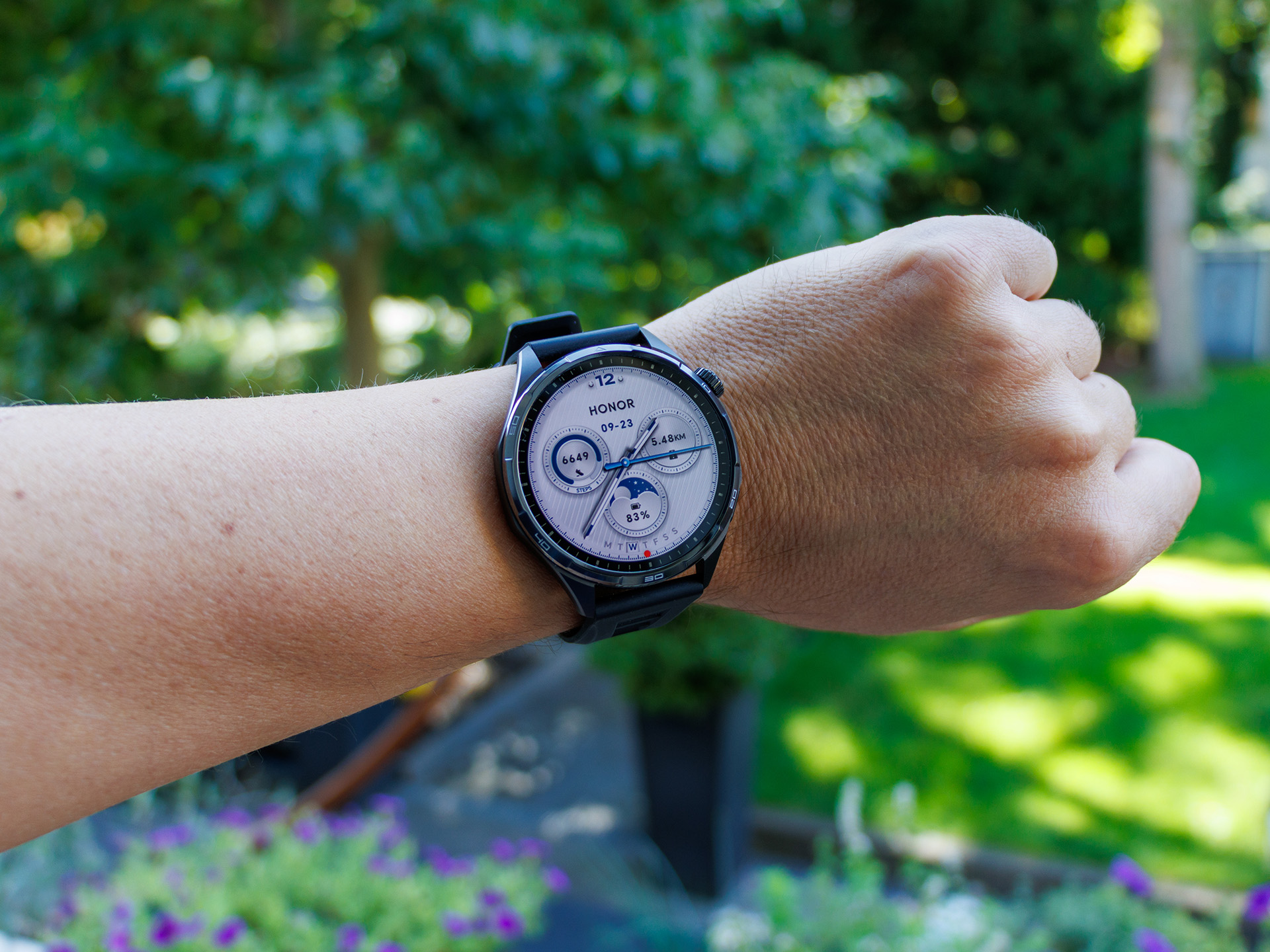
The Honor Watch 6 is a good example of why real-world brightness matters. Honor promotes the watch with brightness of up to 3,000 nits. In testing, the display reached 2,340 cd/m² in the standard basic mode. In its dedicated bright mode, brightness increased to 2,818 cd/m². However, when adjusted manually, the maximum brightness was limited to 699 cd/m².
This shows that the headline number is only one part of the experience. Automatic brightness behavior, display mode, software tuning, and power-saving features can all affect how bright the screen actually gets during daily use.
Battery life is another important factor. A very bright smartwatch display consumes more power, especially when used outdoors for long periods. If the screen constantly pushes high brightness levels, battery drain can increase noticeably. A well-designed smartwatch should balance visibility and efficiency so that the display remains readable without wasting too much power.
Minimum brightness is just as important as maximum brightness. A smartwatch that cannot dim properly can be uncomfortable to use at night. If the display is too bright in a dark room, it may cause glare, disturb sleep, or feel harsh on the eyes.
For example, the Honor Watch 6 was measured with a minimum brightness of 20.62 cd/m². In a dark bedroom, that level can still appear too bright. A good smartwatch should be able to dim very low for nighttime use, sleep tracking, and quick checks in low-light environments.
When buying a smartwatch, do not focus only on the highest nit rating. The best smartwatch display should offer strong peak brightness for sunny days, accurate automatic brightness adjustment, comfortable low brightness for nighttime use, and good battery efficiency.
In short, 500 to 1,000 nits is fine for everyday users, 1,500 to 2,000 nits is better for outdoor fitness, and 3,000 nits can be helpful for extreme sunlight. But real-world performance depends on much more than the advertised number. A truly good smartwatch display is not just bright; it is smart, balanced, readable, and comfortable in every lighting condition.