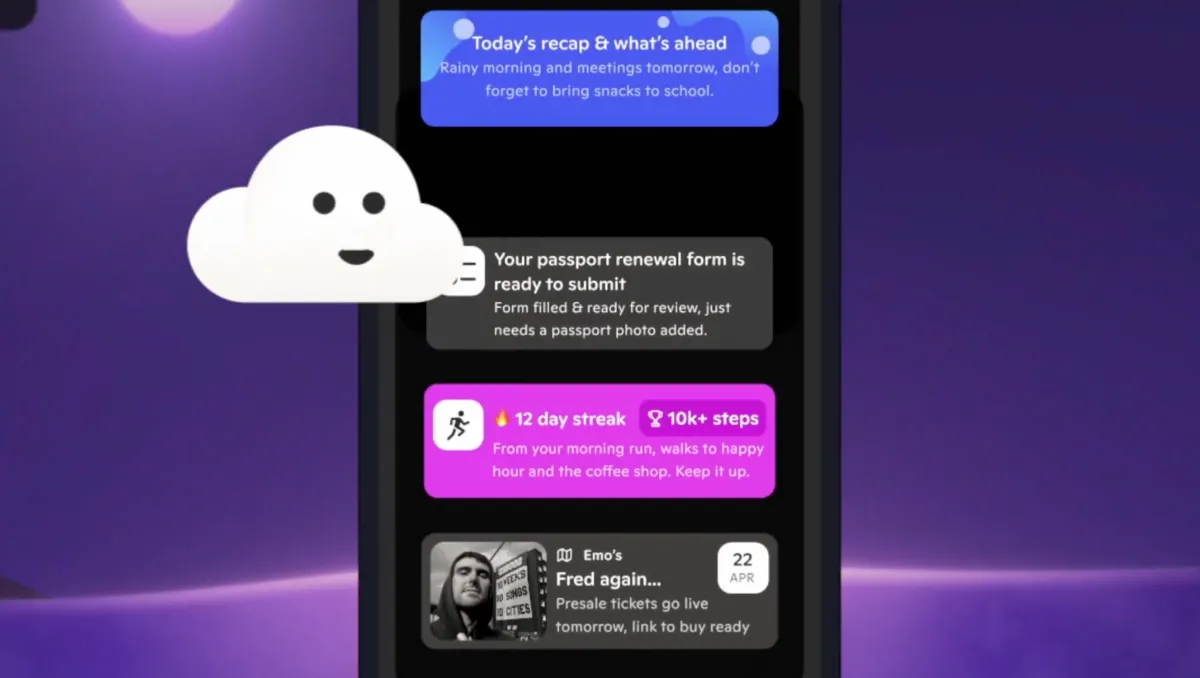
Skye is an iPhone app currently in private testing that’s aiming to rethink how people use AI on their phones. Instead of asking users to open a chatbot or jump between apps, Skye’s big idea is an “agentic homescreen” that lives right where your day already starts: the iPhone home screen.
Rather than building a traditional AI assistant you have to summon, Skye is being designed around iOS widgets. The goal is to make AI feel more like ambient intelligence—useful information and actions that appear proactively, based on what’s happening in your life and where you are, while still relying on user-approved access to data.
According to the app’s creator, who posts under the name signüll on X, Skye can surface personalized insights about things like local weather, your current context, and health-related signals. It’s also positioned as a practical productivity layer, with features that can draft email replies, help with meeting preparation, send reminders, and even flag suspicious charges in bank accounts. On the go, it’s described as a way to get location-specific recommendations plus extra detail about nearby businesses, neighborhoods, and attractions—essentially turning a normal home screen into something that understands what you might need next.
A key part of the pitch is that much of this intelligence would come from connections the user explicitly authorizes, suggesting Skye is being built to plug into the services and data streams people already rely on, instead of forcing them into a brand-new ecosystem.
Even without a public launch, Skye is already drawing significant attention. The app is being developed by a small team at Signull Labs, and investor interest has arrived early. An SEC filing indicates the company raised more than $3.58 million in pre-seed funding in a round that closed in September 2025. Pitchbook lists the New York-based startup as having a post-money valuation of $19.5 million.
Online interest appears to be strong as well. After sharing the concept publicly, signüll claimed Skye added “tens of thousands” of people to its waitlist. If that number is accurate, it’s an early signal that a lot of iPhone users may be looking for something beyond today’s AI experience—less “open an app and ask,” and more “AI that’s present, aware, and helpful throughout the day.”
The founder has said he previously worked at Google and Meta. He has also claimed early backing from major venture firms and angel investors. Since the announcement, he’s continued discussing Skye publicly, including appearances using an avatar and regular posts describing how he uses the app.
As for when everyday users will get their hands on it, the plan is to launch Skye to people on the waitlist soon, though no specific release date has been shared. For now, Skye’s momentum—both from potential users and investors—suggests the race to redefine the AI-powered iPhone experience is heating up, and the home screen may be the next battleground.


