SK Hynix HBM4E pushes AI memory toward 4 TB/s bandwidth with higher density and faster speeds
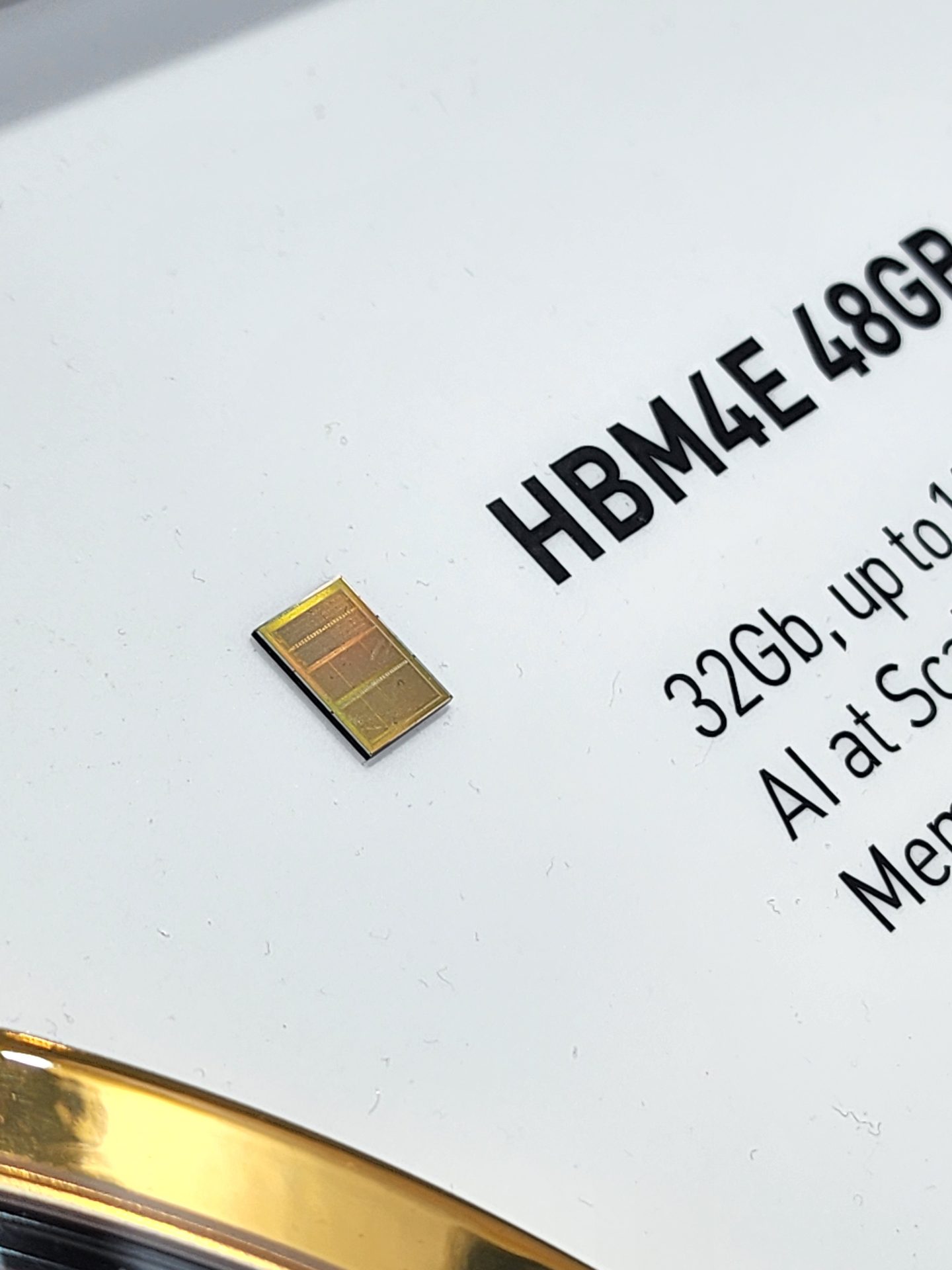
The competition in high-bandwidth memory is heating up fast, and SK Hynix is preparing its next major leap for AI data centers. The company has previewed its upcoming HBM4E memory technology, a next-generation solution designed to deliver more capacity, higher bandwidth, and better efficiency for advanced AI accelerators.
HBM has become one of the most important components in modern AI hardware. As GPUs grow more powerful, they need memory that can move massive amounts of data quickly and efficiently. That is why companies building AI data center chips are moving aggressively from HBM3E to HBM4, and now toward HBM4E.
SK Hynix’s HBM4E is designed to raise the bar again. The new memory die features 32Gb density, which represents a 33% improvement over HBM4. That density increase means a 48GB HBM4E stack can be achieved with a 12-Hi configuration, while HBM4 needs a taller 16-Hi stack to reach the same capacity. In simple terms, HBM4E can deliver the same memory capacity in a more compact package.
Bandwidth is another major upgrade. SK Hynix is targeting up to 16 Gbps pin speeds with HBM4E, giving it around a 37% bandwidth boost over HBM4. That puts the technology on track to reach up to 4 TB/s of memory bandwidth, a huge figure that could significantly improve performance in AI training, inference, high-performance computing, and large-scale data processing.
This is especially important as next-generation AI GPUs become more complex. NVIDIA and AMD are already expected to use HBM4 in upcoming AI data center products, including platforms such as Rubin and the MI400 series. These chips are being built for enormous workloads, and memory bandwidth is one of the biggest performance factors. As AI models grow larger, faster memory is no longer optional; it is essential.
HBM4E is expected to play a key role in the next wave of AI accelerators after the first HBM4-based designs. SK Hynix’s early samples suggest the company wants to stay ahead in the high-bandwidth memory race, particularly as demand for AI hardware continues to put pressure on global memory supply.
The biggest advantages of HBM4E come down to density and bandwidth. A 12-Hi HBM4E stack with 48GB capacity could help chipmakers design more efficient packages while still increasing total memory performance. For future AI processors that combine multiple GPUs and several HBM chiplets in one package, this kind of improvement could translate into major gains in compute efficiency and real-world workload performance.
SK Hynix is also exploring new stacked NAND technology for future storage solutions. One of the more interesting developments is AI-N B, which uses HBM-like TSV technology to stack NAND dies together. TSV, or Through-Silicon Via, allows vertical connections between stacked dies, helping data move more efficiently through the package.
The goal is to combine HBM-like throughput with SSD-like capacity. If successful, this type of stacked NAND could help reduce the gap between fast memory and high-capacity storage, an issue that is becoming more serious as AI workloads demand both speed and scale.
Beyond data center memory, SK Hynix also showed new products aimed at client devices and AI PCs. One highlight is a 96GB LPCAMM2 module built using the company’s 1cnm process technology. Based on the LPDDR5X standard, this module can reach transfer rates of up to 9.6 Gbps.
LPCAMM2 is expected to become increasingly important for thin laptops, compact workstations, and AI PC platforms. It offers high performance in a smaller and more power-efficient form factor compared to traditional memory modules. With AI features becoming more common on consumer PCs, higher-capacity and faster low-power memory will be a major selling point.
SK Hynix is also expanding its NAND lineup with V9 NAND products in both QLC and TLC versions. These solutions can offer up to 2TB of storage in a compact cSSD form factor. Designed for small devices, these SSDs focus on strong power efficiency and can operate without DRAM, making them well suited for space-constrained systems.
The broader message is clear: SK Hynix is investing heavily across the memory stack, from ultra-fast HBM4E for AI servers to efficient LPCAMM2 for AI PCs and compact V9 NAND storage for next-generation devices.
As AI data centers continue to demand more bandwidth, more capacity, and better efficiency, HBM4E could become one of the most important memory technologies of the next hardware cycle. With a 33% die density increase, up to 16 Gbps pin speeds, and a target of 4 TB/s bandwidth, SK Hynix is positioning HBM4E as a major step forward for future AI GPUs and high-performance computing platforms.