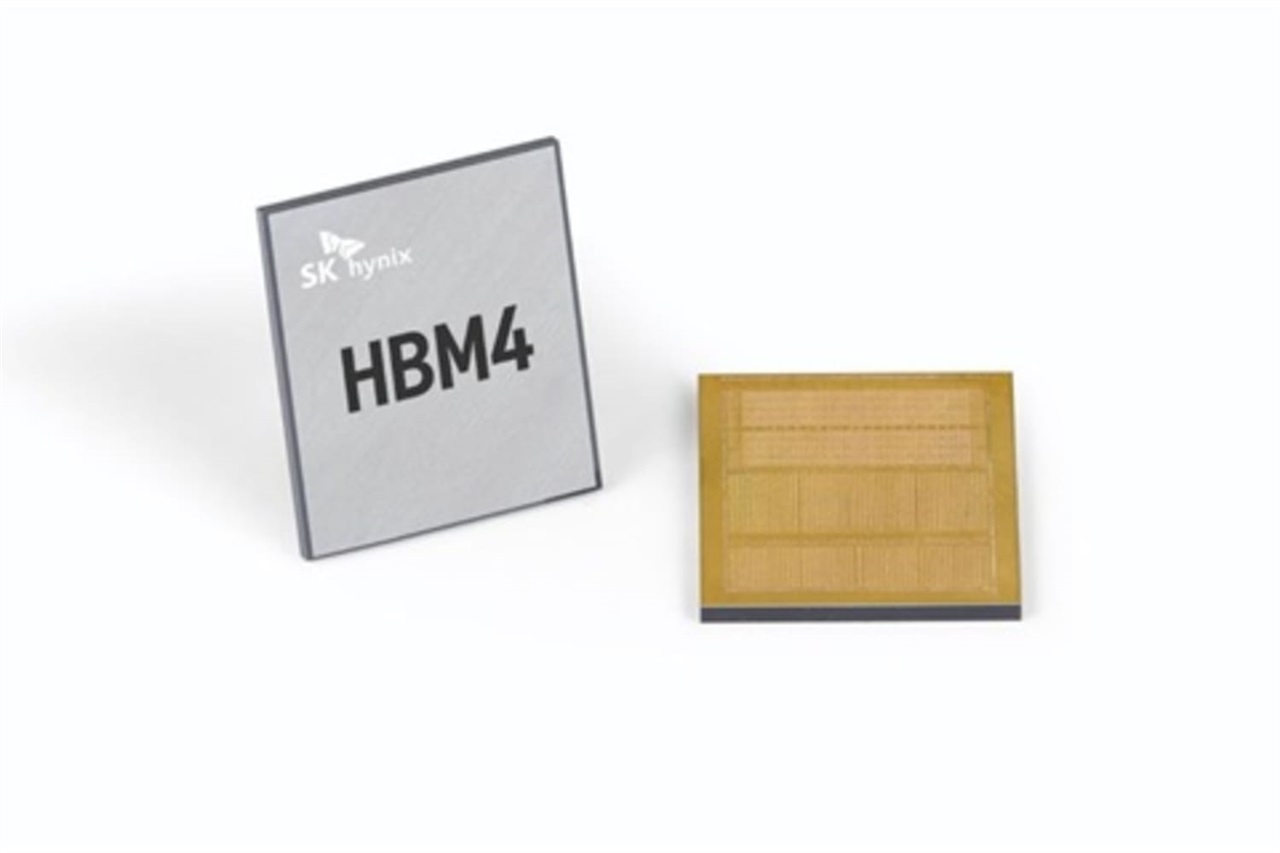
SK Hynix is gaining momentum in the race to supply next-generation memory for AI and high-performance computing. New reports indicate the company has made major progress in quality testing for Nvidia’s sixth-generation high-bandwidth memory, known as HBM4. That’s an important step because passing strict quality checks is one of the biggest hurdles between a promising prototype and a long-term supply deal.
If the current progress continues, SK Hynix is increasingly likely to become a stable HBM4 supplier for Nvidia’s upcoming Rubin GPU platform. In practical terms, that could help Nvidia secure the advanced memory it needs for future AI accelerators—hardware that depends heavily on ultra-fast, high-capacity memory to feed data to massively parallel processors without bottlenecks.
HBM4 is the next evolution of high-bandwidth memory, a critical component in modern AI GPUs where performance is often limited not only by compute power, but by how quickly data can move between memory and the processor. As demand for AI training and inference keeps rising, reliable supply of cutting-edge HBM becomes a strategic advantage across the entire semiconductor ecosystem.
For SK Hynix, stronger results in quality testing signal more than just a technical milestone. It positions the company more competitively in the premium memory market, where winning a place in a flagship GPU supply chain can translate into long-term volume, higher margins, and deeper partnerships with leading chipmakers.
While broader production timelines and final supplier decisions will depend on additional validation and ramp-up readiness, the reported testing breakthrough is a clear indicator: SK Hynix is moving closer to playing a key role in powering Nvidia’s next-generation Rubin GPUs with HBM4.