DIGITIMES Asia’s most-read stories from Feb 3 to Mar 1, 2026 reveal an industry being reshaped by two powerful forces: shifting semiconductor geopolitics and the accelerating momentum of AI hardware. From a proposed trilateral chip alliance to Nvidia’s next big bets and TSMC’s push to localize key packaging materials, the themes are clear—resilience, scale, and speed now matter as much as raw performance.
A trilateral alliance concept is emerging as a new blueprint for semiconductor resilience
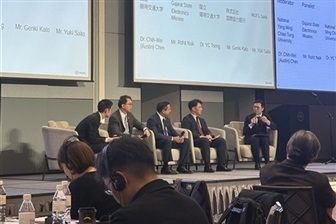
Industry leaders meeting at the MUFG × NYCU Semiconductor Seminar in Hsinchu outlined a potential three-nation framework that could redraw the map of the global semiconductor ecosystem. The proposal positions Japan as the capital provider, Taiwan as the ecosystem integrator, and India as the talent hub—an alignment designed to strengthen supply-chain resilience while supporting long-term growth.
The discussions highlighted how each economy’s strengths could complement the others. Officials from Gujarat emphasized aggressive incentives and infrastructure planning to attract chipmakers, while policy-linked financiers in Japan signaled readiness to deploy large-scale funding connected to Indian semiconductor initiatives. The central idea is partnership-driven expansion: combine Japan’s financing capacity, Taiwan’s manufacturing and supplier ecosystem, and India’s workforce development to create a stabilizing pillar for global chip production.
Nvidia GTC 2026 points to “reasoning AI” and major platform upgrades
As anticipation builds for Nvidia’s GTC 2026, CEO Jensen Huang is expected to address growing talk of an AI bubble while arguing that the industry is entering a new phase focused on “thinking and reasoning” capabilities. Alongside that messaging, Nvidia is preparing to unveil a surprise chip and provide updates to its Vera Rubin platform.
The Vera Rubin platform is expected to use TSMC’s N3P process and lean into chiplet-based design paired with HBM4 memory integration—signaling that next-generation performance gains will come from system-level architecture as much as from smaller process nodes.
Another major spotlight at GTC 2026 is likely to be on silicon photonics and co-packaged optics. These technologies are increasingly viewed as essential for solving data-center bandwidth and power limitations, especially as AI clusters scale. Huang has also repeatedly emphasized that electricity availability is becoming the defining constraint for AI expansion, implying that energy infrastructure and even nuclear power policy could increasingly influence AI competitiveness.
Nvidia returns to the PC market with AI laptop processors
Nvidia is also pushing beyond its data-center stronghold by re-entering the consumer PC arena with AI-focused system-on-chip processors aimed at next-generation Windows laptops. Working with MediaTek on Arm-based chips and also collaborating separately with Intel, Nvidia is pursuing a platform approach that brings CPU, GPU, and AI acceleration together—enabling thinner designs and better power efficiency.
At least eight laptop models from Dell, Lenovo, and Alienware are expected in spring 2026. The move is designed to extend Nvidia’s AI ecosystem from cloud infrastructure down to edge devices, tapping into the emerging AI PC upgrade cycle. Key success factors will include competitive pricing and stronger Windows-on-Arm software compatibility, especially for gaming performance and broader app support.
“Engineer diplomacy” highlights Nvidia’s supply chain priorities for HBM
Jensen Huang drew attention for skipping India’s AI Impact Summit, with reports indicating he instead attended an informal gathering with SK Hynix engineers near Nvidia’s California headquarters. Described by observers as “engineer diplomacy,” the meeting underscored just how central high-bandwidth memory supply has become as AI chip demand accelerates.
Huang reportedly praised teams advancing HBM4 development—widely seen as a critical ingredient for next-generation GPUs. The episode reinforced a broader industry reality: as AI hardware demand surges, execution speed and secured supply chains can be just as decisive as breakthrough chip designs. It also adds to expectations of major AI hardware announcements at GTC 2026.
Rising mobile DRAM prices could shape the economics of the Galaxy S26 generation
Samsung Electronics’ Galaxy S26 rollout is being watched not only for new features, but also for what it signals about tightening mobile DRAM supply and pricing. Early production is expected to rely on memory from both Samsung’s Device Solutions division and Micron, reflecting a balancing act to ensure availability as prices rise. The shift follows earlier quality improvements by Samsung’s internal DRAM operations and highlights an industry trend where supply security is increasingly prioritized over pure cost optimization.
With LPDDR5X prices climbing, smartphone makers may face margin pressure that could translate into higher retail prices. Intensifying negotiations with major buyers, including Apple and others, suggest competition for advanced memory capacity is likely to remain fierce.
TSMC dominates Taiwan’s patent landscape as global filings rise
Taiwan’s innovation engine continued to run hot in 2025, with TSMC leading domestic invention patent applications for the tenth straight year. The company filed 1,485 applications and also secured the most approvals, reinforcing its role not just as a manufacturing powerhouse but as an IP leader.
Overseas companies expanded filings aggressively as well, led by Applied Materials—another sign of Taiwan’s central position in semiconductor R&D. Research institutions and universities also increased participation, with ITRI and National Cheng Kung University remaining among the leaders. The broader takeaway: Taiwan’s semiconductor advantage is deeply rooted in intellectual property generation as much as it is in production scale.
TSMC localizes advanced packaging materials to cut cycle times and reduce risk
With AI-driven semiconductor demand pushing advanced packaging into the spotlight, TSMC is moving to strengthen supply resilience by localizing the production of electroplating additives used in advanced packaging. By helping Japanese suppliers establish manufacturing operations in Taiwan, TSMC reportedly reduced production cycles from 60 days to 20 days while improving logistics efficiency.
The localized materials have already been introduced at advanced packaging sites, with broader deployment planned across multiple fabs in early 2026. Beyond speeding up supply and reducing reliance on imports, the effort also lowers carbon emissions and mitigates operational risk—important advantages as advanced packaging becomes increasingly essential to AI chip performance and data-center scale-out.
Across these stories, one message stands out: the semiconductor industry is entering a phase where geopolitics, supply assurance, packaging, memory availability, power infrastructure, and AI system efficiency are all intertwined. The next wave of competitive advantage won’t come from one breakthrough alone—it will come from aligning technology, supply chains, and scale at the same time.