Scott Rogowsky has always been in on the joke. At New York City Comic Con, the comedian wandered the floor carrying his own face on a “Wanted”-style poster, stopping strangers to ask, “Have you seen this man?” The reactions were exactly what he was going for: a spark of recognition, a puzzled pause, and then that classic line—“You look familiar… where do I know you from?”
One person studied him and said, “I know your face.” A cosplayer in a Ghostbusters outfit finally connected the dots: “Did you used to do that game show online? Like, every night?” That’s the strange afterlife of internet fame—intense, widespread, and then suddenly fuzzy around the edges.
For a couple of years, though, Rogowsky wasn’t fuzzy at all. Between 2017 and 2019, he became the unmistakable face of HQ Trivia, the live mobile game show that turned daily quizzes into must-watch events. The app pulled in more than 2.4 million daily viewers at its peak, and it racked up 20 million lifetime downloads. People scheduled their days around it. Offices paused mid-afternoon so coworkers could play together. It felt like appointment entertainment built for the streaming era—fast, communal, and addictive.
Then HQ Trivia crashed almost as quickly as it rose. A series of painful events and internal turmoil created a perfect storm, and the company—despite a major funding round and massive cultural visibility—never built a sustainable business model. The problem was simple and brutal: the app was literally giving away money without a clear long-term plan to reliably make it back. By February 2020, HQ filed for bankruptcy, cementing its story as one of the most memorable boom-and-bust moments in mobile app history.
For Rogowsky, the fallout didn’t stop there. A devoted baseball fan, he left HQ in 2019 to host a daily show on MLB Network, a pivot that felt like a personal victory. He still recalls, with genuine delight, a surreal run-in with Hall of Fame pitcher Pedro Martinez in a bathroom. But the timing couldn’t have been worse. When the pandemic hit and baseball shut down, his show was canceled. After that came years of stops and starts—efforts to recreate the magic, ideas that didn’t stick, and a growing feeling that life was pushing him around.
Eventually, he stepped away. He even opened a vintage store in California, thinking maybe that chapter was closed. But comedy—and performing—kept calling.
In the last couple of years, Rogowsky says he went through a personal reset that helped him regain direction. He describes completing a seven-day mountain retreat known as the Hoffman Process, a digital detox experience blending psychology and neuroscience that helped him feel like he was back in control. When he came out of it, he didn’t just feel refreshed—he felt certain.
“I have more to do here,” he realized. He missed the camera, the audience, the rhythm of going live. And he missed the feeling that he was doing what he was meant to do.
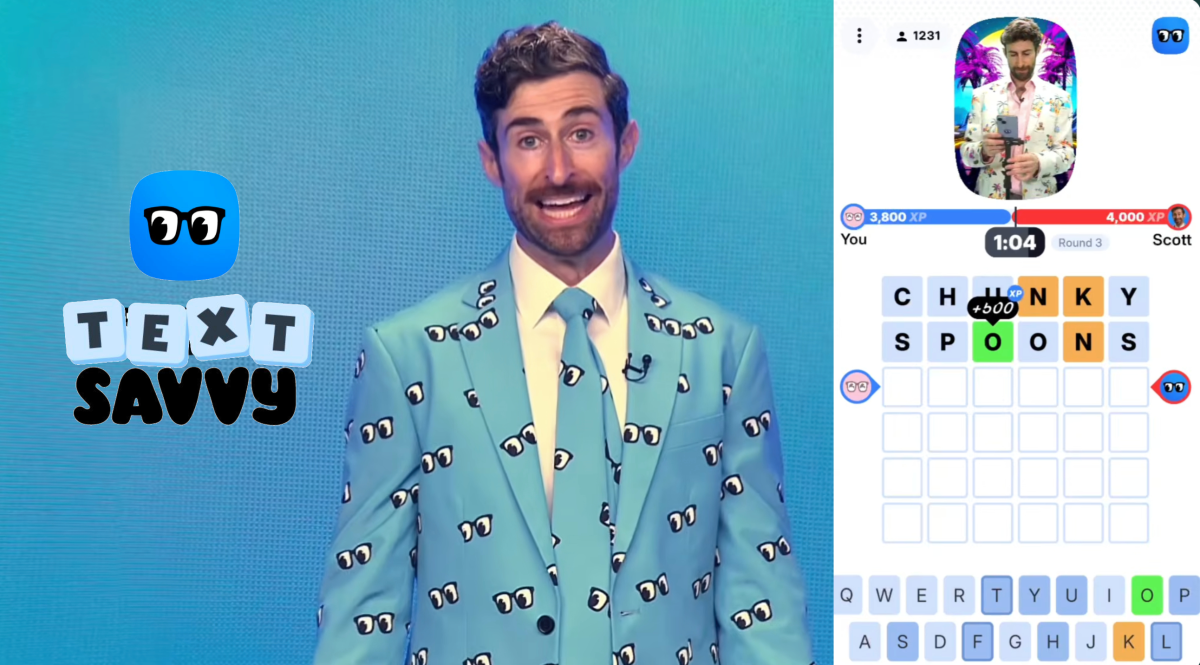
Now Rogowsky is making a return to live game shows with a new app called Savvy, and it’s designed to capture the best parts of what made HQ Trivia so compelling—without repeating the mistakes that helped sink it.
Savvy’s first game is TextSavvy, a daily live word-puzzle competition where players can win real cash. The twist: instead of simply hosting and reading questions, Rogowsky plays against the audience. That two-way interaction changes the vibe completely, turning the host into an active competitor and making the show feel more like a shared contest than a one-sided performance.
It’s also a smart shift for 2026, when traditional trivia comes with an obvious problem: people can easily look up answers, and AI tools make cheating even easier. Word puzzles help level the playing field. TextSavvy is described as a blend of popular daily word formats—more like a mix of Wordle-style logic and Connections-style pattern recognition than straightforward trivia.
There’s another big difference from HQ: the money. Savvy isn’t offering massive prize pools, at least not right now. The largest payout so far has been around $400 in a single game, and Rogowsky has been upfront about why. He and his co-founders are self-funding the company, keeping the budget lean and avoiding the pressure cooker that comes with big venture money.
On-air, he’s joked about the reality of building this kind of live mobile game without a giant bank account. HQ had millions in funding early. Savvy doesn’t. That’s intentional.
Rogowsky says he’s talked with investors and even received tempting offers, but he’s wary of a game plan that revolves around chasing massive returns as fast as possible. Instead, his goal is steady growth and profitability—building a company that can keep hiring, keep creating new games, and keep showing up every day without the kind of chaos that derails the product and burns out the people behind it.
In other words, he’s not chasing an eight-figure or nine-figure exit. He wants a sustainable live game show business that lasts.
TextSavvy is currently in “Season 0,” a soft launch period aimed at working out technical issues before the official launch on March 1. Even with little promotion, the game has already hit about 4,000 viewers in a single night. That number is tiny compared to HQ’s peak, but it’s a meaningful early signal—and a reminder that big cultural waves often start small. HQ itself once hovered around a few thousand concurrent viewers before it exploded.
This time, Rogowsky believes the foundation is stronger. No internal power struggles. No looming threat of being replaced. No constant drama. Just a comedian who understands why people showed up in the first place—because live, shared entertainment feels different, and because a witty host can turn a simple game into a nightly ritual.
And if you still aren’t sure you recognize him, don’t worry. He’s the guy walking around Comic Con with a “Wanted” poster of himself, asking the internet all over again: have you seen this man?


