New Battery Revival Method Could Restore Lithium-Ion Cells to Nearly Full Capacity
A promising new battery restoration technique could change how worn-out lithium-ion batteries are handled, offering a cleaner and more affordable alternative to traditional recycling. Instead of shredding old batteries and extracting raw materials through expensive, energy-heavy processes, researchers have developed a way to revive degraded cells and recover much of their lost performance.
The method, created by a research team at Cornell University, is known as Direct Electrode-to-Electrode Regeneration, or DEER. Early testing shows that the process can restore used lithium-ion batteries to as much as 95% of their original capacity, potentially giving electric vehicle batteries, consumer electronics batteries, and grid storage systems a much longer usable life.
Most lithium-ion batteries do not fail because every internal component is destroyed. Over time, repeated charging and discharging causes a layer called the solid electrolyte interphase, or SEI, to build up on the battery’s electrodes. A thin SEI layer is necessary for normal battery operation, but as it grows thicker, it increases internal resistance and reduces how much energy the battery can hold.
Eventually, the battery may be considered too weak for practical use, even though much of its structure remains intact.
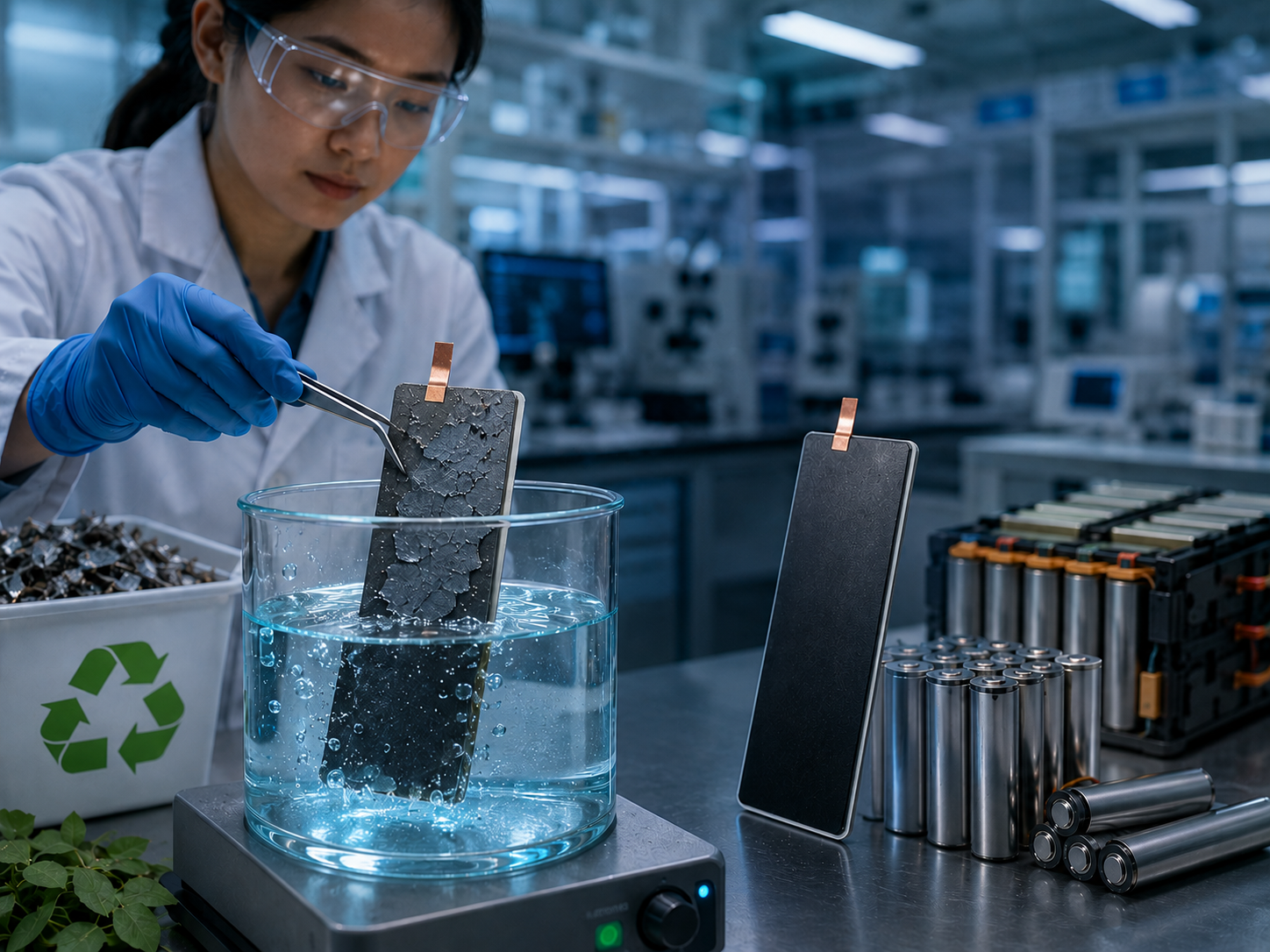
The DEER process targets this problem directly. Instead of breaking the battery apart, the worn cell is treated in an electrochemical solution designed to remove the excessive SEI buildup. By clearing away this unwanted layer, the battery can regain a large portion of its lost capacity.
The process does more than simply clean the battery. It also adds a thin protective layer that helps slow future degradation. In testing, batteries that went through an additional regeneration cycle still retained around 90% of their capacity, suggesting that this approach could be repeated to extend battery life more than once.
If the technology can be scaled successfully, the impact on battery recycling and sustainability could be significant. Conventional lithium-ion battery recycling often requires dismantling, shredding, chemical processing, and high energy input. These steps are costly and can create environmental challenges, including air pollution and heavy water usage.
Researchers estimate that the DEER method could reduce the cost of producing recycled battery cells by up to 56%. It may also lower harmful emissions and reduce water consumption compared with current recycling methods.
This could be especially important as demand for lithium-ion batteries continues to rise. Electric vehicles, smartphones, laptops, renewable energy storage systems, and industrial battery packs all rely on this technology. As more batteries reach the end of their first life, efficient restoration methods could help reduce waste, lower production costs, and decrease dependence on newly mined materials.
The research team is now working on expanding the technique to address other causes of battery aging. One major challenge is lithium loss, another common reason lithium-ion batteries lose capacity over time. If future versions of the process can solve multiple types of degradation, battery regeneration could become a key part of the clean energy economy.
For electric vehicles, this could mean lower battery replacement costs and longer-lasting battery packs. For large-scale energy storage, it could improve the economics of storing solar and wind power. For consumer electronics, it could help reduce electronic waste by keeping batteries useful for longer.
While the technology is still in development, the early results are encouraging. A process that restores lithium-ion batteries close to their original capacity without full recycling could make battery use more sustainable, affordable, and environmentally friendly.