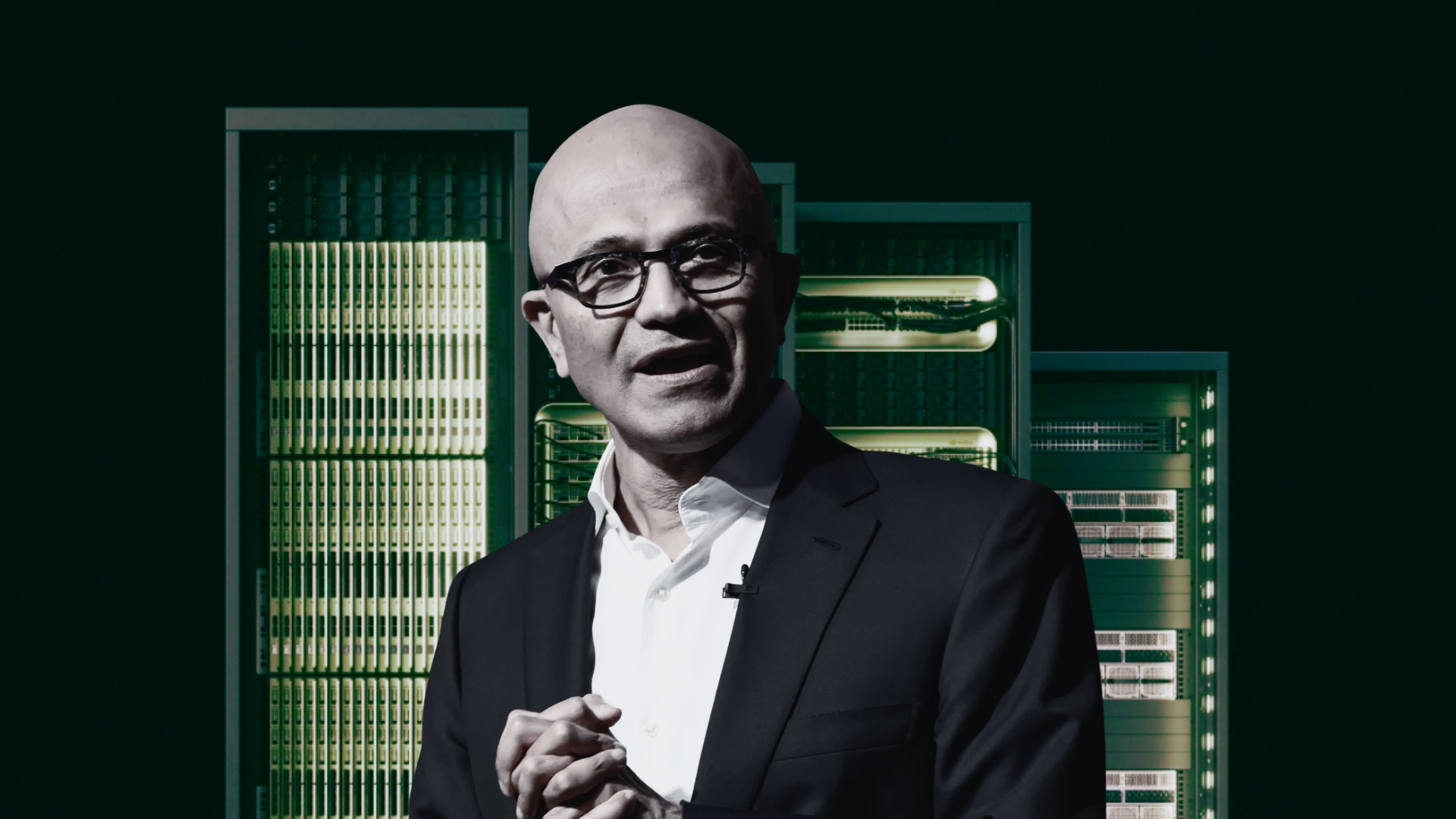
AI’s biggest bottleneck isn’t chips—it’s power and space. That’s the message from Microsoft CEO Satya Nadella, who says the company currently has more NVIDIA AI GPUs than it can actually deploy because there isn’t enough data center capacity or energy available to bring them online.
Key points
– Microsoft has a surplus of AI GPUs sitting in inventory that can’t be used yet.
– The constraint is not chip supply, but energy and data center space.
– Power requirements for next‑gen, rack‑scale AI systems are surging—far faster than facilities and grid capacity can expand.
– Short‑term demand for AI compute remains difficult to forecast and depends on how quickly infrastructure and supply chains progress.
– Microsoft is wary of overbuying a single GPU generation while waiting for more “warm shells” and power to come online.
Nadella’s comments challenge the idea that the industry is racing toward an AI compute shortage. Instead, he describes a “power glut” problem: even if chips are available, they can’t be plugged in without sufficient electricity and ready‑to‑use data center space. He noted this is not a theoretical risk—it’s the company’s present reality.
The trend underpinning this crunch is the rapid escalation in rack‑scale AI designs. With each generation, power draw per rack has climbed dramatically. From earlier platforms like Ampere to upcoming configurations such as the Kyber rack design, industry watchers expect eye‑popping increases in rack TDP, underscoring why energy has become the primary constraint. As models scale and architectures advance, physics and infrastructure are pushing back: utilities, substations, and data center campuses can’t be built or upgraded at the speed AI demand is growing.
Will this slow GPU sales? Nadella suggests it’s complicated. In the near term, demand is volatile and tied to how fast operators can add capacity and how the supply chain evolves. Microsoft also doesn’t want to overcommit to one GPU generation, preferring to balance inventory with deployment readiness.
The takeaway for the AI ecosystem is clear: the next phase of growth hinges less on chip manufacturing and more on power availability, grid upgrades, and data center buildouts. Until those catch up, expect more talk of GPUs “lying in inventory”—and more emphasis on energy‑efficient architectures, higher‑density cooling, and strategic siting near abundant power.