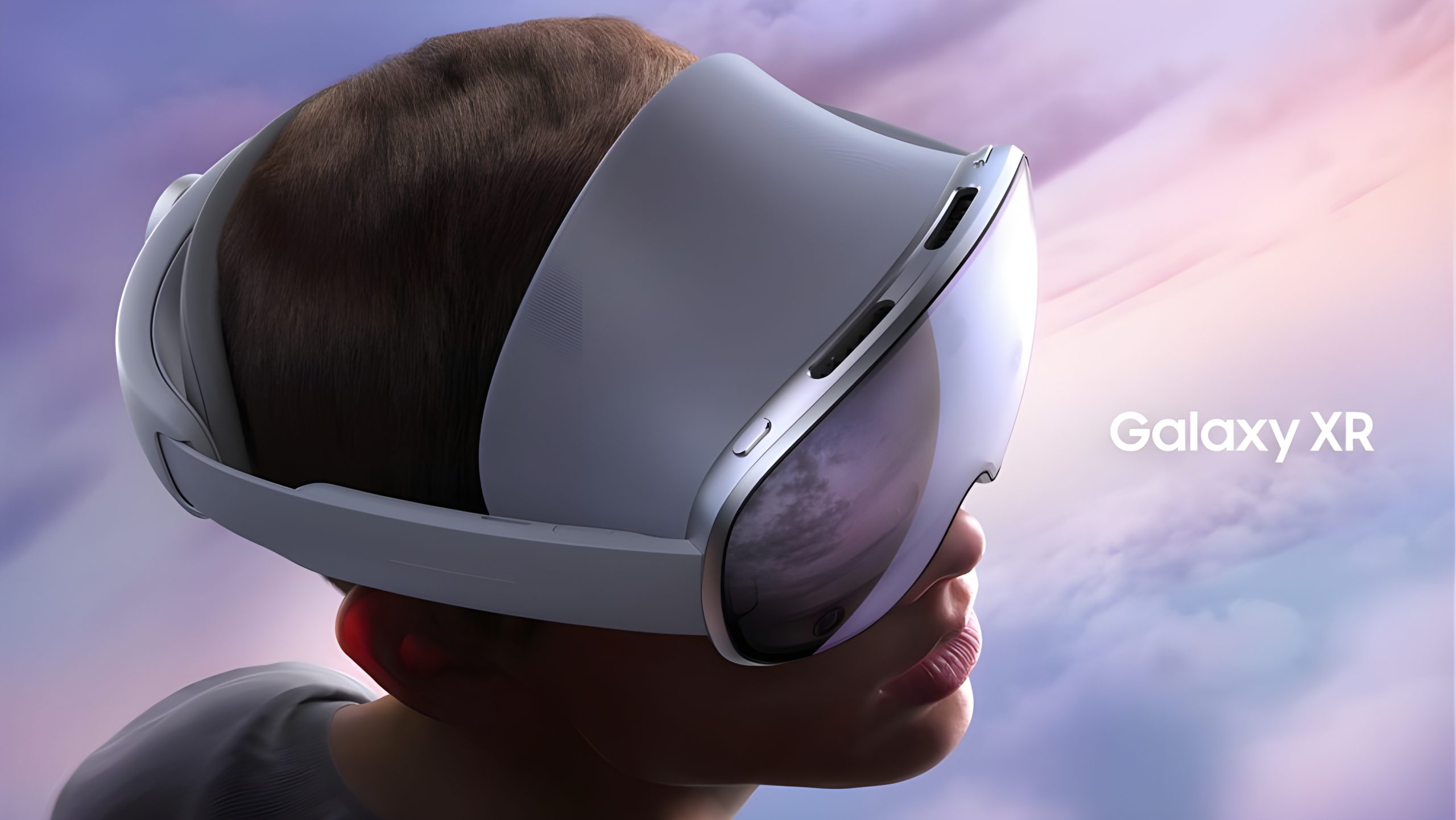
Samsung is stepping into spatial computing with a bold play: the Galaxy XR headset launches at $1,800, dramatically undercutting Apple’s high-end alternative at $3,499. The result is a premium mixed reality device with a strong value proposition, packed with cutting-edge hardware, advanced displays, and deep Google Gemini AI integration.
At the heart of the Galaxy XR is Qualcomm’s Snapdragon XR2+ Gen 2 platform, delivering a meaningful bump in performance over the standard XR2 Gen 2: up to 20% faster CPU and 15% faster GPU performance. The chipset also enables 12ms full-color video passthrough for more natural, real-time mixed reality experiences. An onboard Hexagon NPU accelerates AI tasks locally, while 16GB of RAM keeps multitasking responsive. Storage lands at 256GB, which is generous for apps and media but trails the 1TB maximum offered by the rival device.
Samsung is going big on visuals. The Galaxy XR uses micro‑OLED panels with a 3,552 x 3,840 resolution and a 6.3‑micron pixel pitch, producing around 27 million pixels in total for a near‑8K combined image. Color coverage hits 95% of DCI‑P3, and refresh rates of 60Hz, 72Hz (default), and 90Hz are supported. While that’s shy of the competitor’s 120Hz ceiling, the clarity and color accuracy should impress. The field of view spans 109 degrees horizontally and 100 degrees vertically, and the headset can handle UHD 8K (7680 x 4320) video playback at 60 frames per second.
A dense sensor suite lays the groundwork for precise tracking and natural interaction: two high‑resolution passthrough cameras, six motion-tracking cameras, four eye‑tracking cameras, depth sensors, and six microphones. Biometric security arrives via iris recognition. For media, Dolby Atmos support and HDR10/HLG compatibility promise more immersive sound and lifelike visuals.
What truly differentiates the Galaxy XR is its tight integration with Google Gemini. Gemini can act as a contextual guide in Google Maps, answer questions about the content you’re currently viewing, and even surface relevant videos on YouTube without breaking immersion. A clever passthrough trick lets you draw a circle in your real-world view and ask Gemini for information about everything inside it. There’s also a creative flourish: the ability to bring photos and videos to life by converting 2D images into 3D, enhancing memories and presentations alike.
Comfort matters, and Samsung kept the weight to 545 grams (about 1.2 pounds), lighter than the competing headset’s 1.6 pounds. Battery life is rated for up to two hours of general use and roughly 2.5 hours of video playback. That trails the rival’s stated three hours for video, but fast performance and lighter weight help balance the equation for many buyers.
Key takeaways for shoppers:
– Price and value: A flagship‑class XR experience at $1,800 is a compelling entry point for high-end mixed reality.
– Performance and AI: Snapdragon XR2+ Gen 2 with a dedicated NPU, 16GB RAM, and rapid 12ms passthrough deliver smooth, intelligent interactions.
– Visual fidelity: Near‑8K micro‑OLED clarity, wide color, and a broad field of view make media, productivity, and gaming feel more immersive.
– Sensing and audio: Extensive camera array, eye tracking, iris recognition, Dolby Atmos, HDR10, and HLG elevate both control and content.
– Gemini integration: Context-aware assistance, on‑the‑fly insights from your surroundings, and smart content discovery deepen the XR experience.
– Portability: Lighter design for comfort, with battery life positioned for shorter sessions, meetings, or flights.
For early adopters, creators, and anyone curious about spatial computing, the Galaxy XR lands as a powerful, AI-forward headset that blends premium hardware with practical intelligence. If you’ve been waiting for an immersive device that balances performance, comfort, and price, Samsung’s latest could be the sweet spot in the XR market.


