Samsung Eyes 2029 and Beyond for zHBM Memory as Heat Challenges Continue
Samsung Electronics is setting its sights on 2029 or later for the arrival of products based on its first-generation zHBM specifications, giving the company’s advanced 3D memory concept a clearer timeline.
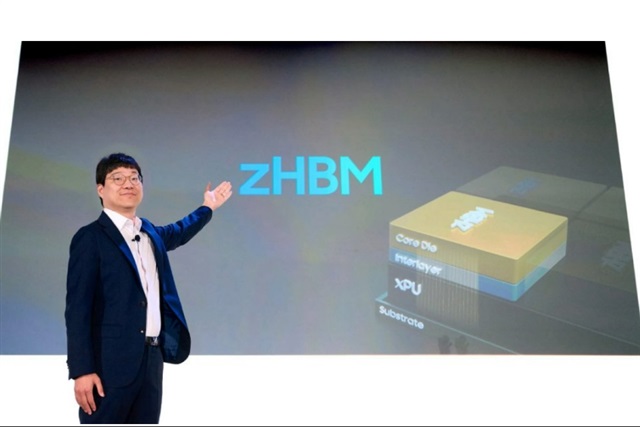
The technology, recently unveiled by Samsung, represents a major step in the evolution of high-bandwidth memory for artificial intelligence hardware. Unlike conventional HBM designs that sit beside processors, zHBM aims to stack memory directly above AI accelerators. This could help reduce data travel distance, improve bandwidth, and support faster performance in demanding AI workloads.
The idea is especially important as AI chips continue to require faster access to massive amounts of data. High-bandwidth memory has already become a critical component in AI servers and data centers, but future systems may need even tighter integration between memory and processing units. Samsung’s zHBM concept is designed to address that need by bringing memory physically closer to the accelerator.
However, heat remains one of the biggest obstacles. Stacking HBM directly on top of AI accelerators creates major thermal challenges, as both the processor and memory generate heat in a very compact space. Managing that heat effectively will be essential before zHBM can become a practical commercial product.
Samsung’s projected 2029-or-later timeline suggests that the company is still in the early stages of solving these engineering issues. The long development window also reflects the complexity of bringing next-generation 3D memory into real-world AI systems, where reliability, cooling, performance, and manufacturing efficiency all matter.
If Samsung succeeds, zHBM could become an important technology for future AI accelerators, cloud computing platforms, and high-performance data center hardware. By stacking memory closer to the logic chip, the design may help reduce latency and improve energy efficiency, two key priorities for the next wave of artificial intelligence infrastructure.
For now, Samsung’s zHBM roadmap points to a future where memory and AI processors become more deeply integrated. While commercial products are still years away, the company’s work highlights the growing pressure across the semiconductor industry to rethink how memory is designed for increasingly powerful AI chips.